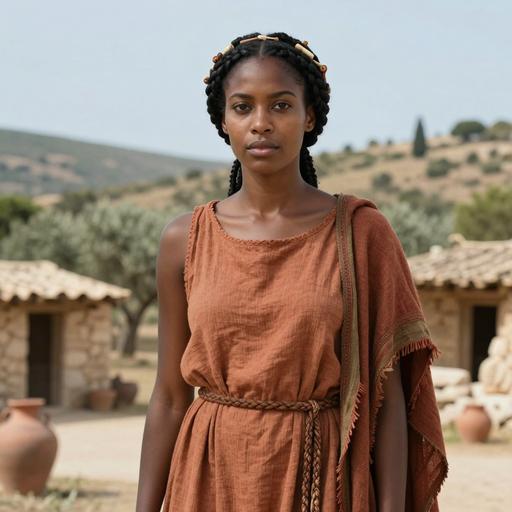
The Punic Period in Ibiza is a fascinating era that marks the island as an important hub in the western Mediterranean under the influence of the Phoenician and later the Carthaginian civilizations. This period generally spans from the late 7th century BCE, when the first Phoenicians settled on the island, up until the Roman conquest in the late 3rd century BCE.
Introduction to the Punic Ibiza
Ibiza, known as \Eivissa" in Catalan, owes its early cultural and historical prominence to the Phoenician settlers, who were skilled maritime traders from the Levant (modern-day Lebanon). These early settlers established several colonies across the Mediterranean, one of which was Ibiza, exploiting its strategic location for trade routes.
Foundational Overview
The Phoenicians arrived on the island around 654 BCE and founded the settlement of "Ibossim," which later became known as "Ibiza." Its position allowed it to effectively control and facilitate trade among various Mediterranean cultures, including the Iberians, Greeks, and the indigenous Balearic people. The Phoenicians introduced advanced agricultural techniques, such as vine growing and olive cultivation, which have had lasting impacts on Ibiza's economy and landscape.
Economic and Cultural Flourishing
Under Phoenician and later Carthaginian rule, Ibiza developed into a significant trade and economic center. The island's prosperity was largely driven by the production and export of salt—a highly prized commodity in ancient times—alongside wine, oil, and textiles. Ibiza's location also made it an essential port for ships sailing between North Africa, Italy, and the Iberian Peninsula.
Culturally, Ibiza during the Punic period was a melting pot where Phoenician, Iberian, and later Carthaginian influences blended. This is evidenced by archaeological finds, including pottery, sculptures, and religious artifacts that showcase a synthesis of artistic and architectural styles.
Religion and Society
Religion played a vital role during the Punic period in Ibiza, strongly influenced by both Phoenician and Carthaginian practices. The worship of Tanit and Baal Hammon was prominent, reflecting the deities of Carthage. Tanit, often referred to as the goddess of fertility and protector of the island, was particularly revered.
The island's society was likely structured in a manner similar to other Phoenician and Carthaginian colonies, with a hierarchy that included merchants, craftsmen, and farmers, potentially governed by local elites or magistrates under Carthage's suzerainty.
Archaeological Significance
Ibiza is rich in archaeological sites that date back to this period. The Puig des Molins necropolis is one of the most extensive and well-preserved Punic burial grounds in the Mediterranean, giving insight into the island’s funerary practices and religious beliefs. The site contains thousands of tombs with artifacts such as jewelry, amulets, and ceramics that provide a window into the life and commerce of its inhabitants.
Another significant site is Sa Caleta, a Phoenician settlement that offers invaluable information about early urban planning and architecture practices employed by these ancient colonizers.
Transition to Roman Rule
The Punic period came to an abrupt end when Ibiza, like many other territories of Carthage, fell under Roman control following the Second Punic War. The island was captured by the Romans in 217 BCE, marking the beginning of a new chapter in its history. However, the legacy of the Phoenician and Carthaginian period continues to be a crucial component of Ibiza's historical narrative, seen in the island’s archaeological treasures and its continued cultural resonance.
Conclusion
The Punic Period in Ibiza is an era characterized by economic prosperity, cultural fusion, and significant contributions to regional trade. The influences of the Phoenician and Carthaginian settlers laid the foundations for the growth and development of the island, positioning it as a vital crossroads in ancient times and leaving a lasting imprint on its cultural and historical landscape."