Menu
mtDNA Haplogroup • Maternal Lineage

F1B1A

mtDNA Haplogroup F1B1A

~6,000 years ago
East to Southeast Asia
1 subclades
17 ancient samples
Scroll to explore
Chapter I

The Story

The journey of mtDNA haplogroup F1B1A

Origins and Evolution

mtDNA haplogroup F1B1A sits as a downstream branch of F1B1, itself a constituent of the broader F1 lineage that diversified in East to Southeast Asia during the early Holocene. Based on the parent clade's estimated time depth (~9 kya) and the phylogenetic position of F1B1A, a reasonable estimate places the origin of F1B1A in the mid-Holocene (~6 kya). Its emergence likely reflects continued local differentiation of maternal lineages in coastal and riverine populations of eastern Eurasia after the Last Glacial Maximum, followed by later dispersal events.

Subclades

F1B1A may include one or more downstream sub-branches identifiable by private control-region and coding-region mutations in population surveys and mitogenome sequencing studies. Because whole-mitochondrial-genome surveys in many parts of Island Southeast Asia and Near Oceania are still being expanded, the internal structure of F1B1A is incompletely resolved in some datasets; however, published mitogenomes and control-region screens indicate a family of closely related haplotypes consistent with localized expansion and island-specific lineages.

Geographical Distribution

F1B1A is principally an East and Southeast Asian maternal lineage with notable representation in insular populations. Its modern distribution pattern is consistent with two overlapping processes: postglacial north–south population movements and the later Austronesian maritime expansion. Observed occurrences include:

  • Mainland East Asia (Han and neighboring groups) at low-to-moderate frequencies in some regions.
  • Japan and the Ryukyu/Okinawan islands where sublineages of F1 are occasionally reported.
  • Mainland Southeast Asia (Vietnam, Thailand, Laos) at low to moderate frequencies.
  • Island Southeast Asia (Philippines, eastern Indonesia, Malaysia) with higher representation in some island groups.
  • Near Oceania (parts of Melanesia and Micronesia) where F1-derived lineages are detected at low to moderate frequencies, likely reflecting Austronesian-mediated gene flow.

Regional frequencies tend to be heterogeneous: some island populations show localized higher frequencies due to founder effects and drift, while continental populations typically have lower, more diffuse frequencies.

Historical and Cultural Significance

The distribution and time depth of F1B1A tie it to major Holocene demographic processes in eastern Eurasia. Its evolution and spread correspond with:

  • Neolithic coastal and riverine expansions in East and Southeast Asia, when sedentary foraging and early farming communities expanded and diversified maternal lineages.
  • The Austronesian maritime expansion (mid-to-late Holocene), which redistributed many East/Southeast Asian maternal haplogroups into Island Southeast Asia and across Near Oceania. In this context, F1B1A often appears alongside other Austronesian-associated mtDNA lineages (for example, certain B4a and M7 subclades), reflecting mixed founding female pools in migrating populations.

Archaeogenetic links are still being refined, but presence of F1-derived lineages in ancient and modern Lapita-associated and other insular samples supports a role in prehistoric seafaring expansions.

Conclusion

F1B1A is a mid-Holocene maternal lineage derived from the F1B1 branch, concentrated in East and Southeast Asia with notable island distributions reflecting Austronesian-era dispersals and earlier coastal expansions. Continued whole-mitogenome sampling across island and mainland populations will clarify its internal diversity, precise origin locale(s), and the timings of its local radiations, but current evidence frames F1B1A as an informative marker for Holocene maternal population dynamics in eastern Eurasia and Western Oceania.

Key Points

  • Origins and Evolution
  • Subclades
  • Geographical Distribution
  • Historical and Cultural Significance
  • Conclusion
Chapter II

Tree & Relationships

Phylogenetic context and subclades

Evolution Path

This haplogroup's evolutionary journey from its earliest ancestor to the present.

Steps Haplogroup Age Estimate Archaeology Era Time Passed Immediate Descendants Tested Modern Descendants Ancient Connections
1 F1B1A Current ~6,000 years ago 🪨 Chalcolithic 6,000 years 1 5 17
2 F1B1 ~9,000 years ago 🌾 Neolithic 9,000 years 5 27 0
3 F1B ~15,000 years ago 🏹 Mesolithic 15,000 years 1 27 8
4 F1 ~25,000 years ago 🦴 Paleolithic 25,000 years 7 115 10
5 N ~60,000 years ago 🦴 Paleolithic 60,000 years 15 15,452 13
6 L3 ~70,000 years ago 🦴 Paleolithic 70,000 years 11 17,621 6
7 L ~160,000 years ago 🦴 Paleolithic 160,000 years 7 18,987 5

Siblings (4)

Other branches from the same parent haplogroup

Chapter III

Where in the World

Geographic distribution and modern presence

Place of Origin

East to Southeast Asia

Modern Distribution

The populations where mtDNA haplogroup F1B1A is found include:

  1. Han Chinese and other East Chinese populations
  2. Japanese (including some Ryukyu/Okinawan groups)
  3. Koreans (occasional, low frequency)
  4. Vietnamese and other mainland Southeast Asian groups (Thai, Lao)
  5. Filipinos and other Austronesian-speaking populations in Island Southeast Asia
  6. Indonesians and Malays (particularly eastern Indonesian islands)
  7. Austronesian-derived populations in Near Oceania (parts of Melanesia and Micronesia)
  8. Tibeto-Burman and Himalayan fringe groups (low to moderate frequency)
  9. Scattered Central Asian and southern Siberian groups (rare, low frequency)
  10. Occasional reports in South Asian populations (rare, very low frequency)
CHAPTER IV

When in Time

Your haplogroup in the context of human history

~10k years ago

Neolithic Revolution

Agriculture begins, settled communities form

~6k years ago

Haplogroup F1B1A

Your mtDNA haplogroup emerged in East to Southeast Asia

East to Southeast Asia
~5k years ago

Bronze Age

Metalworking, writing, and early civilizations

~3k years ago

Iron Age

Iron tools, expanded trade networks

~2k years ago

Classical Antiquity

Greek and Roman civilizations flourish

Present

Present Day

Modern era

Your Haplogroup
Historical Era
Chapter IV-B

Linked Cultures

Ancient cultures associated with mtDNA haplogroup F1B1A

Cultural Heritage

These ancient cultures have been linked to haplogroup F1B1A based on matching ancient DNA samples from archaeological excavations. The presence of this haplogroup in these cultures provides insights into the migrations and population movements of populations carrying this haplogroup.

Chinese Neolithic Dongmaili Culture Dornod Culture Early Buryat Lena River Culture Mongolian Neolithic Northern Mongolian Culture Saka Shamanka Culture Slab Grave Culture Songshugou Culture Transbaikal Culture
Culture assignments are based on archaeological context of ancient DNA samples and may represent regional associations during specific time periods.
Chapter V

Sample Catalog

Top 17 ancient DNA samples directly related to haplogroup F1B1A or parent clades

17 / 17 samples
Portrait Sample Country Era Date Culture mtDNA Match
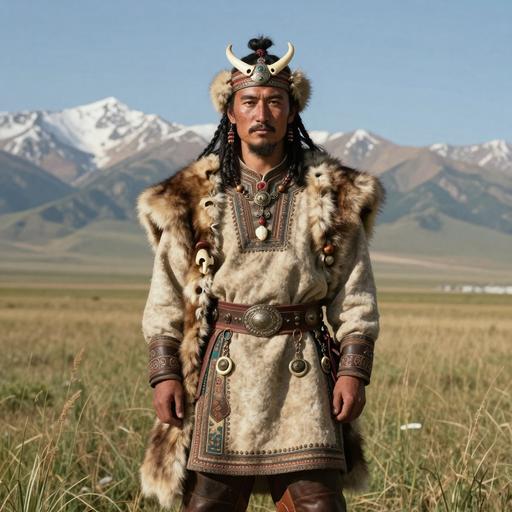
Portrait of ancient individual DA104 from Kyrgyzstan, dated 1 CE - 700 CE
DA104
Kyrgyzstan The Hun Period in Kyrgyzstan 1 CE - 700 CE Hunnic Period F1b1-a Direct
Portrait of ancient individual DA104 from Kyrgyzstan, dated 1 CE - 700 CE
DA104
Kyrgyzstan The Huns 1 CE - 700 CE F1b1-a Direct
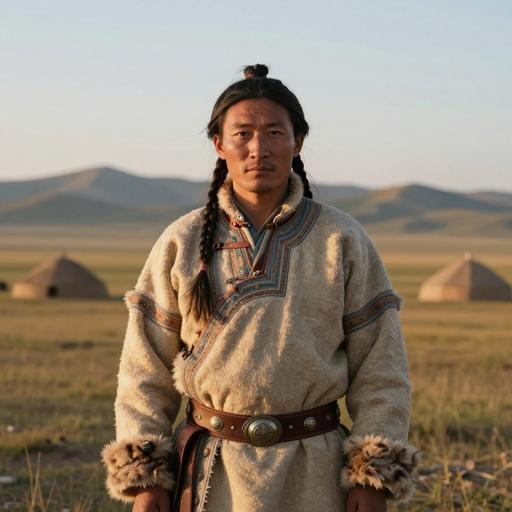
Portrait of ancient individual DA105 from Kyrgyzstan, dated 125 CE - 321 CE
DA105
Kyrgyzstan The Hun Period in Kyrgyzstan 125 CE - 321 CE Hunnic Period F1b1-a Direct
Portrait of ancient individual DA105 from Kyrgyzstan, dated 125 CE - 321 CE
DA105
Kyrgyzstan The Huns 125 CE - 321 CE F1b1-a Direct
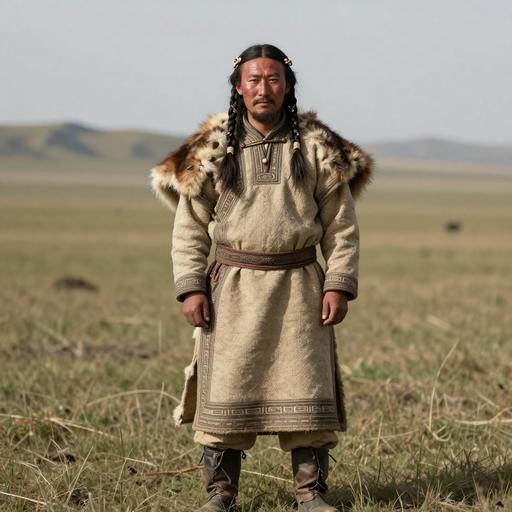
Portrait of ancient individual I6233 from Mongolia, dated 370 BCE - 197 BCE
I6233
Mongolia Early Iron Age Sagly Culture 4, Mongolia 370 BCE - 197 BCE Sagly Culture F1b1-a Direct
Portrait of ancient individual CHN008 from Mongolia, dated 400 BCE - 1500 CE
CHN008
Mongolia Early Iron Age to Xiongnu to Late Medieval Uvs, Mongolia 400 BCE - 1500 CE Uvs Multi-Period F1b1-a2 Direct
Portrait of ancient individual DA11 from Kazakhstan, dated 777 BCE - 423 BCE
DA11
Kazakhstan Saka Culture in Kazakhstan 777 BCE - 423 BCE Saka F1b1-a Direct
Portrait of ancient individual DA11 from Kazakhstan, dated 777 BCE - 423 BCE
DA11
Kazakhstan The Scythian and Saka Cultures 777 BCE - 423 BCE F1b1-a Direct
Portrait of ancient individual I12969 from Mongolia, dated 1124 BCE - 939 BCE
I12969
Mongolia Early Iron Age Slab Grave Culture 1, Mongolia 1124 BCE - 939 BCE Slab Grave Culture F1b1-a Direct
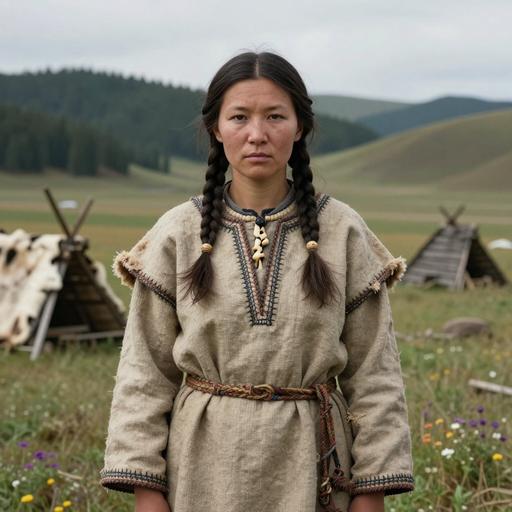
Portrait of ancient individual IUO001 from Russia, dated 5021 BCE - 4849 BCE
IUO001
Russia Early Neolithic Lena River, Siberia, Russia 5021 BCE - 4849 BCE Lena River Culture F1b1-a Direct
Chapter VI

Carrier Distribution Map

Geographic distribution of 17 ancient DNA samples carrying haplogroup F1B1A

Time Period Filter
All Time Periods
Showing all samples
Each marker represents an ancient individual
Chapter VII

Temporal Distribution

Distribution of carriers across archaeological periods

Chapter VIII

Geographic Distribution

Distribution of carriers by country of origin

Chapter IX

Country × Era Distribution

Cross-tabulation of carrier countries and archaeological periods

Data

Data & Provenance

Source information and data quality

Last Updated 2026-02-16
Confidence Score 50/100
Coverage Low
Data Source

We use the latest phylotree for MTDNA haplogroup classification and data.