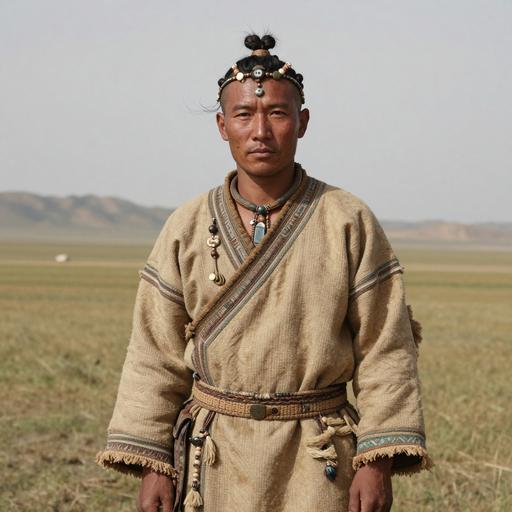
The Story
The journey of mtDNA haplogroup F1G1
Origins and Evolution
mtDNA haplogroup F1G1 is a downstream lineage of the broader F1G clade within haplogroup F, a maternal lineage that diversified in East to Southeast Asia during the Holocene. Based on the phylogenetic position of F1G and population-level sampling, F1G1 most likely arose in Island Southeast Asia roughly in the mid-Holocene (on the order of ~5–6 kya). Its origin corresponds with periods of intensified coastal adaptation, regional population growth after the Last Glacial Maximum, and the later island-hopping maritime movements that characterize the Austronesian expansion.
Genetic studies that sample complete mitogenomes or high-resolution HVS and coding-region markers find that F1G1 shows a pattern of local diversification: distinct sub-lineages are frequently restricted to single islands or island groups, consistent with founder effects and genetic drift in small, relatively isolated island populations.
Subclades (if applicable)
F1G1 exhibits internal structure in published population surveys and mitogenome phylogenies, with several localized sublineages (often reported as island- or region-specific clades). Because research continues to refine the mitochondrial tree with more whole-mitochondrial-genome data, the formal naming and resolution of those subclades evolves; current observations emphasize micro-endemism (island-specific lineages) rather than deep, widely distributed subclades. Further full mitogenome sequencing across under-sampled islands will clarify the internal branching of F1G1.
Geographical Distribution
F1G1 has a clear concentration in Island Southeast Asia, with its highest frequencies and diversity found among Austronesian-speaking groups in the Philippines, eastern Indonesia (Sulawesi, Maluku, Lesser Sundas), and indigenous Taiwanese/Formosan populations. Lower but detectable frequencies occur in coastal southern China and mainland Southeast Asia (Vietnam, Thailand, Laos), consistent with historical coastal contacts and gene flow. The haplogroup also appears at low frequencies in Near Oceania and Micronesia where Austronesian-speaking voyagers admixed with local groups, and rare occurrences are reported from Melanesia, Japan, Korea and sporadically in South Asia due to later contacts or isolated lineages.
Two archaeological individuals in current databases carry F1G1, indicating the lineage has appeared in ancient contexts and can be used to track Holocene coastal movements when ancient DNA preservation and sampling permit.
Historical and Cultural Significance
F1G1's geographic pattern ties it closely to the Austronesian expansion and to coastal/insular subsistence systems (maritime foraging, early horticulture, and later seafaring communities). Its strong presence in Formosan and Philippine groups supports scenarios in which maternal lineages diversified in Taiwan and the northern Philippines or in nearby island regions before or during the outward spread of Austronesian languages and culture (roughly beginning ~4–5 kya in archaeological and linguistic models).
Because maternal lineages can persist in island populations with limited male-mediated gene flow, F1G1 serves as a marker of female-mediated continuity on islands and of localized founder effects during island colonization. Low-frequency occurrences in neighboring mainland and Northeast Asian populations likely reflect later historical trade, marriage exchanges, and small-scale migrations rather than primary expansions from those regions.
Conclusion
mtDNA F1G1 is a Holocene maternal lineage rooted in Island Southeast Asia with a distribution and internal structure shaped by maritime dispersal, island colonization, and localized drift. It complements other Austronesian-associated maternal haplogroups in reconstructing patterns of female ancestry across the Philippines, eastern Indonesia, Taiwan, and into parts of Near Oceania and coastal East Asia. Increased mitogenome sampling, particularly from underrepresented islands and ancient contexts, will further refine its phylogeny and the timing of its dispersals.
Key Points
- Origins and Evolution
- Subclades (if applicable)
- Geographical Distribution
- Historical and Cultural Significance
- Conclusion