The Story
The journey of mtDNA haplogroup J
Origins and Evolution
mtDNA haplogroup J is a descendant of the JT macro-haplogroup and likely arose in the Near East during the Upper Paleolithic or early Holocene, with coalescence estimates commonly placed around ~40–50 kya. As a branch of JT, J shares ancestral mutations that separate it from sister haplogroup T, but J developed its own defining control-region and coding-region mutations early in its history. The age and geographic placement of J make it well positioned to participate both in post-glacial re-expansion into Europe and in the Neolithic demographic processes that spread farming from Anatolia and the Near East into Europe and North Africa.
Subclades
The haplogroup is commonly divided into two main subclades, J1 and J2, each with further internal structure (e.g., J1b, J1c, J2b, etc.). Broad patterns observed in population studies include:
- J1: Often further subdivided (J1b, J1c, etc.), with some lineages (for example, J1c) being relatively frequent in parts of Europe and associated in ancient DNA studies with Mesolithic and Neolithic contexts in Europe. J1 subclades display a relatively wide geographic footprint across Europe and the Near East.
- J2: Tends to show stronger representation in the Near East, the Caucasus, and North Africa, though some J2 lineages are also found in Europe and Central Asia. The internal branching structure of J2 suggests important regional diversification after the initial expansion out of the Near East.
Phylogeographic analyses and ancient DNA have refined these subclade assignments and shown that some subbranches of J expanded at different times (post-glacial vs. Neolithic vs. Bronze Age expansions).
Geographical Distribution
Today haplogroup J is widely distributed but with varying frequencies:
- Near East and Caucasus: relatively high frequencies and diversity, consistent with an origin and long-term presence.
- Europe: moderate and regionally variable frequencies; certain European regions (parts of southern, central and northern Europe) show appreciable levels of specific J subclades, reflecting multiple migration episodes.
- North Africa and Central Asia: lower but detectable frequencies, often reflecting historical gene-flow from the Near East or ancient movements across the Mediterranean and into adjacent regions.
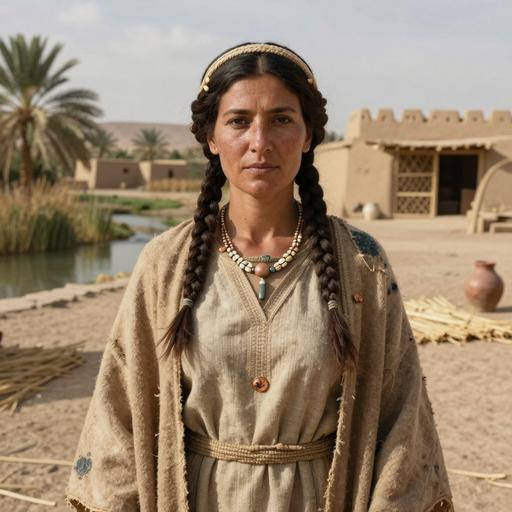
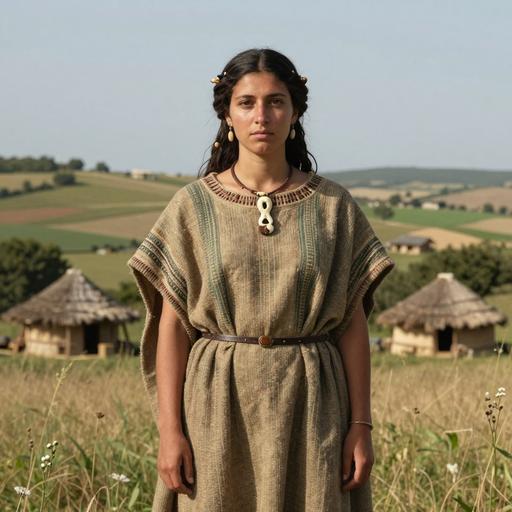
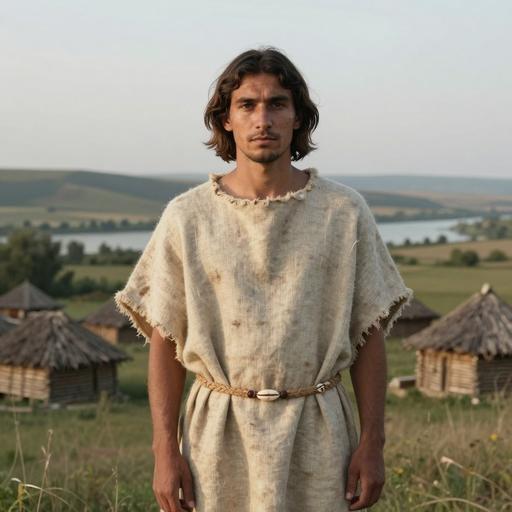
Ancient DNA from Neolithic sites in Anatolia and early European farming contexts frequently contains J lineages, supporting a role in farming dispersals, while some Mesolithic and post-glacial European samples also carry J subclades, indicating an older presence too.
Historical and Cultural Significance
Haplogroup J has been invoked in studies of several major prehistoric demographic processes:
- Post-glacial recolonization of Europe: certain J lineages appear in post-LGM contexts and may have contributed to the re-settlement of parts of Europe as climates warmed.
- Neolithic farming expansions: J is detected among early Anatolian and European farmers, making it one of the lineages associated with the spread of agriculture into Europe from the Near East.
- Regional continuity and admixture: in the Caucasus, the Levant, and parts of North Africa, the presence and diversity of J reflect both ancient settlement and later admixture events (including movements in the Bronze and Iron Ages).
In modern populations, J is present across many European and Middle Eastern communities and is notably observed among various Jewish groups, including Ashkenazi Jews, where specific J sublineages contribute to the maternal genetic landscape.
Some studies have explored modest associations between mtDNA J and phenotypes (for example, metabolic traits or longevity-related signals), but such associations are complex, population-specific, and not universally replicated; they should be treated as tentative and requiring further research.
Conclusion
mtDNA haplogroup J is a Near Eastern–centered maternal lineage with a multi-phase history: an Upper Paleolithic origin, participation in post-glacial population movements, and a clear role in Neolithic farmer dispersals into Europe and neighboring regions. Its internal diversity (J1, J2, and downstream branches) and geographic distribution make J a useful marker for tracing maternal ancestry and prehistoric demographic events across the Near East, Europe, the Caucasus, North Africa, and parts of Central Asia.
Key Points
- Origins and Evolution
- Subclades
- Geographical Distribution
- Historical and Cultural Significance
- Conclusion