Menu
mtDNA Haplogroup • Maternal Lineage

L0A2A1A

mtDNA Haplogroup L0A2A1A

~4,000 years ago
East Africa (Horn of Africa / East Africa)
1 subclades
3 ancient samples
Scroll to explore
Chapter I

The Story

The journey of mtDNA haplogroup L0A2A1A

Origins and Evolution

mtDNA haplogroup L0A2A1A is a downstream derivative of L0A2A1, itself a branch of the broader L0A clade — one of the deep maternal lineages that is largely restricted to Africa. Based on the phylogenetic placement of L0A2A1A under L0A2A1 (estimated ~6 kya) and patterns of diversity observed in modern and ancient East African samples, L0A2A1A most likely arose in the Horn/Eastern Africa during the mid-to-late Holocene (several thousand years after the Last Glacial Maximum). Its emergence is consistent with regional demographic processes in the early to mid-Holocene, including population growth, local expansions of pastoralist and agricultural groups, and continuing gene flow among Cushitic, Nilotic and other East African communities.

Subclades (if applicable)

L0A2A1A is an intermediate/derived clade of L0A2A1. As of current published phylogenies and public sequence databases, L0A2A1A typically appears as a more narrowly defined terminal or near-terminal branch with limited deeply characterized downstream diversity; small locally restricted sub-branches occasionally appear in higher-resolution datasets. Continued whole-mtDNA sequencing in under-sampled African populations may reveal additional subclades and finer geographic structure.

Geographical Distribution

The distribution of L0A2A1A mirrors patterns seen for its parent clade but is most concentrated in the Horn and adjacent eastern African regions. High relative frequencies are observed in some Cushitic- and Afroasiatic-speaking groups of the Horn (e.g., Oromo, Somali, Amhara), with moderate or low frequencies in Nilotic groups, eastern Bantu-speaking populations (reflecting regional admixture), and among some southern African and Central African populations at low frequencies due to historical gene flow. L0A-derived lineages, including L0A2A1A, are also detected in Madagascar and Indian Ocean island populations where East African maternal input mixed with Austronesian and other sources. Finally, low-frequency occurrences are found in the African diaspora in the Americas and sporadically in North Africa and the Near East attributable to historic contacts and recent movements.

Historical and Cultural Significance

Although mtDNA alone cannot define cultural change, the timing and location of L0A2A1A's origin suggest it was part of the maternal genetic background of communities involved in important Holocene processes in eastern Africa: the spread of pastoralism and localized agricultural practices, regional mobility along riverine and coastal routes, and later interactions associated with the Bantu expansion and Indian Ocean exchanges. Its presence in Madagascar and along the Swahili coast aligns with maritime and island colonization events that mixed East African maternal lineages with Austronesian mitochondrial types. In southern Africa and among Khoe‑San groups where L0A2A1A occurs at low levels, its presence mainly reflects later admixture rather than deep local origin.

Conclusion

L0A2A1A is a geographically informative maternal lineage that helps trace mid-to-late Holocene maternal gene flow out of the Horn/East Africa into central and southern Africa and across the Indian Ocean to Madagascar. It is most useful in regional studies of East African demographic history, admixture, and migration, and its full diversity will become clearer as more whole-mtDNA sequences from under-sampled African populations are reported.

Key Points

  • Origins and Evolution
  • Subclades (if applicable)
  • Geographical Distribution
  • Historical and Cultural Significance
  • Conclusion
Chapter II

Tree & Relationships

Phylogenetic context and subclades

Evolution Path

This haplogroup's evolutionary journey from its earliest ancestor to the present.

Steps Haplogroup Age Estimate Archaeology Era Time Passed Immediate Descendants Tested Modern Descendants Ancient Connections
1 L0A2A1A Current ~4,000 years ago 🔶 Bronze Age 4,500 years 1 4 3
2 L0A2A1 ~6,000 years ago 🪨 Chalcolithic 6,000 years 1 9 0
3 L0A2A ~12,000 years ago 🌾 Neolithic 12,000 years 2 39 2
4 L0A2 ~30,000 years ago 🦴 Paleolithic 30,000 years 2 48 0
5 L0A ~70,000 years ago 🦴 Paleolithic 70,000 years 2 166 13
6 L0 ~170,000 years ago 🦴 Paleolithic 170,000 years 4 245 6
7 L ~160,000 years ago 🦴 Paleolithic 160,000 years 7 18,987 5
Chapter III

Where in the World

Geographic distribution and modern presence

Place of Origin

East Africa (Horn of Africa / East Africa)

Modern Distribution

The populations where mtDNA haplogroup L0A2A1A is found include:

  1. East African populations (e.g., Oromo, Amhara, Somali and other Horn of Africa groups)
  2. Various Nilotic and Cushitic groups of eastern Africa
  3. Bantu-speaking populations in central and southern Africa (via admixture and regional gene flow)
  4. Some Central African forager groups (low-to-moderate frequencies)
  5. Khoe‑San and southern African groups at low-to-moderate frequencies (often reflecting historical admixture)
  6. Malagasy (Madagascar) and other Indian Ocean island populations with East African maternal input
  7. African-descended populations in the Americas (low frequency, via the transatlantic slave trade)
  8. Sporadic occurrences in North Africa and the Near East (historical admixture)
CHAPTER IV

When in Time

Your haplogroup in the context of human history

~10k years ago

Neolithic Revolution

Agriculture begins, settled communities form

~5k years ago

Bronze Age

Metalworking, writing, and early civilizations

~4k years ago

Haplogroup L0A2A1A

Your mtDNA haplogroup emerged in East Africa (Horn of Africa / East Africa)

East Africa (Horn of Africa / East Africa)
~3k years ago

Iron Age

Iron tools, expanded trade networks

~2k years ago

Classical Antiquity

Greek and Roman civilizations flourish

Present

Present Day

Modern era

Your Haplogroup
Historical Era
Chapter IV-B

Linked Cultures

Ancient cultures associated with mtDNA haplogroup L0A2A1A

Cultural Heritage

These ancient cultures have been linked to haplogroup L0A2A1A based on matching ancient DNA samples from archaeological excavations. The presence of this haplogroup in these cultures provides insights into the migrations and population movements of populations carrying this haplogroup.

Cameroon Stone Mounds Hora Culture Mtwapa
Culture assignments are based on archaeological context of ancient DNA samples and may represent regional associations during specific time periods.
Chapter V

Sample Catalog

Top 3 ancient DNA samples directly related to haplogroup L0A2A1A or parent clades

3 / 3 samples
Portrait Sample Country Era Date Culture mtDNA Match
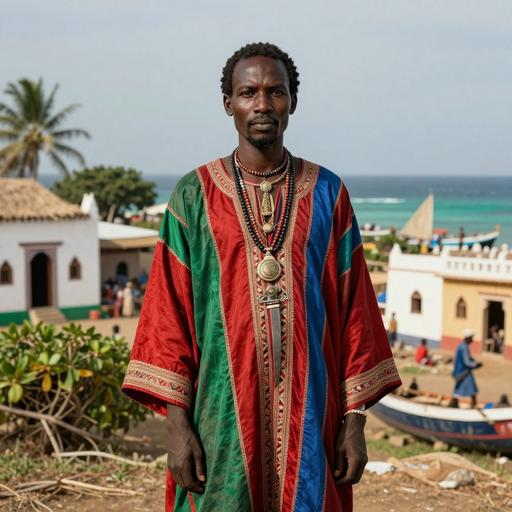
Portrait of ancient individual I17412 from Kenya, dated 1250 CE - 1650 CE
I17412
Kenya Swahili Culture of Mtwapa 1250 CE - 1650 CE Mtwapa L0a2a1a2 Direct
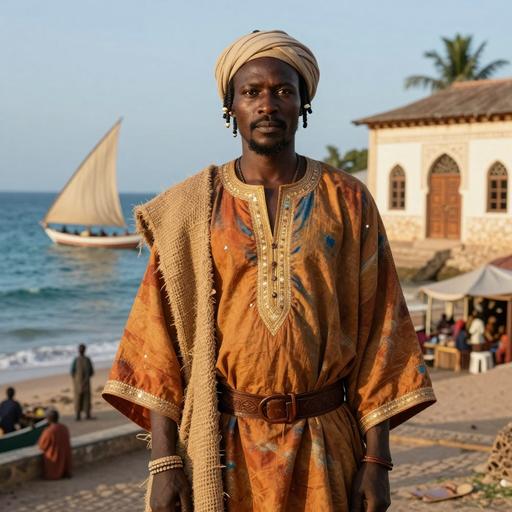
Portrait of ancient individual I19415 from Kenya, dated 1408 CE - 1442 CE
I19415
Kenya Swahili Culture of Mtwapa 1408 CE - 1442 CE Mtwapa L0a2a1a2 Direct
Portrait of ancient individual I23662 from Kenya, dated 1450 CE - 1700 CE
I23662
Kenya Swahili Culture of Mtwapa 1450 CE - 1700 CE Mtwapa L0a2a1a2 Direct
Chapter VI

Carrier Distribution Map

Geographic distribution of 3 ancient DNA samples carrying haplogroup L0A2A1A

Time Period Filter
All Time Periods
Showing all samples
Each marker represents an ancient individual
Chapter VII

Temporal Distribution

Distribution of carriers across archaeological periods

Chapter VIII

Geographic Distribution

Distribution of carriers by country of origin

Chapter IX

Country × Era Distribution

Cross-tabulation of carrier countries and archaeological periods

Data

Data & Provenance

Source information and data quality

Last Updated 2026-02-16
Confidence Score 50/100
Coverage Low
Data Source

We use the latest phylotree for MTDNA haplogroup classification and data.