The Story
The journey of mtDNA haplogroup L0K1A
Origins and Evolution
mtDNA haplogroup L0K1A is a downstream branch of L0K1, itself part of the broader L0K/L0 family that represents some of the deepest maternal lineages in modern humans. Based on its phylogenetic position beneath L0K1 and comparisons with time estimates for related L0 lineages, L0K1A most plausibly arose in southern Africa during the Late Pleistocene (tens of thousands of years ago). Its age estimate is inherently dependent on molecular-clock calibrations and available sampling, but a Late Pleistocene origin (on the order of a few 10s of kya) fits the pattern seen for many L0 subclades associated with Khoe‑San and Later Stone Age populations.
The lineage represents a long-standing maternal branch that persisted through the Later Stone Age into the Holocene. Like other deep L0 branches, L0K1A preserves signal of ancient population structure in southern Africa; its persistence reflects both small, structured hunter‑gatherer communities and episodes of continuity in maternal ancestry despite later regional demographic changes.
Subclades
As a named subclade (L0K1A) of L0K1, this haplogroup may itself include further downstream sublineages defined by additional control‑region and coding‑region mutations. However, published resolution for many African mtDNA clades remains incomplete in public databases, and precise internal structure of L0K1A is best resolved by high‑coverage complete mtDNA genomes. Future targeted sequencing of Khoe‑San and neighboring populations will likely reveal more fine‑scale branching within L0K1A.
Geographical Distribution
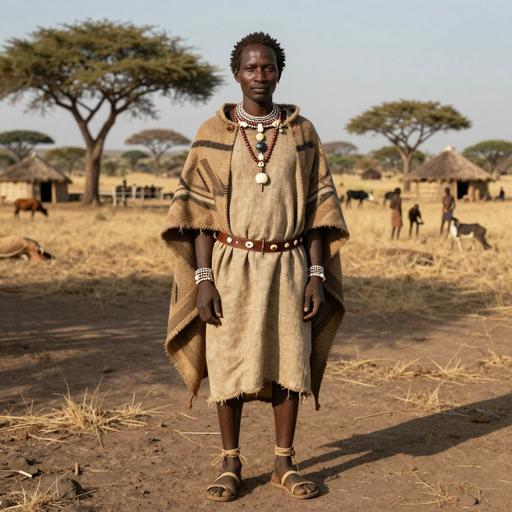
L0K1A is concentrated in southern Africa, particularly among Khoe‑San groups and other Later Stone Age forager communities. The highest frequencies and greatest phylogenetic diversity are expected where continuity of indigenous maternal lineages remained strongest. Lower‑frequency occurrences are documented in neighboring Bantu‑speaking populations as a consequence of sex‑biased admixture (maternal gene flow from forager groups into incoming agriculturalists) and sporadic reporting exists from some East and Central African forager groups. Very low frequencies in the African diaspora in the Americas reflect historical transatlantic admixture when present, and isolated detections in North Africa or the Near East are best interpreted as rare instances of long‑distance movement or historical admixture rather than evidence of a major prehistoric spread.
It is important to emphasize that observed modern geographical patterns are influenced by sampling density, historical demographic events, and the differential survival of maternal lineages.
Historical and Cultural Significance
The association of L0K1A with Khoe‑San and Later Stone Age contexts ties it to some of the longest‑continuing human cultural traditions in southern Africa. Ancient DNA studies from southern African Later Stone Age remains frequently recover deep L0 lineages (notably L0d and L0k groups), documenting maternal continuity from Pleistocene and Holocene forager populations into present‑day Khoe‑San groups. L0K1A contributes to this picture by representing a lineage that likely persisted through cultural transitions (for example, shifts in lithic technology and subsistence) and into periods when pastoralism and later agricultural expansions introduced new genetic inputs.
In demographic terms, L0K1A serves as a marker of pre‑agricultural southern African maternal ancestry; where present in Bantu‑speaking and pastoralist groups it testifies to localized female‑mediated admixture and social interaction between indigenous foragers and later incoming groups.
Conclusion
mtDNA L0K1A is a regionally focal, phylogenetically deep maternal lineage that illuminates ancient maternal structure and continuity in southern Africa. Its study helps clarify the demographic history of Khoe‑San and neighboring populations and underscores the need for broader, high‑resolution mtDNA sampling and ancient DNA integration to refine its internal branching, age estimates, and finer‑scale geographic history. Observed rare occurrences outside southern Africa are best viewed in the context of later admixture and historical movements rather than a primary signal of prehistoric range expansion.
Key Points
- Origins and Evolution
- Subclades
- Geographical Distribution
- Historical and Cultural Significance
- Conclusion