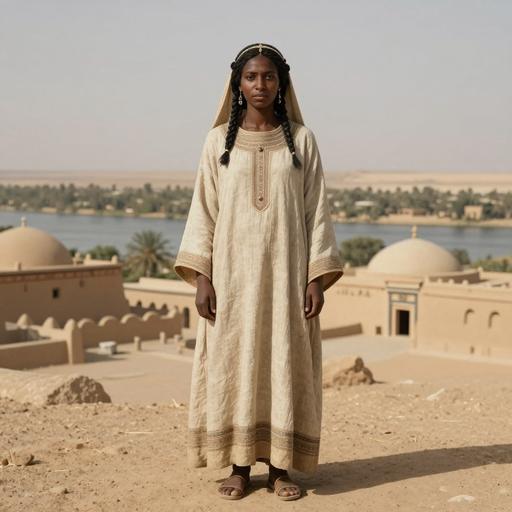
The Story
The journey of mtDNA haplogroup L2A1C3
Origins and Evolution
L2A1C3 is a subclade of mtDNA haplogroup L2A1C, itself a branch of the widely distributed African lineage L2A. Based on the phylogenetic position of L2A1C3 beneath L2A1C and calibrations from related mtDNA lineages, the coalescence of L2A1C3 is plausibly placed in the Late Holocene (on the order of a few thousand years ago). The lineage almost certainly arose within the West/Central African genetic landscape and was shaped by regional demographic processes of that period.
The haplogroup is defined by a set of diagnostic coding-region and control-region mutations reported in phylogenetic compilations (e.g., PhyloTree and region-specific surveys); like many subclades of L2A, L2A1C3 reflects maternal genealogical branching that occurred after the broader expansion of L2A lineages in Holocene Africa.
Subclades (if applicable)
At present L2A1C3 appears to be an intermediate/terminal subclade with relatively limited internal branching in published datasets. Where deeper sampling has been performed, a few downstream variants have been reported at low frequency, but no widely distributed, well-differentiated child clades are universally recognized across studies. Increased sequencing of complete mitogenomes from understudied West and Central African populations may reveal additional substructure within L2A1C3.
Geographical Distribution
L2A1C3 shows a clear West/Central African focus in contemporary and ancient population samples. Its highest frequencies are observed among coastal West African groups and many Central African Bantu-speaking populations, while lower-frequency occurrences are reported in eastern and southern African Bantu communities and in African-descended populations across the Atlantic world. The lineage also appears sporadically in populations with historical contact or admixture with West/Central Africans (e.g., Cape Verde, some Caribbean and North American African-descent groups) and at very low levels in North Africa and adjacent parts of the Near East due to historical mobility and gene flow.
Historical and Cultural Significance
L2A1C3 should be interpreted as a maternal ancestry marker that tracks movements and demographic processes rather than a direct indicator of a single archaeological culture. Its distribution is consistent with the demographic expansions and migrations of the last several thousand years in sub-Saharan Africa, particularly the Bantu-speaking expansions that redistributed many L2A-derived maternal lineages across Central, Eastern, and Southern Africa. In the historical period, L2A1C3 is also pertinent to studies of the African diaspora — the transatlantic slave trade translocated many West/Central African maternal lineages, including L2A subclades, into the Americas and Atlantic islands.
Geneticists and genealogists use lineages like L2A1C3 to refine maternal ancestry assignments inside broader L2A frameworks and to help reconstruct regional matrilineal population structure and migration histories in Holocene Africa and the Atlantic diaspora.
Conclusion
L2A1C3 is a Holocene maternal subclade rooted in West/Central Africa that complements the broader L2A narrative of post-Pleistocene demographic change in sub-Saharan Africa. While currently observed at modest frequency relative to major L2A branches, it is informative for reconstructing regional maternal ancestry, Bantu-related dispersals, and the maternal components of African-descended populations outside Africa. Increased mitogenome sampling in West and Central Africa and in diaspora populations will clarify its internal diversity and historical trajectories.
Key Points
- Origins and Evolution
- Subclades (if applicable)
- Geographical Distribution
- Historical and Cultural Significance
- Conclusion