Menu
mtDNA Haplogroup • Maternal Lineage

L3E1A1A

mtDNA Haplogroup L3E1A1A

~4,000 years ago
West/Central Africa
0 subclades
2 ancient samples
Scroll to explore
Chapter I

The Story

The journey of mtDNA haplogroup L3E1A1A

Origins and Evolution

mtDNA haplogroup L3E1A1A is a downstream subclade of L3E1A1, itself part of the broader L3E branch within macro-haplogroup L3. L3 is a deep African maternal lineage that gave rise to many modern African lineages and also, through branches M and N, to non-African mtDNA diversity. Based on its phylogenetic position beneath L3E1A1 and the distribution of closely related lineages, L3E1A1A most likely arose in West to Central Africa during the mid-to-late Holocene (a few thousand years ago). Its emergence post-dates the initial split of L3-derived African lineages and plausibly coincides with demographic processes in the region such as increased sedentism, forest-savanna dynamics, and the demographic movements that preceded and accompanied the Bantu expansions.

Two archaeogenetic identifications (ancient DNA hits) in the available database indicate that L3E1A1A has been observed in archaeological contexts, supporting its presence in the region through at least the late Holocene.

Subclades (if applicable)

As a terminal or near-terminal subclade in some databases, L3E1A1A may contain further internal diversity (private mutations and micro-lineages) detectable only with high-resolution complete mitogenome sequencing. Where deeper sequencing has been performed, researchers often find geographically structured sub-branches reflecting local demographic histories (e.g., forest vs. savanna populations). Because L3E1A1A is a fine-scale subclade of L3E1A1, many studies will report it only when whole mitochondrial genomes or targeted high-resolution SNP panels are used.

Geographical Distribution

Primary concentrations of L3E1A1A are in West and Central Africa, particularly among populations in coastal and forested zones. Frequencies are highest in parts of Nigeria, Ghana and neighbouring areas, and the lineage is also present among Central African rainforest populations and many Bantu-speaking groups across Central and Southern Africa at variable frequencies. The haplogroup has also been carried into the Americas and the Caribbean via the transatlantic slave trade, where it appears at low-to-moderate frequencies within African-descended communities. Low levels may be detected along some East African and North African coastal populations due to historic gene flow.

Historical and Cultural Significance

L3E1A1A's distribution reflects major demographic processes that shaped sub-Saharan Africa in the late Holocene. Its presence among Bantu-speaking populations and in regions affected by Bantu expansions suggests that part of its modern range was established or amplified during the agricultural and metallurgical expansions that began roughly 3,000–5,000 years ago. The detection of L3E1A1A in the African diaspora of the Americas highlights the impact of the transatlantic slave trade on global mtDNA diversity. In forested Central Africa, its persistence in both forager and farming communities points to complex interactions (gene flow and admixture) between different subsistence groups over millennia.

Conclusion

mtDNA haplogroup L3E1A1A is a regionally important maternal lineage within West and Central Africa whose current distribution and demographic signal were shaped by Holocene regional population dynamics, the Bantu expansions, and historic transcontinental movements. High-resolution mitogenomic data continue to refine its internal structure and improve understanding of its local history and migration pathways.

Key Points

  • Origins and Evolution
  • Subclades (if applicable)
  • Geographical Distribution
  • Historical and Cultural Significance
  • Conclusion
Chapter II

Tree & Relationships

Phylogenetic context and subclades

Evolution Path

This haplogroup's evolutionary journey from its earliest ancestor to the present.

Steps Haplogroup Age Estimate Archaeology Era Time Passed Immediate Descendants Tested Modern Descendants Ancient Connections
1 L3E1A1A Current ~4,000 years ago 🔶 Bronze Age 3,500 years 0 17 2
2 L3E1A1 ~8,000 years ago 🌾 Neolithic 8,000 years 1 17 0
3 L3E1A ~8,000 years ago 🌾 Neolithic 8,000 years 3 44 1
4 L3E1 ~15,000 years ago 🏹 Mesolithic 15,000 years 4 113 0
5 L3e ~30,000 years ago 🦴 Paleolithic 30,000 years 3 565 5
6 L3 ~70,000 years ago 🦴 Paleolithic 70,000 years 11 17,621 6
7 L ~160,000 years ago 🦴 Paleolithic 160,000 years 7 18,987 5

Subclades (0)

Terminal branch - no known subclades

Chapter III

Where in the World

Geographic distribution and modern presence

Place of Origin

West/Central Africa

Modern Distribution

The populations where mtDNA haplogroup L3E1A1A is found include:

  1. Yoruba and other West African groups (Nigeria, Ghana)
  2. Central African rainforest groups (including some pygmy/forest populations)
  3. Bantu-speaking populations across Central and Southern Africa
  4. Akan, Igbo and other West African ethnic groups
  5. Coastal East African communities (low to moderate frequencies)
  6. Some Southern African Bantu- and Khoe-adjacent groups (low to moderate frequencies)
  7. African-descended populations in the Americas and the Caribbean (due to the transatlantic slave trade)
  8. Low-frequency occurrences in North African and Near Eastern populations from historical admixture
CHAPTER IV

When in Time

Your haplogroup in the context of human history

~10k years ago

Neolithic Revolution

Agriculture begins, settled communities form

~5k years ago

Bronze Age

Metalworking, writing, and early civilizations

~3k years ago

Haplogroup L3E1A1A

Your mtDNA haplogroup emerged in West/Central Africa

West/Central Africa
~3k years ago

Iron Age

Iron tools, expanded trade networks

~2k years ago

Classical Antiquity

Greek and Roman civilizations flourish

Present

Present Day

Modern era

Your Haplogroup
Historical Era
Chapter IV-B

Linked Cultures

Ancient cultures associated with mtDNA haplogroup L3E1A1A

Cultural Heritage

These ancient cultures have been linked to haplogroup L3E1A1A based on matching ancient DNA samples from archaeological excavations. The presence of this haplogroup in these cultures provides insights into the migrations and population movements of populations carrying this haplogroup.

Afro-Mexican Corded Ware Jordanow-Michelsberg Culture Modern Period Mtwapa St. Helena Colonial Terminal Stone Age Xaro Culture
Culture assignments are based on archaeological context of ancient DNA samples and may represent regional associations during specific time periods.
Chapter V

Sample Catalog

Top 2 ancient DNA samples directly related to haplogroup L3E1A1A or parent clades

2 / 2 samples
Portrait Sample Country Era Date Culture mtDNA Match
Portrait of ancient individual SJN003 from Mexico, dated 1436 CE - 1472 CE
SJN003
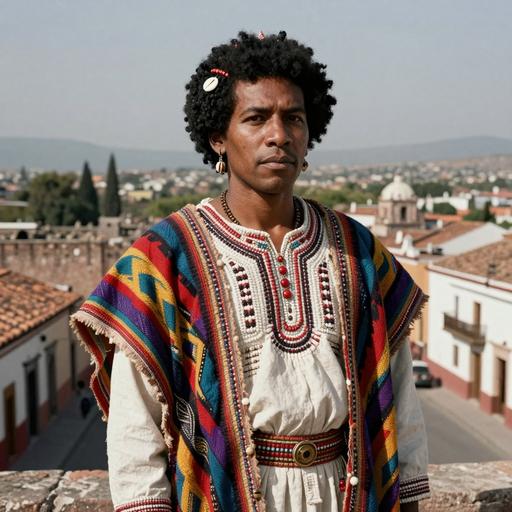
Mexico Afro-Mexican Community of Colonial Mexico City 1436 CE - 1472 CE Afro-Mexican L3e1a1a Direct
Portrait of ancient individual I15333 from USA, dated 1700 CE - 1850 CE
I15333
USA Modern Era 1700 CE - 1850 CE Modern Period L3e1a1a Direct
Chapter VI

Carrier Distribution Map

Geographic distribution of 2 ancient DNA samples carrying haplogroup L3E1A1A

Time Period Filter
All Time Periods
Showing all samples
Each marker represents an ancient individual
Chapter VII

Temporal Distribution

Distribution of carriers across archaeological periods

Chapter VIII

Geographic Distribution

Distribution of carriers by country of origin

Chapter IX

Country × Era Distribution

Cross-tabulation of carrier countries and archaeological periods

Data

Data & Provenance

Source information and data quality

Last Updated 2026-02-16
Confidence Score 50/100
Coverage Low
Data Source

We use the latest phylotree for MTDNA haplogroup classification and data.