The Story
The journey of mtDNA haplogroup L3I2
Origins and Evolution
mtDNA haplogroup L3I2 is a subclade of the broader L3I (L3i) lineage, itself a branch of the major African maternal macro-haplogroup L3. Based on its phylogenetic position and the age of nearby L3I nodes, L3I2 most plausibly arose in the Horn of Africa or adjacent northeastern African corridor during the early Holocene (roughly ~8 kya), following Late Pleistocene and early Holocene demographic shifts in East Africa. Its emergence postdates the initial diversification of L3 in eastern Africa and represents a localized maternal expansion and differentiation within populations of the Horn.
Mutational patterns that define L3I2 are derived from the L3I backbone; the clade shows limited deep branching in published surveys, indicating a relatively recent and regionally concentrated history compared with older African lineages such as L0 and other L3 subclades.
Subclades (if applicable)
At present, L3I2 appears to have few deeply divergent sub-branches documented in published population surveys and public mtDNA phylogenies; most detections fall within a narrow set of haplotypes derived from the L3I node. This limited internal diversity is consistent with a regionally focused expansion or a series of population processes (bottlenecks, founder effects, or cultural transmission within pastoralist/forager communities) that restricted diversification. As more complete mitogenomes from the Horn and neighbouring regions are sampled, modest substructure within L3I2 may be resolved, but it currently remains a relatively shallow, geographically concentrated lineage.
Geographical Distribution
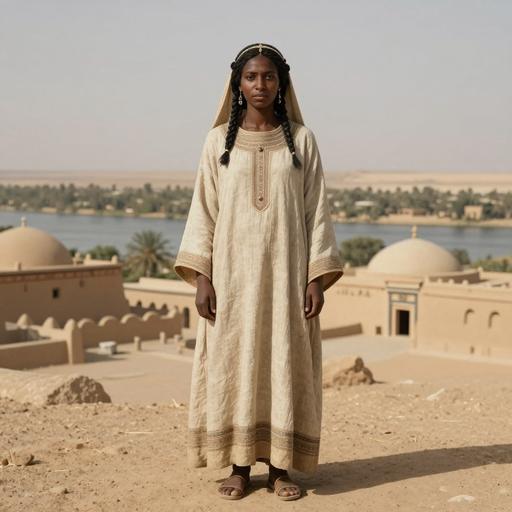
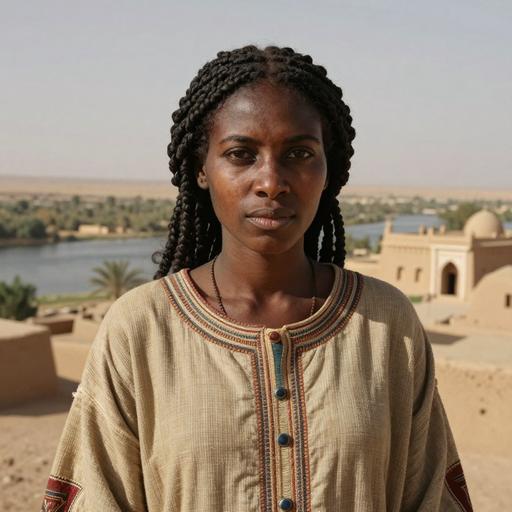
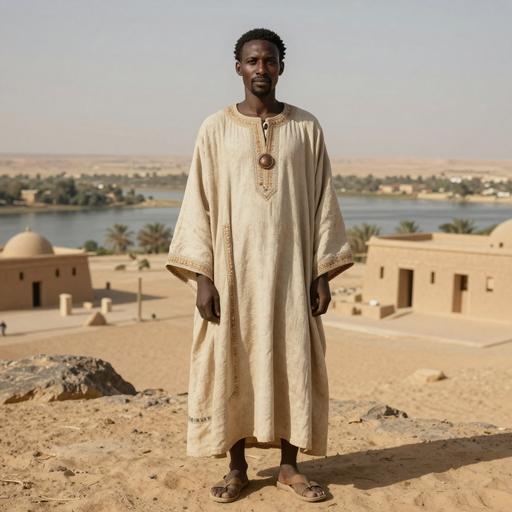
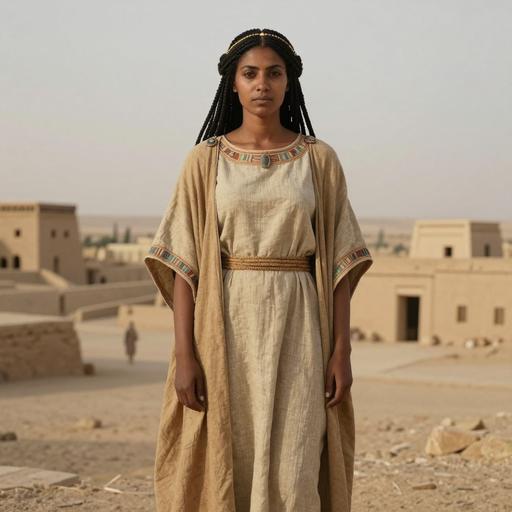
L3I2 is most frequent and best represented in the Horn of Africa—particularly among Ethiopian (Amhara, Oromo) and Somali-speaking populations—and is present at moderate frequencies among Eritrean groups and certain Nile corridor / northeastern Sudan groups. Lower-frequency occurrences are recorded along the East African coast (Kenya, Tanzania), and sporadic low-level presence in North Africa and the Arabian Peninsula reflects historic maritime and trade-mediated gene flow across the Red Sea. Modern diasporas have also carried rare instances of this lineage to the Americas via recent historical movements.
The clade’s distribution supports a primary origin in the Horn with subsequent localized spread associated with Holocene population processes such as the adoption and spread of pastoralism, local population expansions, and continuing contact across the Red Sea.
Historical and Cultural Significance
The regional pattern of L3I2 links it to demographic events in the Horn during the Holocene: transitions from foraging to pastoral lifeways, establishment of localized pastoralist communities, and integration into long-distance Red Sea and Arabian trade networks during later periods. In historic times, matrilineal continuity of such lineages may be visible in groups associated with the Aksumite polity and later medieval and historic coastal trading communities, though the major signal is best interpreted as a Holocene-era regional lineage rather than a marker of any single archaeological culture.
Because L3I2 frequently co-occurs with other East African mtDNA lineages (e.g., L0a, L2a, L3f) in the same populations, it forms part of the typical Horn genetic profile reconstructed in population genetic surveys and ancient DNA where available. Its presence in a small number of ancient samples confirms continuity of L3I-derived maternal ancestry in the region over the Holocene.
Conclusion
L3I2 is a regionally concentrated, Holocene-aged maternal lineage rooted in the Horn of Africa and northeastern Africa. It provides a useful marker for studying localized maternal population history in Ethiopia, Somalia, Eritrea and adjacent areas, illuminating patterns of population continuity, pastoralist expansions, and Red Sea-mediated contacts. Continued mitogenome sequencing in the Horn and adjacent regions will refine the age, internal structure, and historical movements associated with L3I2.
Key Points
- Origins and Evolution
- Subclades (if applicable)
- Geographical Distribution
- Historical and Cultural Significance
- Conclusion