The Story
The journey of mtDNA haplogroup ND1B1
Origins and Evolution
mtDNA haplogroup ND1B1 descends from the broader ND1B branch and is best interpreted as part of the East–Northeast Asian maternal phylogeography that formed during the Late Pleistocene. Based on phylogenetic position within ND1 and the inferred coalescence time of its parent branch, ND1B1 most likely arose around ~28 kya in northeastern Eurasia or adjacent East Asian coastal regions. Its emergence falls into a period of regional population structure when humans occupying Siberia, the Russian Far East, and northern Japan were differentiating into lineages that later contributed to the genetic makeup of Holocene hunter–gatherer groups.
Genetic continuity in some areas and local founder effects have preserved ND1B1 and downstream variants through the Last Glacial Maximum into the early Holocene. A small number of ancient DNA hits (six in the referenced database) place ND1B1 directly into archaeological contexts in northeastern Eurasia, supporting a Paleolithic to early Holocene persistence rather than a purely recent introduction.
Subclades (if applicable)
As a downstream clade of ND1B, ND1B1 itself appears to have internal variation, with locally enriched sublineages in coastal forager and island populations (notably northern Japan and adjacent coastal Siberia). Downstream variants show patchy distribution consistent with:
- Coastal forager specialization: certain ND1B1 sub-lineages are overrepresented in seafaring and littoral archaeological samples, suggesting maritime foraging and localized founder events.
- Island persistence: distinct ND1B1-derived haplotypes occur among Ainu and Jomon-descended groups, consistent with long-term isolation and genetic drift.
Ongoing mitogenome sequencing continues to refine subclade structure; many named downstream haplotypes will be resolved as sample sizes and complete mitochondrial genomes increase for northeastern Eurasian and ancient samples.
Geographical Distribution
Today ND1B1 is most frequently observed in Northeast Asian and Siberian groups, with moderate presence among mainland East Asian populations and low-frequency detections beyond this core area. Typical geographic patterns include:
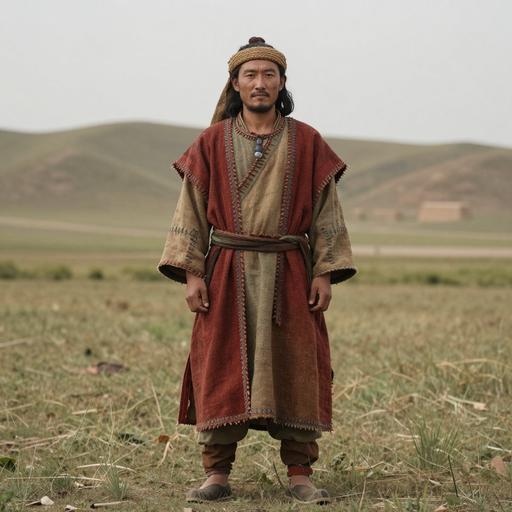
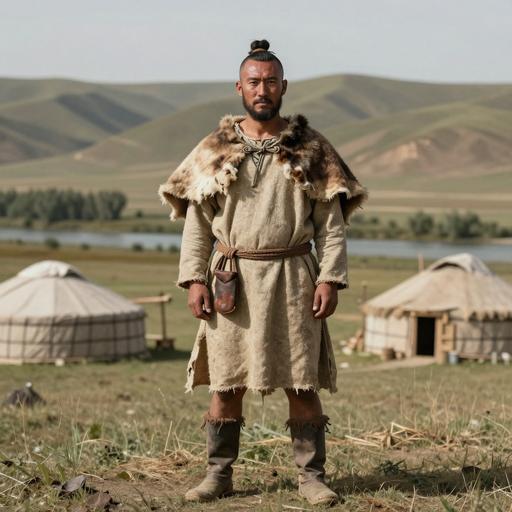
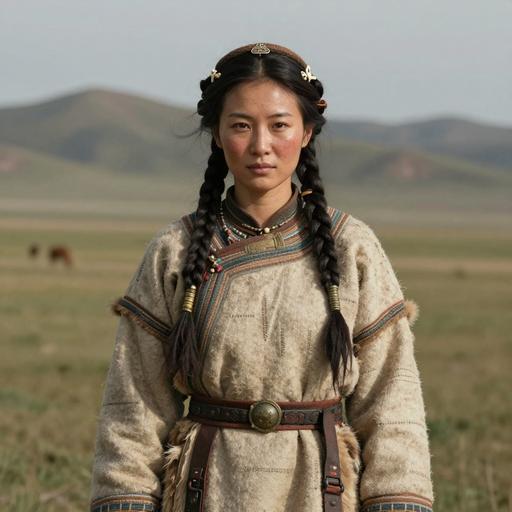
- High or moderate frequencies in Siberian Tungusic, Mongolic, and some Yakut populations.
- Detectable presence among Han Chinese, Koreans, and Japanese at low-to-moderate frequencies, often represented by different local subvariants.
- Enrichment in northern Japan among Ainu and in ancient Jomon-associated samples, where specific ND1B1 lineages document long-term maternal continuity.
- Scattered, low-frequency occurrences in Central Asia, the Tibetan/Himalayan region, and parts of Southeast Asia that are best explained by Holocene east–west contacts, recent gene flow, or founder effects.
Sampling bias (geography and resolution of mitogenomes) affects apparent frequencies; increased ancient and modern mitogenome coverage helps clarify true distributions.
Historical and Cultural Significance
ND1B1 is useful for reconstructing several aspects of northeastern Eurasian prehistory:
- Paleolithic continuity: its presence in Late Pleistocene and early Holocene contexts supports genetic continuity in parts of Siberia and the Russian Far East.
- Jomon and Ainu connections: enrichment of ND1B1 downstream variants among the Ainu and in Jomon-associated remains links these populations to broader Paleolithic Northeast Asian maternal variation and underscores regional persistence on northern Japanese islands.
- Coastal foraging and maritime dispersals: associations of some ND1B1 sublineages with coastal archaeological contexts point to the role of littoral resource use and small-scale marine-oriented dispersals in shaping mitochondrial diversity.
- Markers of east–west contact: low-level ND1B1 detections in Central Asia and the Tibetan Plateau reflect Holocene mobility and contacts between eastern and central Eurasian populations rather than primary colonization events.
Caveats: because mtDNA tracks a single maternal lineage, ND1B1 should be interpreted alongside genome-wide and Y-chromosome data to reconstruct demographic processes fully.
Conclusion
mtDNA haplogroup ND1B1 is a diagnostically northeastern Eurasian maternal lineage that originated in the Late Pleistocene and persisted into the Holocene, with particular relevance to understanding the peopling and regional continuity of Siberia, Northeast Asia, and northern Japan. While not numerically dominant across broad East Asia, its patterned enrichment in specific forager and island populations (and presence in ancient remains) makes it a valuable marker for tracing Paleolithic–Holocene demographic structure and coastal forager histories. Continued ancient mitogenome sampling and high-resolution phylogenetic work will further refine its subclade topology and migratory implications.
Key Points
- Origins and Evolution
- Subclades (if applicable)
- Geographical Distribution
- Historical and Cultural Significance
- Conclusion