Menu
mtDNA Haplogroup • Maternal Lineage

R30A

mtDNA Haplogroup R30A

~15,000 years ago
South Asia
1 subclades
Scroll to explore
Chapter I

The Story

The journey of mtDNA haplogroup R30A

Origins and Evolution

mtDNA haplogroup R30A is a downstream subclade of haplogroup R30, itself derived from the broader R3/R branch of macro-haplogroup R. Based on phylogenetic position and molecular-clock estimates for related South Asian R-lineages, R30A most likely coalesced in the Late Pleistocene to early Holocene (around ~15 kya) within the Indian subcontinent. As with many rare, regionally concentrated mtDNA lineages, R30A preserves a fragment of maternal ancestry that predates major Holocene demographic events such as the Neolithic agricultural expansions and later Bronze Age population movements.

Because R30A is a low-frequency lineage, the topology of the clade is resolved only in part by published mitogenomes and targeted control-region surveys. The lineage accumulation and limited geographic spread are consistent with an origin in small, locally structured populations followed by limited expansion and occasional long-range dispersal events.

Subclades (if applicable)

R30A is an intermediate/terminal clade within the R30 phylogeny. Where fully sequenced mitogenomes are available, R30A may be split into minor internal variants defined by private mutations; however, no widely distributed, deeply divergent daughter clades of R30A have been robustly described in the literature to date. Given the low overall frequency, additional whole-mtDNA sequencing in South Asian and neighboring populations could reveal finer substructure (e.g., R30A1, R30A2) or identify private branches associated with particular regional or tribal groups.

Geographical Distribution

R30A is concentrated in the Indian subcontinent with sporadic, low-frequency detections in neighboring regions. Population surveys and published mitogenomes have recorded R30 and its subclades primarily among diverse Indian populations (including both tribal groups and caste populations), with occasional reports from Pakistan, Sri Lanka, and parts of the Iranian plateau and Central Asia. A small number of detections in Southeast Asia and among diasporic South Asian communities outside the subcontinent have also been reported. This distribution is consistent with an origin in South Asia followed by limited mobility and occasional long-distance gene flow.

Historical and Cultural Significance

Given its antiquity and rarity, R30A is not associated with a single well-defined archaeological complex in the way some higher-frequency haplogroups are, but it contributes to the broader picture of deep maternal diversity that persisted through South Asia's prehistory. R30A likely reflects lineages present among Late Pleistocene hunter-gatherer groups and their descendants; these maternal lineages persisted locally through the Holocene and would have been present among populations that later participated in Neolithic, Chalcolithic, and Bronze Age cultural complexes of the region (e.g., early farming and Harappan-associated communities), though in low proportions.

Because R30A is rare, it is more useful as a marker of microevolutionary processes (local continuity, founder effects, drift within isolated populations) than as an indicator of major demographic turnovers. Its occasional presence outside South Asia likely represents historical or prehistoric contacts (trade, migration, or individual movements) rather than a large-scale population replacement.

Conclusion
mtDNA haplogroup R30A is a low-frequency but evolutionarily informative maternal lineage centered on South Asia with a deep coalescence time around ~15 kya. It documents part of the region's long-term maternal diversity and serves as a target for future whole-mitogenome sampling that could refine its internal structure, demographic history, and the timing and routes of its occasional dispersals beyond the subcontinent.

Key Points

  • Origins and Evolution
  • Subclades (if applicable)
  • Geographical Distribution
  • Historical and Cultural Significance
  • Conclusion

Chapter II

Tree & Relationships

Phylogenetic context and subclades

Evolution Path

This haplogroup's evolutionary journey from its earliest ancestor to the present.

Steps Haplogroup Age Estimate Archaeology Era Time Passed Immediate Descendants Tested Modern Descendants Ancient Connections
1 R30A Current ~15,000 years ago 🏹 Mesolithic 15,000 years 1 13 0
2 R30 ~15,000 years ago 🏹 Mesolithic 15,000 years 2 28 0
3 R3 ~28,000 years ago 🦴 Paleolithic 28,000 years 1 28 0
4 R ~60,000 years ago 🦴 Paleolithic 60,000 years 12 10,987 57
5 N ~60,000 years ago 🦴 Paleolithic 60,000 years 15 15,452 13
6 L3 ~70,000 years ago 🦴 Paleolithic 70,000 years 11 17,621 6
7 L ~160,000 years ago 🦴 Paleolithic 160,000 years 7 18,987 5

Siblings (1)

Other branches from the same parent haplogroup

Chapter III

Where in the World

Geographic distribution and modern presence

Place of Origin

South Asia

Modern Distribution

The populations where mtDNA haplogroup mtDNA haplogroup R30A is found include:

  1. Diverse populations of the Indian subcontinent (including tribal groups, caste communities, and regional populations)
  2. Pakistani population samples (sporadic detections)
  3. Sri Lankan populations (rare detections)
  4. Central Asian groups (occasional detections in some Uzbek/Tajik samples)
  5. Populations on the Iranian plateau and parts of West Asia (low frequency, occasional)
  6. Southeast Asian populations in limited surveys (rare occurrences)
  7. Diasporic South Asian communities globally (low frequency detections)
CHAPTER IV

When in Time

Your haplogroup in the context of human history

~20k years ago

Last Glacial Maximum

Peak of the last ice age, populations isolated

~15k years ago

Haplogroup R30A

Your mtDNA haplogroup emerged in South Asia

South Asia
~10k years ago

Neolithic Revolution

Agriculture begins, settled communities form

~5k years ago

Bronze Age

Metalworking, writing, and early civilizations

~3k years ago

Iron Age

Iron tools, expanded trade networks

~2k years ago

Classical Antiquity

Greek and Roman civilizations flourish

Present

Present Day

Modern era

Your Haplogroup
Historical Era
Chapter IV-B

Linked Cultures

Ancient cultures associated with mtDNA haplogroup R30A

Cultural Heritage

These ancient cultures have been linked to haplogroup R30A based on matching ancient DNA samples from archaeological excavations. The presence of this haplogroup in these cultures provides insights into the migrations and population movements of populations carrying this haplogroup.

Afanasievo Culture Boisman Cambodian Iron Age Ganj Dareh Culture Gogdara Culture Linear Pottery Culture Santa Rosa Island Culture Sardinian Neolithic Shahr-i Sokhta Culture Taiwanese Iron Ust-Ishim Culture
Culture assignments are based on archaeological context of ancient DNA samples and may represent regional associations during specific time periods.
Chapter V

Sample Catalog

Top 50 ancient DNA samples directly related to haplogroup R30A or parent clades

50 / 50 samples
Portrait Sample Country Era Date Culture mtDNA Match
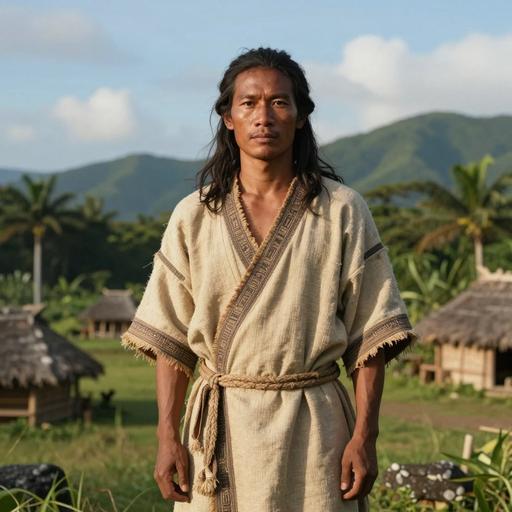
Portrait of ancient individual I3614 from Taiwan, dated 1 CE - 800 CE
I3614
Taiwan Iron Age Taiwan 1 CE - 800 CE Taiwanese Iron R Direct
Portrait of ancient individual I3618 from Taiwan, dated 1 CE - 800 CE
I3618
Taiwan Iron Age Taiwan 1 CE - 800 CE Taiwanese Iron R Direct
Portrait of ancient individual I8071 from Taiwan, dated 1 CE - 800 CE
I8071
Taiwan Iron Age Taiwan 1 CE - 800 CE Taiwanese Iron R Direct
Portrait of ancient individual I8076 from Taiwan, dated 1 CE - 800 CE
I8076
Taiwan Iron Age Taiwan 1 CE - 800 CE Taiwanese Iron R30 Direct
Portrait of ancient individual I13697 from Taiwan, dated 1 CE - 800 CE
I13697
Taiwan Iron Age Taiwan 1 CE - 800 CE Taiwanese Iron R Direct
Portrait of ancient individual I3620 from Taiwan, dated 22 CE - 201 CE
I3620
Taiwan Iron Age Taiwan 22 CE - 201 CE Taiwanese Iron R Direct
Portrait of ancient individual I3615 from Taiwan, dated 32 CE - 206 CE
I3615
Taiwan Iron Age Taiwan 32 CE - 206 CE Taiwanese Iron R Direct
Portrait of ancient individual I7714 from Pakistan, dated 45 BCE - 66 CE
I7714
Pakistan Historic Barikot 45 BCE - 66 CE Barikot R30b1 Direct
Portrait of ancient individual I1680 from Cambodia, dated 78 CE - 234 CE
I1680
Cambodia Iron Age Cambodia 78 CE - 234 CE Cambodian Iron Age R30 Direct
Portrait of ancient individual I15519 from Serbia, dated 100 CE - 300 CE
I15519
Serbia Roman Serbia 100 CE - 300 CE Roman Provincial R0a2d Direct
Chapter VI

Carrier Distribution Map

Geographic distribution of 100 ancient DNA samples carrying haplogroup R30A

Time Period Filter
All Time Periods
Showing all samples
Each marker represents an ancient individual
Chapter VII

Temporal Distribution

Distribution of carriers across archaeological periods

Chapter VIII

Geographic Distribution

Distribution of carriers by country of origin

Chapter IX

Country × Era Distribution

Cross-tabulation of carrier countries and archaeological periods

Data

Data & Provenance

Source information and data quality

Last Updated 2026-02-16
Confidence Score 50/100
Coverage Low
Data Source

We use the latest phylotree for MTDNA haplogroup classification and data.