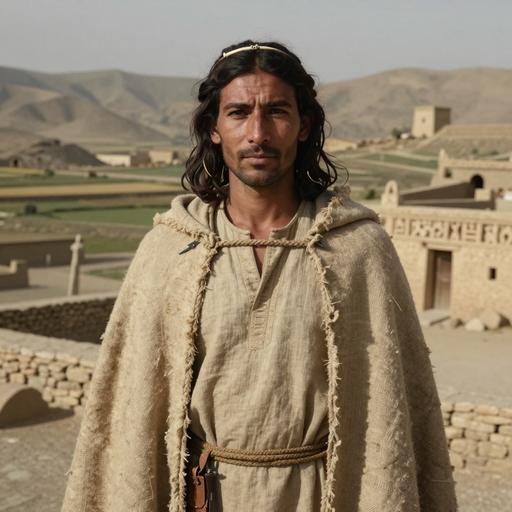
The Story
The journey of mtDNA haplogroup R6B
Origins and Evolution
mtDNA haplogroup R6B is a downstream branch of haplogroup R6, itself a member of macro-haplogroup R. Given the inferred South Asian origin of R6 around the Upper Paleolithic (~28 kya), R6B is best interpreted as a younger, locally derived subclade that most likely diversified in the early Holocene (post‑Last Glacial Maximum), roughly around ~12 kya. Its phylogenetic position as a subclade of R6 indicates continuity with maternal lineages that underwent differentiation within the Indian subcontinent following Paleolithic and late‑Pleistocene demographic events.
Phylogenetic resolution for R6 and its subclades remains incomplete in public databases compared with some widespread Eurasian clades; therefore, the internal structure of R6B may expand as more full mitochondrial genomes from South Asian and adjacent populations are generated.
Subclades
As a defined branch of R6, R6B can carry further downstream substructure in high-resolution mitogenome studies. At present, published and database-sourced sampling indicates relatively limited internal subclade diversity visible in public datasets, consistent with a modest effective population size or recent expansion. Future whole-mitogenome sequencing and denser sampling of tribal and rural groups across South Asia are likely to reveal additional internal branches (e.g., R6B1, R6B2 in author-assigned nomenclatures) and allow more precise dating of sublineage splits.
Geographical Distribution
R6B is predominantly a South Asian maternal lineage. Contemporary observations and reasonable phylogeographic inference place its highest frequency and diversity within the Indian subcontinent, including both caste and tribal groups. Reported occurrences are concentrated in:
- Northwest and western South Asia (Punjabi, Sindhi, Baloch, Kashmiri groups) where R6 and its subclades are more frequently observed.
- Central and southern Indian populations, including some tribal (Adivasi) groups and other local communities.
- Low‑frequency occurrences in neighboring regions such as Iran, parts of Central Asia, and Southeast Asia, usually consistent with historical gene flow, trade, or recent migration.
- Very small numbers in diaspora populations in Europe and elsewhere, reflecting recent movements rather than deep prehistoric dispersion.
The geographic pattern—higher incidence and diversity within South Asia and scattered low-frequency occurrences outside—supports a South Asian origin with limited outward dispersal compared with some other R-derived lineages.
Historical and Cultural Significance
Because R6B appears to be a locally derived Holocene lineage in South Asia, it likely reflects maternal continuity among populations involved in Mesolithic-to‑Neolithic transitions in the subcontinent. R6B does not imply association with any single archaeological culture across the whole region; instead, it is consistent with demographic processes such as:
- Local survival and diversification of hunter‑gatherer maternal lineages into the Holocene.
- Assimilation into expanding agricultural and pastoral communities during the Neolithic and later periods.
Caution is warranted in linking mtDNA clades directly to archaeological cultures: mtDNA tracks only the maternal line and can be reshaped by demographic events (founder effects, drift, social structure) at different timescales. Where ancient DNA is available, R6-derived lineages are sparsely represented, so at present cultural interpretations must remain tentative.
Conclusion
R6B is best understood as a South Asian, early‑Holocene maternal subclade of R6 that contributes to the region’s deep maternal diversity. It is regionally concentrated, shows limited representation outside South Asia, and awaits fuller characterization through expanded whole-mitogenome sampling, particularly among under-sampled tribal and rural populations and ancient remains from the subcontinent.
Key Points
- Origins and Evolution
- Subclades
- Geographical Distribution
- Historical and Cultural Significance
- Conclusion