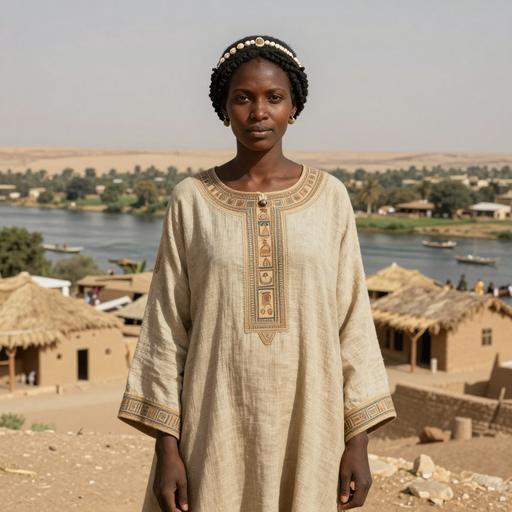
The Story
The journey of mtDNA haplogroup R9B1A3
Origins and Evolution
mtDNA haplogroup R9B1A3 is a downstream subclade of R9B1A within the broader R9/R macro-haplogroup. R9-derived lineages are characteristic components of the maternal gene pool of southern China and mainland Southeast Asia. Based on the phylogenetic position beneath R9B1A (itself estimated to have diversified in the early Holocene around ~9 kya), R9B1A3 most plausibly arose in the mid-Holocene (~5–6 kya), representing a regional diversification associated with localized demographic growth and migration events after the initial postglacial recolonization of tropical East and Southeast Asia.
Phylogenetically, R9B1A3 inherits the diagnostic mutations of R9B1A and carries additional private mutations that define it as a recognisable subclade in mitogenome-based studies. Its presence in a small number of ancient individuals (three samples in available aDNA databases) supports a Holocene antiquity and continuity in southern China and neighboring mainland Southeast Asia.
Subclades
R9B1A3 is itself a terminal or near-terminal branch in many published mitogenome trees; where further internal diversity exists it is typically shallow and geographically localized. Any downstream diversity tends to be observed at low frequency and often restricted to particular ethnic or island populations, consistent with founder effects and recent local expansions tied to horticultural or maritime dispersals.
Geographical Distribution
The modern distribution of R9B1A3 is concentrated in southern China and mainland Southeast Asia, with lower-frequency occurrences among Austronesian-speaking populations of Taiwan, the Philippines and parts of Island Southeast Asia. The haplogroup appears sporadically in some Tibeto-Burman and southwestern Chinese groups and is detected at low levels in Near-Oceanic island populations where Austronesian-related maternal lineages admixed with local groups. Overall, its geographic pattern mirrors that of other R9/R9B-derived lineages: regional concentration in the subtropical and tropical coastal and riverine zones of southern China and mainland Southeast Asia, with maritime dispersal facilitating its presence in nearby islands.
Historical and Cultural Significance
Although not a high-frequency lineage across broad regions, R9B1A3 is informative for tracing mid-Holocene regional demography in southern China and mainland Southeast Asia. Its age and distribution are compatible with expansions linked to the spread of wet-rice agriculture, early Neolithic coastal adaptations, and later Austronesian maritime expansions that carried southern Chinese and mainland Southeast Asian maternal lineages into island Southeast Asia. The haplogroup's detection in a small number of ancient samples indicates continuity across archaeological transitions in some localities, and its low-frequency presence in Austronesian-speaking communities suggests that it sometimes accompanied migrating female lineages during island colonization or entered these populations via subsequent gene flow.
Conclusion
R9B1A3 is a geographically focused, mid-Holocene mtDNA subclade that refines our understanding of maternal lineages in southern China and mainland Southeast Asia. It serves as a marker of regional continuity and localized demographic events tied to Neolithic subsistence shifts and later maritime interactions. Continued sampling of complete mitogenomes and ancient DNA from southern China, Mainland Southeast Asia and adjacent islands will clarify the fine-scale phylogeny and migratory pathways of R9B1A3 and its relationship to neighbouring maternal lineages.
Key Points
- Origins and Evolution
- Subclades
- Geographical Distribution
- Historical and Cultural Significance
- Conclusion