Menu
mtDNA Haplogroup • Maternal Lineage

R9C1B2

mtDNA Haplogroup R9C1B2

~7,000 years ago
Southern China / Mainland Southeast Asia
0 subclades
Scroll to explore
Chapter I

The Story

The journey of mtDNA haplogroup R9C1B2

Origins and Evolution

R9C1B2 is a downstream maternal lineage of mtDNA haplogroup R9C1B, itself a branch of the larger R9 cluster which derives from macrohaplogroup R. Based on the phylogenetic position of R9C1B2 beneath R9C1B and the time depth estimated for its parent clade, R9C1B2 most likely coalesced in the early to mid‑Holocene (~7 kya) in the borderland between southern China and mainland Southeast Asia. Its emergence fits a broader pattern of regional differentiation after the Last Glacial Maximum, when localized maternal lineages accumulated private mutations within relatively stable population refugia and subsequently expanded with postglacial demographic processes.

R9C1B2 is defined by one or more private mitochondrial mutations downstream of R9C1B; resolving its internal structure typically requires complete mitogenome sequencing because control-region or partial-marker data often lack resolution for these fine subclades.

Subclades (if applicable)

At present, R9C1B2 is treated as a defined subclade within R9C1B. Published population surveys and limited sequence-based studies suggest that R9C1B2 may include minor, geographically localized subbranches, but the documentation of further named subclades is sparse. Many reported instances come from HVS/HVR or partial-coding-region data; full mitogenomes are needed to robustly resolve and name downstream sublineages and to estimate their coalescence times more precisely.

Geographical Distribution

R9C1B2 shows a concentrated distribution in southern China and mainland Southeast Asia, with the highest frequencies observed in ethnolinguistic groups from border provinces of southern China and adjacent mainland Southeast Asian populations. The haplogroup occurs at moderate frequencies in Tai‑Kadai (e.g., Dai, Zhuang), Austroasiatic (e.g., Khmer, some Vietnamese groups), and certain southern Han Chinese communities (particularly in provinces near the Sino‑SEA frontier).

Occurrences in Island Southeast Asia (including parts of Indonesia, the Philippines, and among some Taiwanese indigenous groups) and in Near Oceania are low and sporadic, consistent with secondary coastal dispersals or maritime contacts such as Austronesian movements and later trade/interaction networks. The haplogroup is rare or virtually absent in northern East Asia and central Asia, supporting a southern coastal/insular distribution rather than a broad Pan‑East Asian one.

One ancient DNA occurrence in the available databases indicates that R9C1B2 (or closely related lineages) has been recovered from archaeological contexts, supporting continuity of this maternal lineage through parts of the Holocene in the region.

Historical and Cultural Significance

R9C1B2 carries information relevant to several demographic episodes in southern China and mainland Southeast Asia. Its estimated age and geographic pattern are compatible with:

  • Post‑LGM regional continuity: retention and local diversification of maternal lineages in southern refugial zones after the Last Glacial Maximum.
  • Neolithic processes: the Neolithic expansion of wet‑rice cultivation originating in the Yangtze and adjacent regions likely mobilized populations and facilitated gene flow; R9C1B2 may have expanded locally with such farmer groups in the early Holocene and Neolithic.
  • Austronesian and coastal dispersals: low‑level occurrences in Island Southeast Asia and Near Oceania are consistent with later maritime interactions, including Austronesian expansions (starting ~4–5 kya) and subsequent coastal trading networks that moved maternal lineages across islands and along littoral corridors.

Because it is concentrated in specific southern populations, R9C1B2 can be informative in studies of maternal phylogeography, migration corridors between southern China and mainland Southeast Asia, and demographic admixture events among farmer, coastal, and indigenous hunter‑gatherer groups.

Conclusion
R9C1B2 is a regionally informative mtDNA subclade rooted in the Early–Mid Holocene of southern China/Mainland Southeast Asia. It reflects local maternal continuity after the Pleistocene and later demographic processes tied to Neolithic agricultural expansions and maritime contacts. Further resolution of its internal phylogeny and clearer assessment of its prehistoric movements depend on increased sampling of complete mitochondrial genomes from both modern populations and additional ancient remains in the southern China–Southeast Asia corridor.

Key Points

  • Origins and Evolution
  • Subclades (if applicable)
  • Geographical Distribution
  • Historical and Cultural Significance
  • Conclusion

Chapter II

Tree & Relationships

Phylogenetic context and subclades

Evolution Path

This haplogroup's evolutionary journey from its earliest ancestor to the present.

Steps Haplogroup Age Estimate Archaeology Era Time Passed Immediate Descendants Tested Modern Descendants Ancient Connections
1 R9C1B2 Current ~7,000 years ago 🌾 Neolithic 7,000 years 0 1 0
2 R9C1B ~9,000 years ago 🌾 Neolithic 9,000 years 1 5 2
3 R9C1 ~14,000 years ago 🏹 Mesolithic 14,000 years 1 5 0
4 R9C ~22,000 years ago 🏹 Mesolithic 22,000 years 1 5 0
5 R9 ~40,000 years ago 🦴 Paleolithic 40,000 years 2 15 0
6 R ~60,000 years ago 🦴 Paleolithic 60,000 years 12 10,987 57
7 N ~60,000 years ago 🦴 Paleolithic 60,000 years 15 15,452 13
8 L3 ~70,000 years ago 🦴 Paleolithic 70,000 years 11 17,621 6
9 L ~160,000 years ago 🦴 Paleolithic 160,000 years 7 18,987 5

Subclades (0)

Terminal branch - no known subclades

Chapter III

Where in the World

Geographic distribution and modern presence

Place of Origin

Southern China / Mainland Southeast Asia

Modern Distribution

The populations where MTDNA haplogroup R9C1B2 is found include:

  1. Han Chinese (southern China, particularly border provinces and some minority groups)
  2. Dai and Zhuang (Tai‑Kadai speaking groups)
  3. Thai and Lao populations
  4. Vietnamese and Khmer (Austroasiatic / Mon‑Khmer groups)
  5. Austronesian-speaking groups (some Taiwanese indigenous peoples, Filipinos, Indonesians) at low to moderate frequency
  6. Malay populations and Sea Nomad communities (sporadic occurrences)
  7. Tibeto‑Burman southwestern groups (low frequency)
  8. Ethnic minorities in southern China and northern Mainland Southeast Asia
  9. Indigenous populations of Near Oceania (very low, intermittent occurrences)
  10. Sparse occurrences among broader East Asian populations
CHAPTER IV

When in Time

Your haplogroup in the context of human history

~10k years ago

Neolithic Revolution

Agriculture begins, settled communities form

~7k years ago

Haplogroup R9C1B2

Your mtDNA haplogroup emerged in Southern China / Mainland Southeast Asia

Southern China / Mainland Southeast Asia
~5k years ago

Bronze Age

Metalworking, writing, and early civilizations

~3k years ago

Iron Age

Iron tools, expanded trade networks

~2k years ago

Classical Antiquity

Greek and Roman civilizations flourish

Present

Present Day

Modern era

Your Haplogroup
Historical Era
Chapter IV-B

Linked Cultures

Ancient cultures associated with mtDNA haplogroup R9C1B2

Cultural Heritage

These ancient cultures have been linked to haplogroup R9C1B2 based on matching ancient DNA samples from archaeological excavations. The presence of this haplogroup in these cultures provides insights into the migrations and population movements of populations carrying this haplogroup.

Afanasievo Culture Boisman Chinese Epipaleolithic Ganj Dareh Culture Island Southeast Asian Culture Linear Pottery Culture Santa Rosa Island Culture Sardinian Neolithic Shahr-i Sokhta Taiwanese Iron Ust-Ishim Culture
Culture assignments are based on archaeological context of ancient DNA samples and may represent regional associations during specific time periods.
Chapter V

Sample Catalog

Top 50 ancient DNA samples directly related to haplogroup R9C1B2 or parent clades

50 / 50 samples
Portrait Sample Country Era Date Culture mtDNA Match
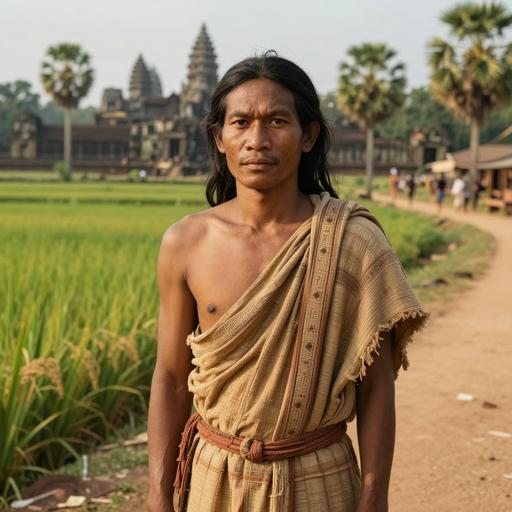
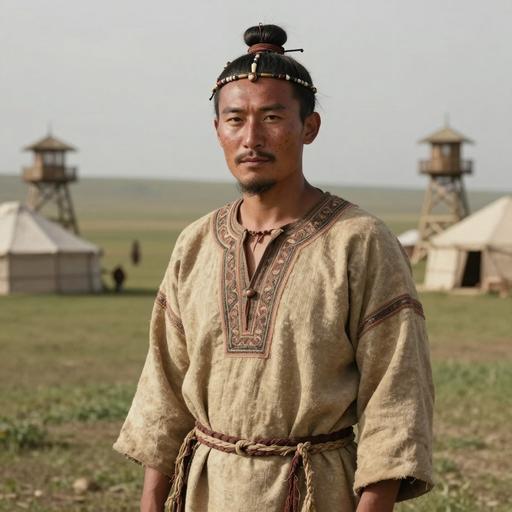
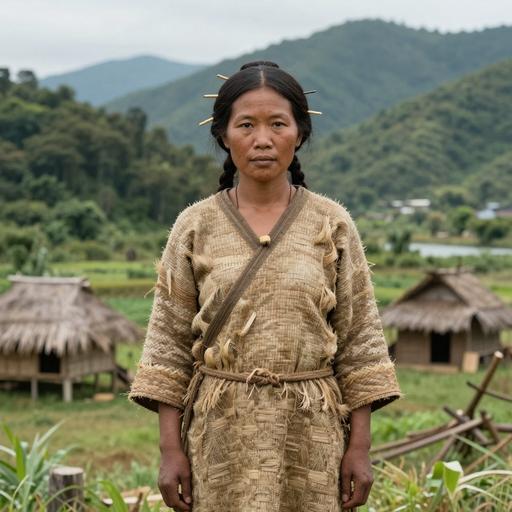
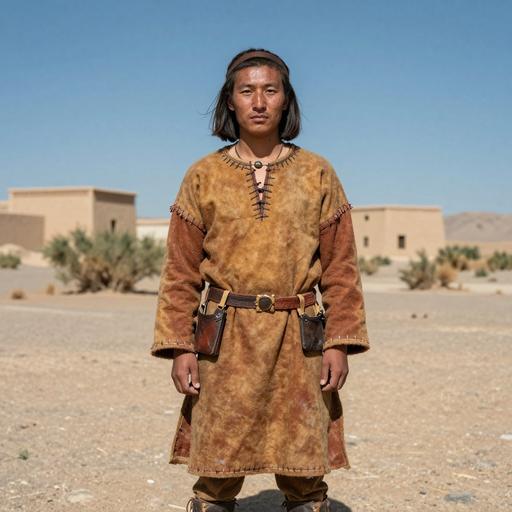
Portrait of ancient individual I3614 from Taiwan, dated 1 CE - 800 CE
I3614
Taiwan Iron Age Taiwan 1 CE - 800 CE Taiwanese Iron R Direct
Portrait of ancient individual I3618 from Taiwan, dated 1 CE - 800 CE
I3618
Taiwan Iron Age Taiwan 1 CE - 800 CE Taiwanese Iron R Direct
Portrait of ancient individual I8071 from Taiwan, dated 1 CE - 800 CE
I8071
Taiwan Iron Age Taiwan 1 CE - 800 CE Taiwanese Iron R Direct
Portrait of ancient individual I8076 from Taiwan, dated 1 CE - 800 CE
I8076
Taiwan Iron Age Taiwan 1 CE - 800 CE Taiwanese Iron R30 Direct
Portrait of ancient individual I13697 from Taiwan, dated 1 CE - 800 CE
I13697
Taiwan Iron Age Taiwan 1 CE - 800 CE Taiwanese Iron R Direct
Portrait of ancient individual I3620 from Taiwan, dated 22 CE - 201 CE
I3620
Taiwan Iron Age Taiwan 22 CE - 201 CE Taiwanese Iron R Direct
Portrait of ancient individual I3615 from Taiwan, dated 32 CE - 206 CE
I3615
Taiwan Iron Age Taiwan 32 CE - 206 CE Taiwanese Iron R Direct
Portrait of ancient individual I7714 from Pakistan, dated 45 BCE - 66 CE
I7714
Pakistan Historic Barikot 45 BCE - 66 CE Barikot R30b1 Direct
Portrait of ancient individual I1680 from Cambodia, dated 78 CE - 234 CE
I1680
Cambodia Iron Age Cambodia 78 CE - 234 CE Cambodian Iron Age R30 Direct
Portrait of ancient individual I15519 from Serbia, dated 100 CE - 300 CE
I15519
Serbia Roman Serbia 100 CE - 300 CE Roman Provincial R0a2d Direct
Chapter VI

Carrier Distribution Map

Geographic distribution of 100 ancient DNA samples carrying haplogroup R9C1B2

Time Period Filter
All Time Periods
Showing all samples
Each marker represents an ancient individual
Chapter VII

Temporal Distribution

Distribution of carriers across archaeological periods

Chapter VIII

Geographic Distribution

Distribution of carriers by country of origin

Chapter IX

Country × Era Distribution

Cross-tabulation of carrier countries and archaeological periods

Data

Data & Provenance

Source information and data quality

Last Updated 2026-02-16
Confidence Score 50/100
Coverage Low
Data Source

We use the latest phylotree for MTDNA haplogroup classification and data.