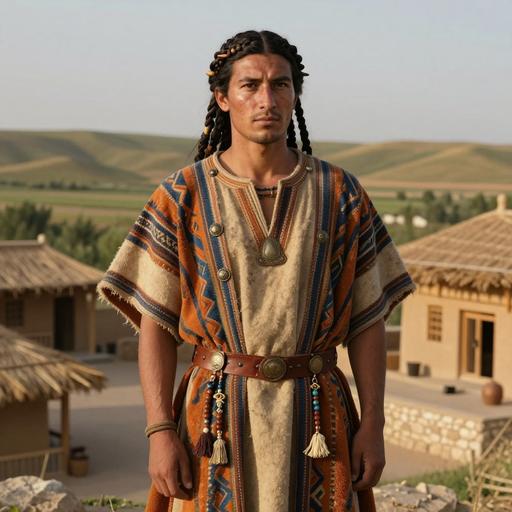
The Story
The journey of mtDNA haplogroup T1A26
Origins and Evolution
mtDNA haplogroup T1A26 is a downstream subclade of T1A2, which itself derives from the broader T1 lineage. The parent clade T1A2 likely formed during the Neolithic in the Near East (~7 kya) as part of the expansion of early farming communities; T1A26 represents a later, more localized diversification within that Neolithic-derived maternal pool. Given its position on the phylogenetic tree, T1A26 most plausibly arose during the Bronze Age or later (roughly 3–4 kya) as populations carrying T1A2 dispersed and experienced regionally restricted demographic events.
Subclades
As a relatively recently defined and rare subclade, T1A26 currently has few or no well-documented downstream branches reported in public phylogenies; continued high-resolution sequencing (whole mitogenomes) may reveal additional internal structure. Because it sits beneath T1A2, T1A26 inherits the diagnostic T1A mutations and adds one or more private mutations that define the subclade.
Geographical Distribution
Known occurrences of T1A26 are sporadic and concentrated around the Mediterranean and adjacent regions. The highest density of closely related maternal lineages is in the Near East and Southern Europe, consistent with a Near Eastern origin followed by westward spread with farmers and later historical movements. Modern detections are typically low-frequency in Southern Europe (Italy, Greece, Iberia), parts of the Balkans and Black Sea rim, coastal North Africa, and occasionally in Central Asia. A small number of instances appear in Jewish maternal lineages (both Sephardi and Ashkenazi contexts), reflecting historical gene flow and diasporic movements.
Ancient DNA evidence for T1A26 is currently scarce; the haplogroup appears in at least one published archaeological sample in the user's database, supporting a presence in past populations but indicating it was not a dominant maternal lineage in the sampled contexts.
Historical and Cultural Significance
Because T1A26 is a low-frequency descendant of a Neolithic Near Eastern lineage, its importance is largely for reconstructing fine-scale demographic events rather than representing a major demographic expansion. It can be informative for:
- Tracing localized female-mediated migrations around the Mediterranean during the Bronze Age and later historical periods.
- Identifying lineages that moved with trade networks, coastal migrations, and diasporic communities (including some Jewish maternal lines).
- Distinguishing sub-regional continuity versus replacement in archaeological contexts where T1-derived lineages are present.
T1A26 should not be interpreted as a marker of any single archaeological culture by itself, but when combined with archaeological and autosomal data it can contribute to narratives of population continuity or limited gene flow.
Conclusion
mtDNA T1A26 is a rare, regionally distributed subclade of T1A2 whose phylogenetic position points to a Near Eastern Neolithic ancestry followed by later, low-frequency dispersals into the Mediterranean, parts of Europe, North Africa, and occasional presence in Jewish maternal lineages. Its scarcity in both modern and ancient datasets means it is most useful for detailed lineage-level studies and for resolving micro-history in regional population genetics projects. Ongoing mitogenome sequencing and improved ancient DNA sampling will clarify its internal structure, age, and precise historical movements.
Key Points
- Origins and Evolution
- Subclades
- Geographical Distribution
- Historical and Cultural Significance
- Conclusion