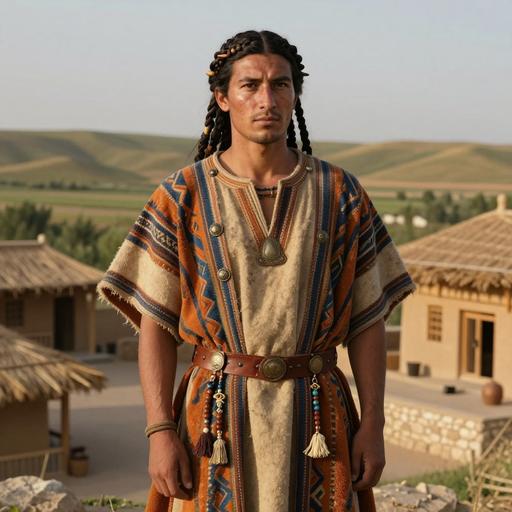
The Story
The journey of mtDNA haplogroup T2A1A16
Origins and Evolution
Haplogroup T2A1A16 is a terminal subclade nested within T2A1A1 → T2A1A, itself part of the broader T2 branch of macro-haplogroup T. The parent lineage (T2A1A1) is associated with early to mid-Holocene expansions from the Near East/Anatolia into Europe with Neolithic farmers. Given that placement, T2A1A16 is best interpreted as a later, localized diversification derived from that Neolithic substrate—probably originating in Anatolia or the adjacent Mediterranean region and expanding regionally during the later Neolithic to Bronze Age and subsequently persisting in modern populations.
Coalescence dating for very downstream mtDNA subclades has substantial uncertainty (depending on mutation rate assumptions and sample sizes), but relative phylogenetic position supports a Holocene origin more recent than the parent T2A1A1 (estimated ~6 kya). A tentative estimate for T2A1A16 is on the order of ~2–4 kya (here expressed as ~3.0 kya), consistent with a subclade that emerged after the main Neolithic dispersals and experienced localized population dynamics.
Subclades (if applicable)
T2A1A16 is a terminal or near-terminal branch in many current phylogenies and does not have widely recognized downstream named subclades in public trees at present; however, dense sequencing in specific regions can reveal further substructure. Because it sits under T2A1A1, its nearest relatives are other T2A1A sub-branches that show similar geographic affinities. Continued high-resolution mitogenome sequencing in Southern Europe, the Balkans and Anatolia may identify additional sublineages derived from T2A1A16.
Geographical Distribution
The modern distribution of T2A1A16 is patchy and at low-to-moderate frequency in regions with a historical legacy of Neolithic farmer ancestry. The highest relative frequencies and greatest diversity are expected in Southern Europe (Italy, Greece, the western Balkans) and in parts of Anatolia/Near East, reflecting its inferred origin and later spread. It is also observed, more sporadically, in Central and Eastern Europe, the Caucasus, and at low levels in North Africa — patterns consistent with later movements (trade, migration, and diaspora communities) and local founder effects. The haplogroup appears only rarely in published ancient DNA datasets so far, though limited ancient occurrences would not be unexpected in Late Neolithic to Bronze Age contexts across the Mediterranean and Balkans.
Historical and Cultural Significance
Because T2A1A16 is nested within a lineage associated with Neolithic farmers, its presence in modern populations reflects the deep maternal contribution of Early Neolithic populations to the European gene pool. A later, localized diversification of T2A1A16 could reflect demographic events in the Chalcolithic-Bronze Age Mediterranean and Balkan worlds (e.g., coastal trade networks, localized population expansions, or social groupings that promoted maternal continuity). The haplogroup's low frequency in North Africa and the Caucasus suggests episodic gene flow across maritime and overland routes linking Anatolia, the Levant, and the Mediterranean rim.
In some modern community samples, including small numbers of Jewish and other historical diaspora groups, members of T2A subclades are observed; occasional occurrences of T2A1A16 in such groups would be consistent with the complex migration and admixture histories of the region, though it is not a lineage uniquely diagnostic of any single cultural or religious group.
Conclusion
T2A1A16 represents a fine-scale maternal lineage that likely arose in the Near East/Anatolia–Mediterranean region after the main Neolithic expansions and has a patchy, low-to-moderate presence in Southern Europe and adjacent regions. Its study is most informative for reconstructing localized Holocene maternal demographic events (founder effects, regional expansions, and continuity) rather than for broad continental migrations. As more full mitogenomes are generated from both modern and ancient samples across the Mediterranean, the geographic structure and age of T2A1A16 should become clearer.
Key Points
- Origins and Evolution
- Subclades (if applicable)
- Geographical Distribution
- Historical and Cultural Significance
- Conclusion