The Story
The journey of mtDNA haplogroup T2I1
Origins and Evolution
mtDNA haplogroup T2I1 is a downstream lineage of T2I, itself a branch of haplogroup T2. The broader T2 lineage has a well-established association with post-glacial and early Neolithic populations originating in the Near East and Anatolia; T2I1 most likely arose in that same geographic context during the early Neolithic period (order of ~8 kya). Like other T2 subclades, T2I1 is defined by a small set of coding- and control-region mutations relative to the RSRS and represents a maternal lineage that expanded with the movement of farming groups out of Anatolia into Europe.
Subclades
T2I1 sits beneath T2I and may itself include minor downstream branches detectable only in high-resolution full-mitogenome studies. At present, T2I1 is relatively rare and many published datasets report it as an undifferentiated subclade (T2I1(x...)) rather than showing extensive internal diversity; this pattern is consistent with a moderate founder effect during Neolithic dispersals followed by localized persistence rather than large later expansions.
Geographical Distribution
T2I1 is most frequently observed at low-to-moderate frequencies in Southern Europe (Italy, Greece, Iberia) and occurs at lower frequencies in Central and Eastern Europe (the Balkans, parts of Poland and Hungary). The haplogroup is also present in the Near East/Anatolia and in North Africa at reduced frequencies, reflecting both Neolithic dispersal routes across the Mediterranean and later gene flow across the Mediterranean littoral. Small numbers of T2I1 observations have been reported from the Caucasus and rare occurrences in Central Asia; the lineage also appears sporadically in modern Jewish communities (including Ashkenazi and other Near Eastern Jewish groups). Ancient DNA evidence for T2I1 is sparse but the presence in at least one archaeological sample supports its antiquity in European/Anatolian contexts.
Historical and Cultural Significance
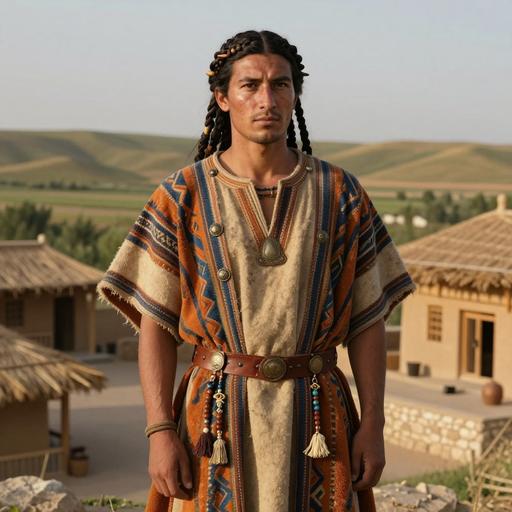
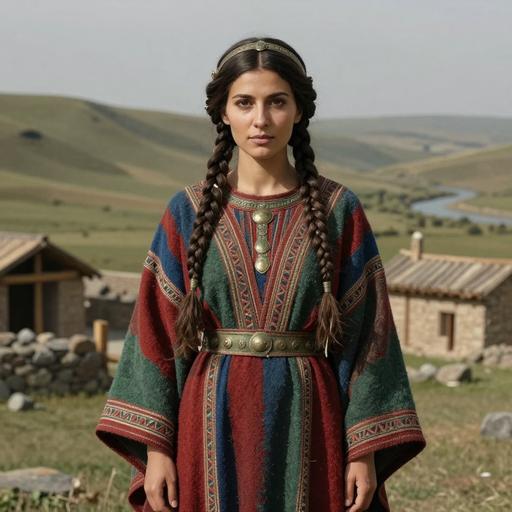
Because T2I1 is nested within a clade strongly associated with early farmers, its presence in Europe is typically interpreted as a signal of Neolithic demic diffusion from Anatolia and the Near East rather than Mesolithic hunter-gatherer ancestry. Where detected in later contexts, T2I1 likely reflects population continuity or localized maternal line survival through Bronze Age and historic periods rather than large-scale demographic turnovers. Its low overall frequency means T2I1 is not a marker of any single wide-ranging archaeological culture on its own, but it is compatible with presence among populations associated with Anatolian Neolithic farmer lineages, early European farmer groups (Cardial/Impressed Ware, LBK-derived communities), and is occasionally observed in contexts influenced by subsequent movements (e.g., Bronze Age and historic mobility around the Mediterranean).
Conclusion
T2I1 is a geographically focused mtDNA subclade that records part of the maternal legacy of Neolithic dispersals from Anatolia into Europe and neighboring regions. Its distribution—scattered but persistent in southern and parts of central/eastern Europe, with lower frequencies in the Near East and North Africa—matches expectations for a lineage that expanded with early farmers and then remained at modest frequencies through later millennia. Continued mitogenome sequencing and a growing ancient DNA record may clarify finer substructure within T2I1 and better resolve its demographic history.
Key Points
- Origins and Evolution
- Subclades
- Geographical Distribution
- Historical and Cultural Significance
- Conclusion