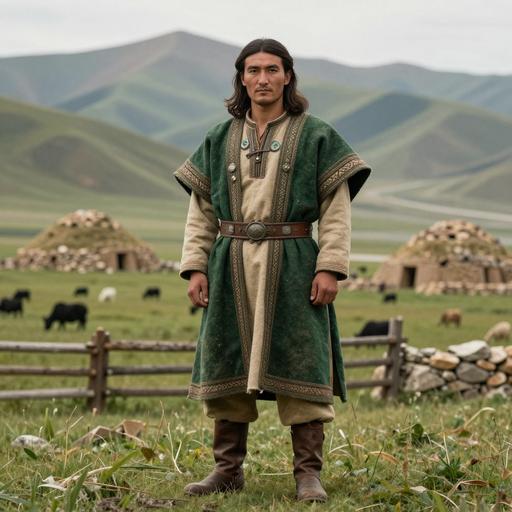
The Story
The journey of mtDNA haplogroup U2A2
Origins and Evolution
mtDNA haplogroup U2A2 is a downstream branch of U2A, itself a component of haplogroup U2 within the broader West Eurasian maternal lineage U. U2 lineages have a deep time depth across South Asia and West Eurasia; U2A likely diversified in South Asia during the Late Upper Paleolithic (~22 kya). U2A2, as a subclade, plausibly arose later—postdating the main U2A split—during the late Pleistocene or early Holocene (here estimated ~14 kya), reflecting further local diversification among South Asian maternal lineages.
Phylogenetically, U2A2 is defined by specific control-region and coding-region mutations that distinguish it from sister subclades within U2A. Because it is a relatively rare subclade, its precise internal branching and coalescent age estimates rely on limited modern sample sets and sparse ancient DNA hits; therefore confidence intervals on dating are broad and will refine as more full mitogenomes are sequenced from the region.
Subclades (if applicable)
At present, U2A2 shows limited documented internal substructure in public databases compared with higher-frequency haplogroups. Where additional variation is observed, it tends to be private or localized to individual populations or lineages. Future targeted mitogenome sequencing in under-sampled South Asian tribal and caste groups, and in ancient samples from South and West Asia, may reveal further subclades and allow more precise phylogenetic resolution.
Geographical Distribution
Primary distribution of U2A2 is in South Asia, where it occurs at low-to-moderate frequencies in some caste and tribal groups, reflecting continuity of Pleistocene-derived maternal lineages. Secondary occurrences are reported across parts of Central Asia and the Iranian plateau/West Asia, likely the result of millennia of gene flow, mobility and population contact across the Hindu Kush–Iranian corridor. Sporadic detections in Eastern and Central Europe and low-frequency reports from North Africa represent either rare long-distance dispersals, historic movements, or sampling of lineages with wide but low-frequency distributions.
Ancient DNA evidence for U2A2 is sparse but present: isolated archaeological detections show that the lineage has been part of the regional maternal gene pool for millennia, consistent with continuity in some locales.
Historical and Cultural Significance
U2A2, like other U2 sublineages, is interpreted as part of the deep hunter-gatherer maternal substrate in South Asia that predates agricultural expansions. Its persistence in some tribal and rural caste groups suggests demographic continuity in refugial or less admixed populations. Because it is not a high-frequency lineage associated with a single archaeological culture, U2A2 is best seen as a marker of deep local ancestry rather than a diagnostic signature of a particular archaeological complex.
Where U2A2 appears outside South Asia, it may mark small-scale migrations, trade-linked gene flow, or assimilation into expanding populations across Central and West Asia in the Holocene. It has limited power as a cultural marker but contributes to multi-lineage reconstructions of past demography when combined with other maternal and paternal markers.
Conclusion
U2A2 is a relatively rare but informative South Asian subclade of U2A that documents continued local maternal diversification after the Late Upper Paleolithic. Its scattered modern and ancient occurrences across South Asia, Central/West Asia and at low levels in Europe and North Africa reflect both long-term persistence in core areas and episodic dispersals beyond that core. Improved mitogenome sampling—especially of understudied South Asian groups and additional ancient specimens—will clarify its internal structure, precise age, and routes of geographic spread.
Key Points
- Origins and Evolution
- Subclades (if applicable)
- Geographical Distribution
- Historical and Cultural Significance
- Conclusion