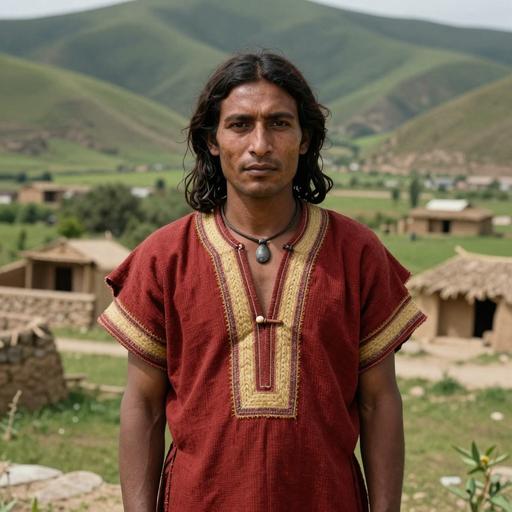
The Story
The journey of mtDNA haplogroup U2C1B
Origins and Evolution
mtDNA haplogroup U2C1B is a subclade of U2C1, itself derived from the broader U2C/U2 branch. Based on the phylogenetic position of U2C1 and observed sequence diversity in downstream lineages, U2C1B likely arose in the South Asian region during the early to mid-Holocene (several thousand years after the Late Pleistocene diversification of U2 lineages). The clade shows the hallmarks of a regional maternal lineage that differentiated within local populations after the Last Glacial Maximum as populations expanded and became structured during the Holocene.
Mutational differences that define U2C1B (relative to U2C1) are consistent with a relatively shallow coalescent time compared with deeper U2 subclades, which is why its estimated origin is placed in the mid-Holocene rather than in the Late Pleistocene.
Subclades
As a downstream branch of U2C1, U2C1B may itself include further minor sub-branches in densely sampled mitogenomes, but current published data indicate it remains a low-frequency lineage with limited internal diversity. Where additional sub-branches have been reported, they are typically geographically restricted within the Indian subcontinent or seen as singletons in neighboring populations; further high-coverage mitogenome sequencing of South Asian and adjacent populations is required to fully resolve any internal structure.
Geographical Distribution
U2C1B is primarily associated with the South Asian maternal pool and is observed at low to moderate frequencies among diverse Indian caste and tribal groups. It has been reported, at lower frequencies, among populations on the western margins of South Asia (e.g., Pakistan and the Iranian Plateau) and sporadically in Central Asian samples. Rare occurrences have been reported farther afield (isolated cases in parts of Eastern and Central Europe and North Africa), consistent with low-frequency long-distance dispersal or historic gene flow. The haplogroup also appears in at least one archaeological mitogenome in published datasets, indicating presence in Holocene-era contexts.
The distribution pattern—regional concentration with sporadic external occurrences—is typical of many maternal lineages that arose in South Asia during the Holocene and reflects demographic processes such as local population expansion, social structure (e.g., endogamy in some groups), and episodic gene flow to neighboring regions.
Historical and Cultural Significance
Because U2C1B is relatively rare and localized, its primary significance is as a marker of maternal ancestry within the South Asian Holocene population substrate. It may be informative in studies of population structure among caste and tribal groups, and in reconstructing maternal genealogies of specific groups in the region. While not tied definitively to any single archaeological culture, the timing and geographic distribution of U2C1B make it compatible with the demographic transformations associated with the South Asian Neolithic and later Holocene periods (for example, local agricultural expansions and the formation of regional cultural horizons such as those associated with Mehrgarh and later the Indus-associated populations).
Sporadic detections outside South Asia likely reflect low-level dispersal events, trade, migration, or isolated maternal line survival rather than large-scale replacements. As with other mtDNA markers, U2C1B provides a maternal-line perspective complementary to autosomal and paternal (Y-DNA) data.
Conclusion
U2C1B is a downstream maternal lineage of U2C1 that most likely originated in the Indian subcontinent during the Holocene and today is a low-to-moderate frequency, geographically concentrated lineage. It is useful for resolving fine-scale maternal ancestry within South Asia and for tracking localized Holocene demographic events, while its rare occurrences beyond the subcontinent illustrate episodic gene flow into neighboring regions. Continued mitogenome sequencing and ancient DNA sampling in South and Central Asia will refine its phylogeny, age estimates, and past distribution.
Key Points
- Origins and Evolution
- Subclades
- Geographical Distribution
- Historical and Cultural Significance
- Conclusion