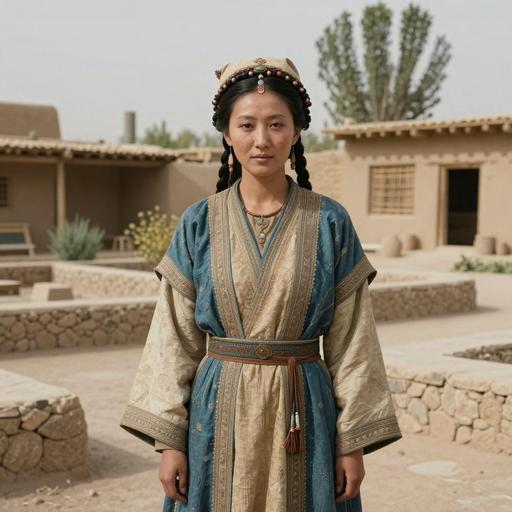
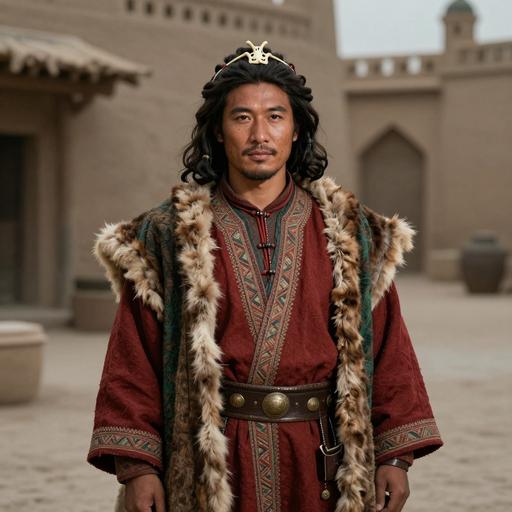
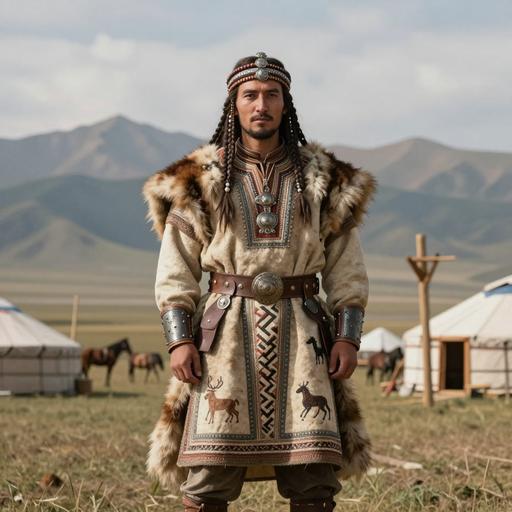
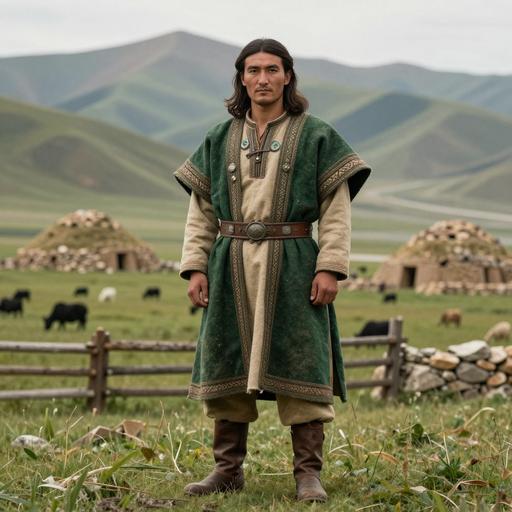
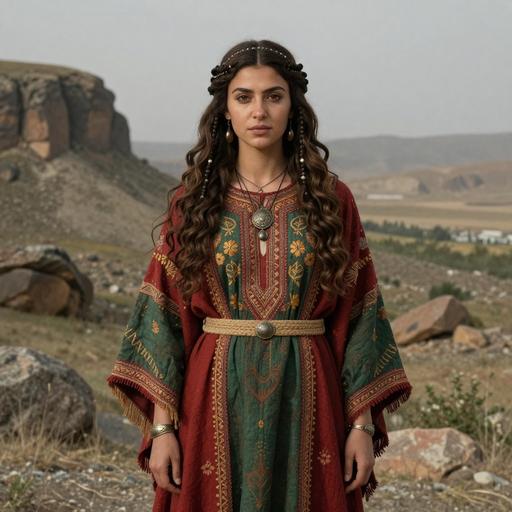
The Story
The journey of mtDNA haplogroup U2E2A1
Origins and Evolution
mtDNA haplogroup U2E2A1 is a derived subclade of U2E2A, itself nested within the broader European/West Eurasian U2 branch that has an important South Asian diversification. Based on phylogenetic position and available temporal estimates for its parent clade, U2E2A1 most plausibly arose in the early Holocene within the South Asian maternal gene pool (roughly ~9 kya). Its emergence likely reflects regional differentiation after the Last Glacial Maximum and during the climatic stabilization and population growth of the early Holocene in South Asia.
Genetic patterns for U2-derived lineages in South Asia show localization and structure consistent with founder effects, drift in endogamous groups, and occasional long-range connections; U2E2A1 fits this pattern as a regional lineage that expanded among local populations while remaining rare outside its core area.
Subclades (if applicable)
U2E2A1 is a terminal or near-terminal branch in current phylogenies where it has been recognized; available data indicate it is a sub-branch of U2E2A and may itself include small downstream clusters defined by low-frequency private mutations observed in modern and ancient samples. Because sampling density across South Asian tribal and caste groups remains uneven and ancient DNA from the subcontinent is still sparse, further sequencing can reveal additional substructure and help clarify the internal topology and age estimates of U2E2A1.
Geographical Distribution
The distribution of U2E2A1 is strongly centered on the Indian subcontinent. High relative frequencies (within the context of rare U-lineages overall) occur in diverse Indian caste and tribal groups, with lower but detectable frequencies in neighboring Pakistan (Punjabi, Sindhi, Pashtun, Baloch), across parts of Central Asia (Kazakh, Uzbek, Tajik and related groups) and on the Iranian Plateau and adjacent Near Eastern zones. Sporadic detections at very low frequency have been reported in parts of Eastern and Central Europe and North Africa, likely representing long-range gene flow or rare historical movements rather than major expansion events. A small number of ancient DNA occurrences (11 samples in the referenced database) tie the lineage to archaeological contexts in South and West Asia, confirming its antiquity in the region.
Historical and Cultural Significance
U2E2A1's presence in a wide array of indigenous South Asian populations suggests it was part of the maternal background of early Holocene and later Neolithic communities in the region. It likely persisted through major cultural transitions — including local Neolithic developments, the later urbanizing phases (e.g., Indus-related contexts), and Bronze Age interactions with neighboring regions — without experiencing a continent-wide sweep. The lineage appears to be associated with populations that practiced long-term local endogamy and with groups that were regionally mobile over millennia (e.g., trade, pastoral connections to Central Asia and Iran).
Because U2E2A1 is relatively rare outside South Asia, its sporadic detection in Central Asia, the Iranian Plateau and marginally in Europe and North Africa is best interpreted as the result of episodic female-mediated gene flow, small-scale migrations, or historical contacts (trade, movement of small groups) rather than a signature of large-scale population replacement.
Conclusion
U2E2A1 represents a regional South Asian maternal lineage that highlights the deep and structured maternal diversity of the subcontinent during the Holocene. It serves as a marker of localized demographic history — founder effects, drift in structured societies, and limited long-range dispersals — and its study benefits from expanded modern sampling and additional ancient DNA from South Asia and adjacent regions. Future high-resolution mitogenomes and denser ancient sampling will better resolve its internal subclades, precise age, and the timing and routes of its occasional dispersals beyond the subcontinent.
Key Points
- Origins and Evolution
- Subclades (if applicable)
- Geographical Distribution
- Historical and Cultural Significance
- Conclusion