Menu
mtDNA Haplogroup • Maternal Lineage

U2E3

mtDNA Haplogroup U2E3

~12,000 years ago
South Asia
2 subclades
Scroll to explore
Chapter I

The Story

The journey of mtDNA haplogroup U2E3

Origins and Evolution

U2E3 is a derived branch of the broader U2E lineage, itself a regional offshoot of haplogroup U2. Given the phylogenetic position within U2E and comparative molecular clock estimates for similar subclades, U2E3 most likely formed in South Asia during the terminal Pleistocene or early Holocene (a few-to-several thousand years after the parent U2E node). The lineage shows the pattern expected of a locally differentiated maternal clade: limited deep branching, a set of defining private mutations, and concentration in particular populations consistent with long-term regional continuity and genetic drift.

Mitochondrial genomes assigned to U2E3 have been observed in modern DNA surveys and a small number of ancient samples (two documented archaeological occurrences in available datasets). Those ancient occurrences reinforce a history of regional persistence rather than a recent, wide-ranging expansion.

Subclades (if applicable)

High-resolution sequencing and ongoing phylogenetic refinement have identified modest internal structure within U2E3, but unlike very large pan-regional haplogroups it does not yet present a large, well-resolved set of named subclades in the published literature. Localized branches (private or low-frequency mutations) are detectable in deep mtDNA sampling of South Asian groups, reflecting founder effects or drift within endogamous communities. As additional whole-mitochondrial genomes are published, more formal subclade names may be established.

Geographical Distribution

U2E3 is concentrated in South Asia, especially among tribal and many caste populations of the Indian subcontinent. Secondary occurrences are recorded in adjacent regions of Pakistan and the Iranian plateau, and at lower frequency in Central Asia (reflecting historical north–westward contacts and periodic gene flow). Sporadic detections in West Eurasia and North Africa are rare and can represent either ancient long-distance movement, individual migration, or low-level admixture; a few archaeological finds in West Eurasia suggest occasional ancient connectivity between South Asia and parts of West Eurasia.

Patterns of distribution are typical for a regional maternal lineage: high frequency and diversity in the putative homeland (South Asia), and decreasing frequency and diversity away from that core area. The distribution is shaped by prehistoric demography (population splits, local expansions), later migrations and trade, and social practices (endogamy) that preserve local maternal lineages.

Historical and Cultural Significance

While U2E3 is not tied unambiguously to any single archaeological culture over its full time depth, its age and distribution suggest a role in the deep maternal population structure of South Asia. Inferences from modern and ancient DNA are consistent with continuity through the Neolithic and into the Bronze Age in the region: U2E3 likely formed prior to or during early local food-producing societies and persisted through subsequent cultural horizons (including communities associated with the Indus Valley/Mature Harappan interaction sphere). Its presence in tribal groups today underscores a pattern of long-term maternal continuity in many parts of the subcontinent.

Outside South Asia, limited frequencies in Central Asia and on the Iranian plateau point to historical contacts such as trade, pastoral movements, or small-scale migrations rather than a large-scale demographic replacement driven by this lineage.

Conclusion

U2E3 is best interpreted as a regional South Asian maternal lineage with a Late Pleistocene–early Holocene origin and a demographic history characterized by local persistence, modest internal substructure, and occasional dispersal beyond the subcontinent. Continued whole-mitochondrial sequencing of under-sampled populations and increased ancient DNA sampling in South Asia and neighboring regions will clarify its finer-scale phylogeny and the timing and routes of its more distant occurrences.

Key Points

  • Origins and Evolution
  • Subclades (if applicable)
  • Geographical Distribution
  • Historical and Cultural Significance
  • Conclusion

Chapter II

Tree & Relationships

Phylogenetic context and subclades

Evolution Path

This haplogroup's evolutionary journey from its earliest ancestor to the present.

Steps Haplogroup Age Estimate Archaeology Era Time Passed Immediate Descendants Tested Modern Descendants Ancient Connections
1 U2E3 Current ~12,000 years ago 🌾 Neolithic 12,000 years 2 5 0
2 U2E ~18,000 years ago 🏹 Mesolithic 18,000 years 3 194 45
3 U2 ~38,000 years ago 🦴 Paleolithic 38,000 years 5 757 37
4 U ~46,000 years ago 🦴 Paleolithic 46,000 years 12 2,835 110
5 R ~60,000 years ago 🦴 Paleolithic 60,000 years 12 10,987 57
6 N ~60,000 years ago 🦴 Paleolithic 60,000 years 15 15,452 13
7 L3 ~70,000 years ago 🦴 Paleolithic 70,000 years 11 17,621 6
8 L ~160,000 years ago 🦴 Paleolithic 160,000 years 7 18,987 5

Siblings (2)

Other branches from the same parent haplogroup

Chapter III

Where in the World

Geographic distribution and modern presence


Place of Origin

South Asia

Modern Distribution

The populations where mtDNA haplogroup U2E3 is found include:

  1. Various Indian caste and tribal groups (India)
  2. Pakistani populations (Punjabi, Sindhi, Pashtun, Baloch groups)
  3. Central Asian populations (Kazakh, Uzbek, Tajik and related groups)
  4. Populations on the Iranian Plateau and adjacent Near Eastern groups
  5. European populations at very low frequency (sporadic detections in Eastern/Central Europe and isolated ancient samples)
  6. North African groups at low frequency (reported in some Berber-adjacent samples)
  7. Indigenous South Asian populations with high local diversity (reflecting deep regional continuity)
  8. Ancient Mesolithic/Neolithic/Bronze Age archaeological samples in West Eurasia and South Asia (sporadic ancient DNA occurrences)
CHAPTER IV

When in Time

Your haplogroup in the context of human history

~12k years ago

Haplogroup U2E3

Your mtDNA haplogroup emerged in South Asia

South Asia
~10k years ago

Neolithic Revolution

Agriculture begins, settled communities form

~5k years ago

Bronze Age

Metalworking, writing, and early civilizations

~3k years ago

Iron Age

Iron tools, expanded trade networks

~2k years ago

Classical Antiquity

Greek and Roman civilizations flourish

Present

Present Day

Modern era

Your Haplogroup
Historical Era
Chapter IV-B

Linked Cultures

Ancient cultures associated with mtDNA haplogroup U2E3

Cultural Heritage

These ancient cultures have been linked to haplogroup U2E3 based on matching ancient DNA samples from archaeological excavations. The presence of this haplogroup in these cultures provides insights into the migrations and population movements of populations carrying this haplogroup.

Avar Catacomb Culture Koshkino-Boborykino Kostenki Culture Mesolithic Ukrainian Ob River Culture Sunghir Culture
Culture assignments are based on archaeological context of ancient DNA samples and may represent regional associations during specific time periods.
Chapter V

Sample Catalog

Top 50 ancient DNA samples directly related to haplogroup U2E3 or parent clades

50 / 50 samples
Portrait Sample Country Era Date Culture mtDNA Match
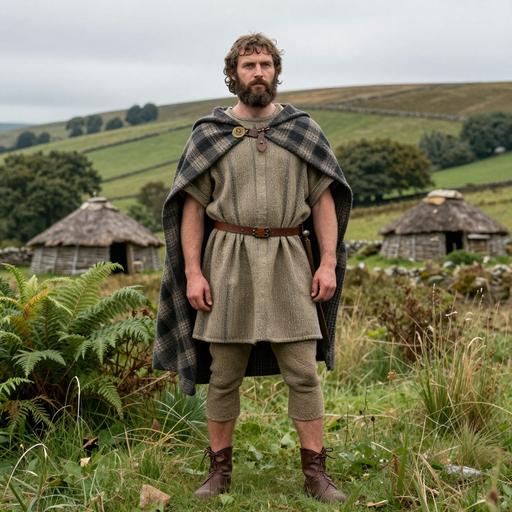
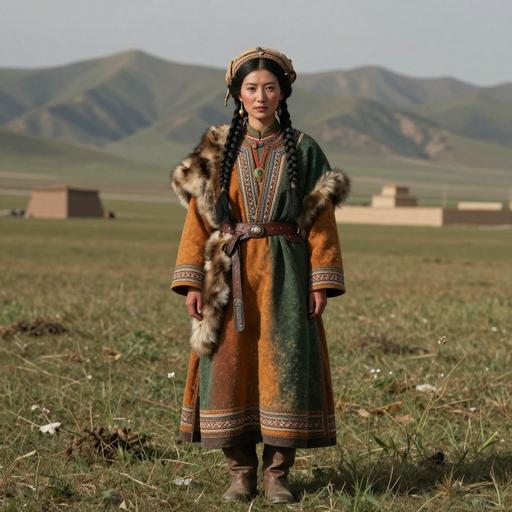
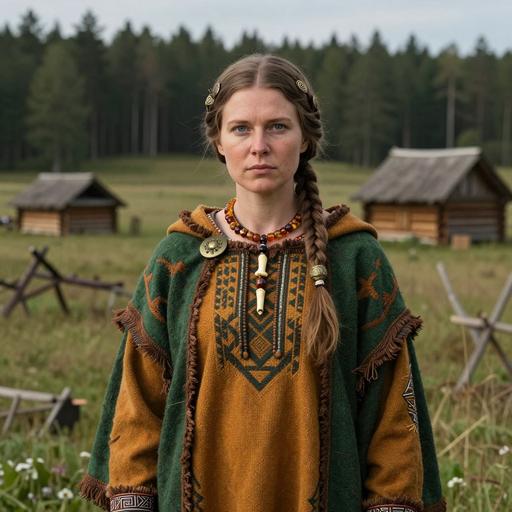
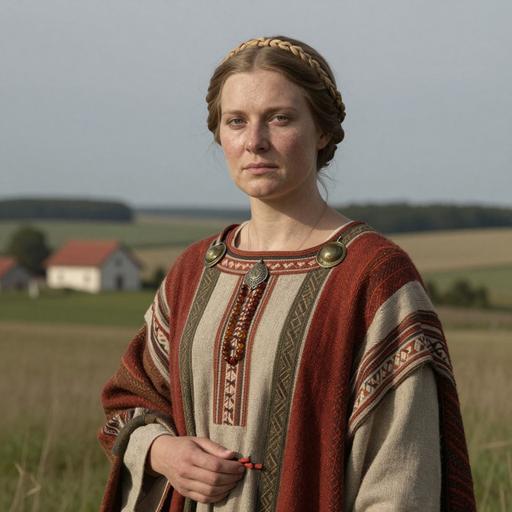
Portrait of ancient individual R114 from Italy, dated 1 CE - 200 CE
R114
Italy Imperial Rome 1 CE - 200 CE Roman Empire U1b1 Direct
Portrait of ancient individual R115 from Italy, dated 1 CE - 200 CE
R115
Italy Imperial Rome 1 CE - 200 CE Roman Empire U4 Direct
Portrait of ancient individual R116 from Italy, dated 1 CE - 200 CE
R116
Italy Imperial Rome 1 CE - 200 CE Roman Empire U3a2c* Direct
Portrait of ancient individual R436 from Italy, dated 1 CE - 200 CE
R436
Italy Imperial Rome 1 CE - 200 CE Roman Empire U5b3a Direct
Portrait of ancient individual R45 from Italy, dated 1 CE - 400 CE
R45
Italy Imperial Rome 1 CE - 400 CE Roman Empire U3b1 Direct
Portrait of ancient individual R51 from Italy, dated 1 CE - 400 CE
R51
Italy Imperial Rome 1 CE - 400 CE Roman Empire U3b1 Direct
Portrait of ancient individual KD042 from United Kingdom, dated 1 CE - 250 CE
KD042
United Kingdom Iron Age Orkney, Scotland 1 CE - 250 CE Orcadian Iron Age U5a1b1a Direct
Portrait of ancient individual VK532 from Denmark, dated 1 CE - 200 CE
VK532
Denmark Iron Age Denmark 1 CE - 200 CE Danish Iron Age U2e2a1 Direct
Portrait of ancient individual I15514 from Serbia, dated 1 CE - 400 CE
I15514
Serbia Roman Serbia 1 CE - 400 CE Roman Provincial U4a2a Direct
Portrait of ancient individual I15536 from Serbia, dated 1 CE - 400 CE
I15536
Serbia Roman Serbia 1 CE - 400 CE Roman Provincial U5a1j Direct
Chapter VI

Carrier Distribution Map

Geographic distribution of 100 ancient DNA samples carrying haplogroup U2E3

Time Period Filter
All Time Periods
Showing all samples
Each marker represents an ancient individual
Chapter VII

Temporal Distribution

Distribution of carriers across archaeological periods

Chapter VIII

Geographic Distribution

Distribution of carriers by country of origin

Chapter IX

Country × Era Distribution

Cross-tabulation of carrier countries and archaeological periods

Data

Data & Provenance

Source information and data quality

Last Updated 2026-02-16
Confidence Score 50/100
Coverage Low
Data Source

We use the latest phylotree for MTDNA haplogroup classification and data.