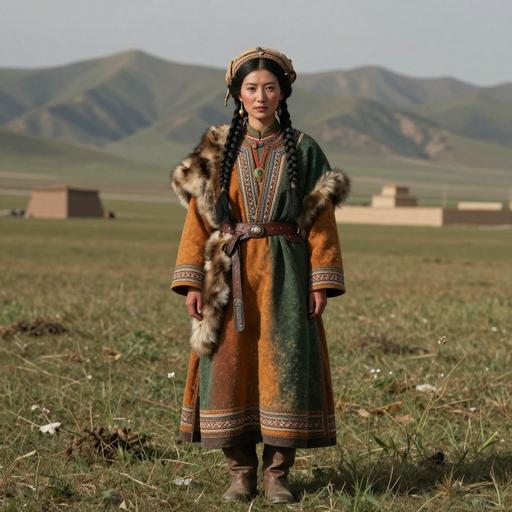
The Story
The journey of mtDNA haplogroup U3A2A1
Origins and Evolution
mtDNA haplogroup U3A2A1 is a downstream subclade of U3A2A, itself nested within the broader U3 branch of haplogroup U. Based on its phylogenetic position and comparisons with coalescence estimates for closely related U3 lineages, U3A2A1 most likely arose in the Near East or Caucasus region during the mid‑Holocene (roughly ~5 kya). This timing places its emergence after the initial spread of Neolithic farming from Anatolia and the Levant and contemporaneous with Chalcolithic–Bronze Age demographic events that reshaped genetic structure across West Eurasia.
The lineage is defined by private and downstream control‑region and coding‑region mutations that distinguish it from its parent U3A2A and from sister subclades. Its phylogenetic placement indicates it is a relatively young, derived maternal lineage that expanded locally rather than producing a broad, high‑frequency diaspora.
Subclades
As a fine‑scale subclade (U3A2A1), documented downstream diversity is limited compared with older branches of U3. Where present, internal variation is modest, consistent with a recent origin and limited subsequent diversification. If additional samples are recovered — especially from ancient DNA contexts in the Near East, Anatolia and the Caucasus — it is plausible that new subbranches (e.g., U3A2A1a, U3A2A1b) will be defined, reflecting localized maternal lineages within regional populations.
Geographical Distribution
U3A2A1 shows a geographically concentrated distribution centered on the Near East and the Caucasus, with low to sporadic occurrences in surrounding regions. Modern and ancient sample evidence indicates presence in:
- Levantine populations (Lebanon, Syria, Palestine)
- Caucasus groups (Armenia, Georgia, Azerbaijan)
- Anatolia/Turkish populations
- Scattered occurrences in North Africa (Mediterranean coastal groups and some Berber populations)
- Low frequencies in southern Europe (Italy, Greece, Iberia) and among some Jewish communities (Ashkenazi and Sephardic maternal lineages)
- Very occasional observations in South Asia and Central Asia, consistent with long‑range historical gene flow and trade routes
The detection of U3A2A1 in a small number of ancient DNA samples supports continuity of the lineage in the region through the Holocene, though its low prevalence has limited its recovery in prehistoric contexts compared with more common maternal lineages.
Historical and Cultural Significance
Although not diagnostic of any single archaeological culture, the emergence and dispersal timing of U3A2A1 aligns it with later Holocene cultural dynamics in the Near East — namely Chalcolithic and Bronze Age movements, trade networks, and population restructuring following Neolithic farmer expansions. Its presence in coastal North Africa and southern Europe at low frequencies likely reflects maritime contacts and Mediterranean gene flow during historical periods as well as earlier Bronze Age connections.
U3A2A1 is also found in some Jewish maternal lineages; this likely reflects the complex demographic history of Levantine populations, diasporas, and community founder events over the last several millennia rather than a unique association with a single ethnoreligious group.
Conclusion
U3A2A1 is a derived, regionally focused mtDNA subclade that provides insight into mid‑Holocene maternal genealogies of the Near East and adjacent regions. Its limited diversity and low frequencies in peripheral areas point to local expansion and sporadic long‑distance dispersal events. Continued ancient DNA sampling across the Near East, Anatolia and the Caucasus will clarify its deeper history, internal branching and exact roles in prehistoric population movements.
Key Points
- Origins and Evolution
- Subclades
- Geographical Distribution
- Historical and Cultural Significance
- Conclusion