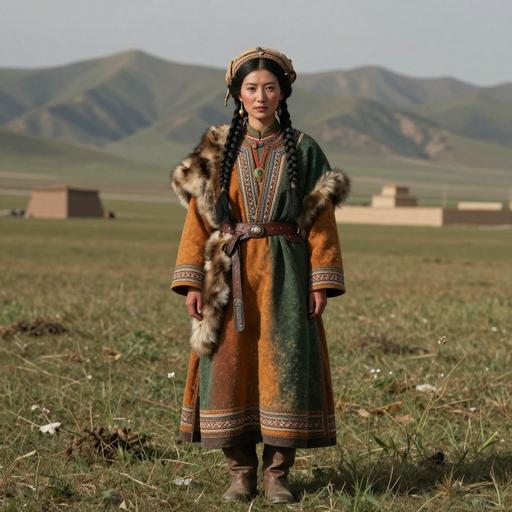
The Story
The journey of mtDNA haplogroup U3B1
Origins and Evolution
mtDNA haplogroup U3B1 is a downstream lineage of U3B, itself a branch of haplogroup U3. Given the established position of U3B in the phylogeny and population-genetic evidence for U3 substructure, U3B1 most plausibly arose in the Near East or Caucasus during the Early Holocene (roughly around 9 kya, i.e., after the Last Glacial Maximum). Its emergence likely represents local diversification of Near Eastern maternal lineages that were associated with postglacial population expansions and the early phases of Neolithic demographic growth.
Subclades
U3B1 sits beneath U3B on the mtDNA tree; as a named subclade it may contain further internal branches identifiable by private mutations in hypervariable and coding-region sites. Where deep sequencing and complete mitogenomes are available, researchers can resolve U3B1 into finer subbranches that reflect later, regionally restricted dispersals (for example, lineages concentrated in the Levant vs. the Caucasus). At present, U3B1 appears to be a relatively low-frequency lineage with limited but geographically widespread substructure consistent with Neolithic and post-Neolithic movements.
Geographical Distribution
U3B1 is concentrated in the Near East/Caucasus and is also detected at lower frequencies in the Levant, Anatolia, parts of North Africa (including some Berber groups), and southern Europe (Italy, Greece, Iberia). It appears sporadically in Jewish communities (both Ashkenazi and Sephardic contexts), and at low frequency in parts of South Asia and Central Asia, likely reflecting later historical contact, migration, or trading networks. U3B1 has also been observed in a small number of ancient DNA samples (on the order of single-digit counts in many survey databases), indicating an archaeological presence consistent with Neolithic and subsequent periods.
Historical and Cultural Significance
Because of its inferred Near Eastern origin and presence in Anatolia, the Levant and North Africa, U3B1 is best interpreted as part of the maternal substrate associated with early farming populations and their descendants in western Asia and adjacent regions. Its occurrence in southern Europe and Jewish communities is consistent with both Neolithic maritime and overland expansions and later historical movements (trade, diasporas, and regional population turnover). U3B1 is typically found alongside other common West Eurasian mtDNA lineages (e.g., H, J) and often in populations with paternal lineages typical of the Near East/Caucasus (e.g., G2a, J2), reflecting demographic processes that mixed maternal and paternal ancestries over millennia.
Conclusion
U3B1 is a modest-frequency, regionally informative maternal lineage that reflects Near Eastern/Caucasus differentiation of U3 during the early Holocene and subsequent dispersals into the Levant, Anatolia, North Africa and parts of southern Europe. While not as widespread or as frequent as some other West Eurasian mtDNA haplogroups, its phylogenetic placement and geographic pattern provide useful resolution for studies of Neolithic expansion, historical connectivity across the Mediterranean and Near East, and maternal ancestry in relevant modern and ancient populations.
Key Points
- Origins and Evolution
- Subclades
- Geographical Distribution
- Historical and Cultural Significance
- Conclusion