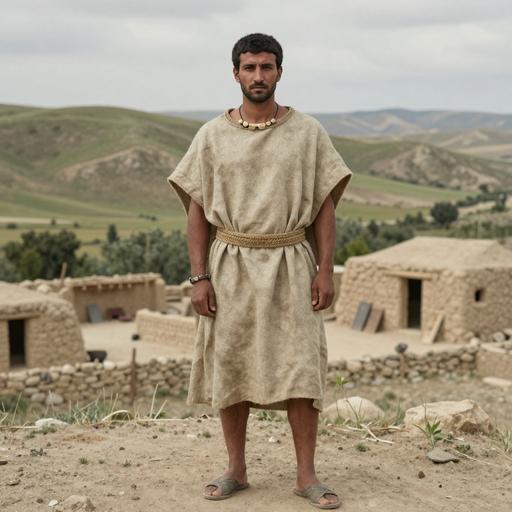
The Story
The journey of mtDNA haplogroup U3B2C
Origins and Evolution
mtDNA haplogroup U3B2C is a downstream subclade of U3B2 within haplogroup U3. As a Holocene lineage, it most plausibly arose in the Near East / Caucasus region after the Last Glacial Maximum, during the mid-to-late Holocene (several thousand years after the initial spread of U3). Its phylogenetic position as a subclade of U3B2 ties it to maternal gene pools that expanded with Neolithic and post-Neolithic population movements across the eastern Mediterranean and adjacent regions.
The modest diversity and generally low-to-moderate regional frequencies of U3B2C suggest either a relatively recent origin compared with deeper U3 branches or the survival of a limited number of maternal lineages that experienced local founder effects and drift. The presence of U3B2C in a small number of ancient DNA samples confirms its antiquity in archaeological contexts and supports continuity in some local maternal lineages from the Holocene to the present.
Subclades
U3B2C is itself a narrow terminal subclade beneath U3B2. Depending on sequencing resolution and database sampling, U3B2C may contain one or a few downstream variants observed in modern or ancient samples; however, it is not as deeply branched or widely diverse as major haplogroups. Where available, high-resolution mitogenomes can resolve private mutations within U3B2C that help track localized maternal lineages and micro-dispersals.
Geographical Distribution
U3B2C is concentrated in the broad arc that connects the Caucasus and the Levant into Anatolia, with spillover into neighboring regions. Modern occurrences are reported at low-to-moderate frequencies in Levantine populations (Lebanon, Syria, Palestine), Caucasus groups (Armenia, Georgia, Azerbaijan), and Anatolia/Turkish populations. Peripheral occurrences are seen in coastal North Africa (including some Berber and Mediterranean coastal groups) and in parts of southern Europe (Italy, Greece, Iberia) at generally low frequencies, which is consistent with maritime and overland gene flow in the Holocene. Sporadic, low-frequency occurrences recorded in South Asia and Central Asia likely reflect later long-distance movements, trade contacts, or small-scale gene flow rather than primary centers of origin.
The geographic pattern is consistent with a Near Eastern/Caucasus origin followed by diffusion via Neolithic population processes and subsequent Bronze Age / Iron Age demographic events (trade, colonial movements, diasporas). The detection of U3B2C in at least two ancient individuals strengthens its association with prehistoric and historic human groups in the eastern Mediterranean and adjacent regions.
Historical and Cultural Significance
Although not a high-frequency lineage, U3B2C is informative for reconstructing maternal histories in the eastern Mediterranean and adjacent regions. Its distribution overlaps with archaeological and historic phenomena such as Neolithic farmer dispersals from the Near East, Bronze Age interregional connectivity, and later historic movements including Mediterranean trade networks and diasporas. U3B2C has been observed in some Jewish communities (both Ashkenazi and Sephardic-associated lineages in specific cases), reflecting how small maternal lineages can be preserved within endogamous or diasporic groups.
Because U3B2C coexists with other Near Eastern mtDNA lineages (for example haplogroups H, J, and other U3 subclades) and with paternal haplogroups typical of the region (such as Y-DNA J2 and E1b1b in many populations), it is a useful marker in multilocus studies that aim to disentangle sex-biased migrations, localized founder events, and regional continuity versus replacement.
Conclusion
U3B2C is a localized Holocene maternal lineage rooted in the Near East / Caucasus that today appears at low-to-moderate frequencies in the Levant, Anatolia, parts of North Africa and southern Europe. Its restricted diversity, occasional presence in Jewish and Mediterranean coastal groups, and identification in ancient DNA indicate it is a persistent, regionally informative lineage reflecting Neolithic and later maternal gene flow across the eastern Mediterranean and neighboring regions.
Key Points
- Origins and Evolution
- Subclades
- Geographical Distribution
- Historical and Cultural Significance
- Conclusion