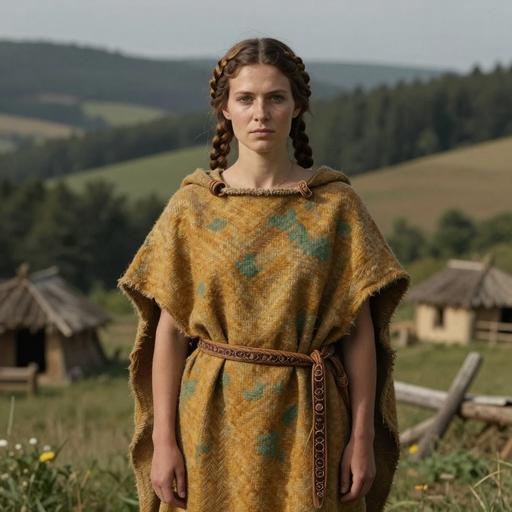
The Story
The journey of mtDNA haplogroup U5A1A1L
Origins and Evolution
mtDNA haplogroup U5A1A1L is a downstream branch of U5a1a1, itself a sublineage of U5a, one of the oldest and most characteristic maternal lineages of post‑glacial Europe. U5 lineages expanded in Europe after the Last Glacial Maximum, and more derived branches such as U5a1a1 likely arose during the early Holocene as hunter‑gatherer populations recolonized northern and northeastern Europe. Based on its phylogenetic position beneath U5a1a1 and the geographic pattern of related lineages, U5A1A1L most plausibly originated approximately 6–10 kya (here estimated ~8 kya), consistent with a post‑glacial Mesolithic origin and later persistence in northern populations.
Because U5A1A1L is a relatively fine‑scale terminal branch (often represented by a limited set of defining mutations), dating and phylogeographic inference are sensitive to sample size; current inferences draw on published phylogenies for U5 and the reported occurrence of this specific subclade in a small number of modern and ancient samples.
Subclades (if applicable)
At present U5A1A1L appears to be a terminal or near‑terminal branch beneath U5a1a1 with limited reported downstream diversity in public databases. The suffix "L" denotes a named minor branch; available data suggest few if any well‑characterized child clades, indicating that U5A1A1L is either a recently diversified local lineage or a sparsely sampled ancient lineage. As more whole‑mitogenome sequences and ancient DNA samples are published, additional internal structure (subclades) may be revealed.
Geographical Distribution
Modern distribution: U5A1A1L shows its highest relative frequencies in northern Scandinavia and among Saami and other northern Fennoscandian groups, consistent with the persistence of Mesolithic maternal lineages in those regions. At lower frequencies it is detected across eastern and central Europe and sporadically in western Europe and nearby areas (e.g., Caucasus, North Africa) likely due to later movements and long‑range gene flow.
Ancient DNA: The haplogroup has been identified in a small number of archaeological individuals (several reported instances in available databases), supporting a continuing presence from the Mesolithic/early Holocene into later prehistoric contexts in northern Europe. The limited ancient sample count underlines both the antiquity of the broader U5a cluster and the relative rarity of this exact terminal branch.
Historical and Cultural Significance
U5 lineages in general are emblematic of European Mesolithic hunter‑gatherer maternal ancestry. A subclade like U5A1A1L likely reflects localized survival and continuity of Mesolithic maternal lines through the Neolithic and later periods, especially in northern and marginal environments where incoming Neolithic farming populations had less demographic dominance. The presence of U5A1A1L in Saami and other northern groups today fits broader genetic, archaeological, and linguistic evidence for partial continuity of pre‑Neolithic ancestry in high‑latitude Europe.
While U5 lineages are often less associated with early Neolithic farmer cultures (which carried different mtDNA profiles such as H, J, K, T), they occasionally appear in later prehistoric contexts (Corded Ware, Funnel Beaker, etc.) through assimilation or persistence of local maternal lines. The rarity of U5A1A1L makes it a useful marker for studies of fine‑scale demographic continuity and of maternal line survival in northern Europe.
Conclusion
U5A1A1L is best understood as a geographically centered, low‑to‑moderate frequency descendant of the broader Mesolithic U5a1a1 lineage. Its distribution emphasizes the long‑term survival of pre‑Neolithic maternal ancestry in northern Europe, especially in Scandinavia and Saami populations. Continued whole‑mitogenome sequencing and targeted ancient DNA sampling in northern and eastern Europe will refine the age, internal structure, and migratory history of this minor but informative clade.
Note: Interpretations here rely on the position of U5A1A1L beneath U5a1a1 and on patterns documented for related U5 subclades; the limited number of reported samples means dates and finer geographic inferences remain provisional.
Key Points
- Origins and Evolution
- Subclades (if applicable)
- Geographical Distribution
- Historical and Cultural Significance
- Conclusion