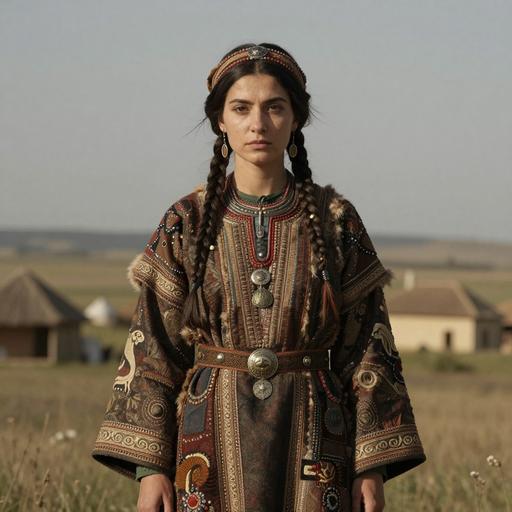
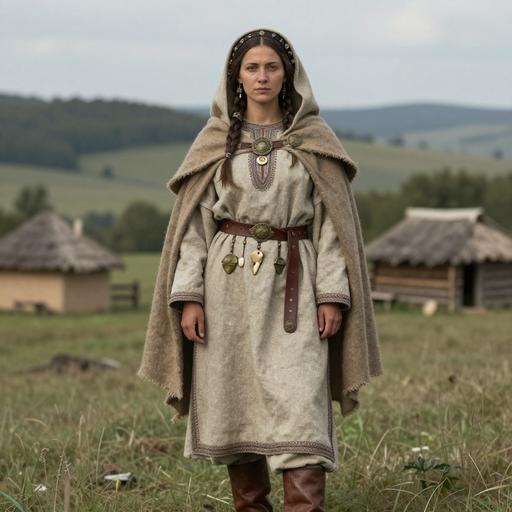
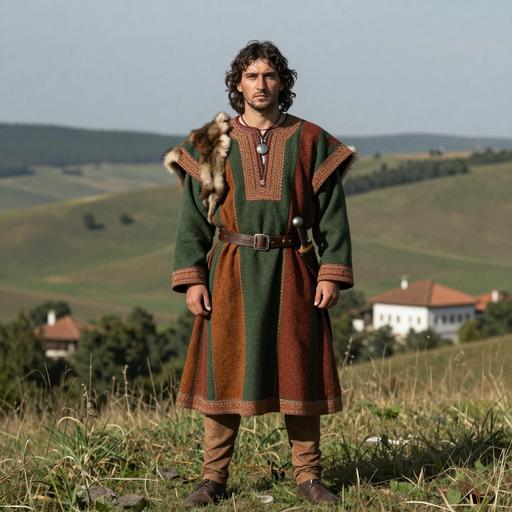
The Story
The journey of mtDNA haplogroup U5A1B1C
Origins and Evolution
U5A1B1C is a downstream branch of U5a1, one of the oldest and most characteristic maternal lineages of post‑glacial European hunter‑gatherers. The broader U5a clade expanded in Europe after the Last Glacial Maximum (LGM) as ice sheets retreated, and subclades such as U5A1B1 likely formed in northern or northeastern Europe during the early to mid Holocene. U5A1B1C represents a further derived offshoot of U5A1B1 and, based on its phylogenetic position and limited diversity, probably originated several millennia after the parent node as local populations diversified or experienced founder effects.
Ancient DNA studies show deep continuity of U5 lineages among Mesolithic hunter‑gatherers across northern and eastern Europe. Although U5 frequencies declined in some regions with the arrival of Neolithic farmers, U5 subclades—including U5a derivatives—remain detectable in both ancient and modern northern European groups, consistent with long‑term persistence and local continuity.
Subclades (if applicable)
At present, U5A1B1C itself is a relatively specific terminal subclade with limited reported internal diversity in public databases, reflecting either a recent origin, limited sampling, or bottleneck/founder events in the populations that carry it. Because it is a derived branch of U5A1B1, its closest relatives are other U5a1 subclades and sibling branches under U5A1B1. Future ancient and modern mitogenome sequencing may reveal additional downstream branches or refine the internal structure of U5A1B1C.
Geographical Distribution
U5A1B1C is concentrated in northern and northeastern Europe, where U5a subclades are most common. Modern detections are highest in parts of Scandinavia and among some indigenous northern groups (e.g., Saami), with lower but measurable frequencies in parts of eastern and central Europe. Occasional low‑frequency occurrences have been reported farther afield (e.g., the Caucasus, Central Asia, and North Africa), likely reflecting historical gene flow, small founder events, or sampling artifacts.
The limited number of reported ancient occurrences (including one archaeological sample in the referenced database) indicates that while the clade has ancient roots in Europe, it has remained relatively rare or locally restricted compared with more widespread maternal lineages.
Historical and Cultural Significance
Because U5A1B1C descends from U5 lineages that were prominent among Mesolithic hunter‑gatherers, its presence is often interpreted as a marker of deep Paleolithic/Mesolithic ancestry in northern Europe. In regions such as Scandinavia and the Baltic, U5 subclades are associated with hunter‑gatherer substrate populations that persisted through the Mesolithic and contributed maternally to later Neolithic and Bronze Age populations.
Where U5A1B1C is observed at elevated local frequencies (for example in isolated or indigenous northern communities), this pattern may reflect genetic continuity, founder effects, or reduced population replacement relative to more southerly regions that experienced larger demographic turnovers during the Neolithic and Bronze Age expansions.
Conclusion
U5A1B1C is best understood as a geographically northerly, post‑LGM derivative of the deep European U5a lineage, reflecting Mesolithic maternal ancestry with continuity into the modern era in parts of northern and eastern Europe. Its low overall frequency and limited number of documented ancient samples make it an informative but relatively rare marker for studies of regional continuity, founder events, and the maternal legacy of Europe's hunter‑gatherers.
Key Points
- Origins and Evolution
- Subclades (if applicable)
- Geographical Distribution
- Historical and Cultural Significance
- Conclusion