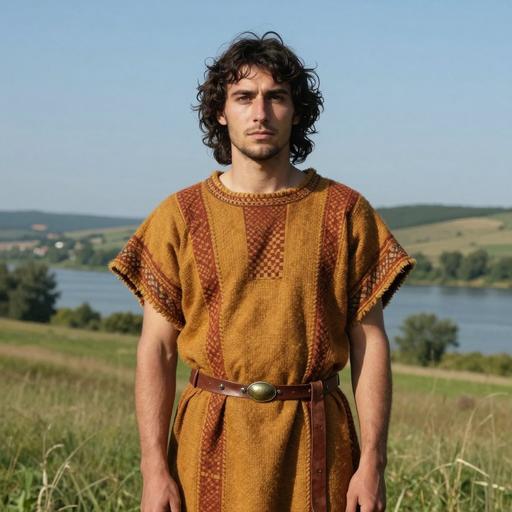
The Story
The journey of mtDNA haplogroup U5B1D1B
Origins and Evolution
mtDNA haplogroup U5B1D1B is a downstream branch of U5B1D1, itself part of the broader U5B subclade of haplogroup U5. Haplogroup U5 is one of the oldest European maternal lineages and is widely associated with Upper Paleolithic and Mesolithic hunter‑gatherer populations across Europe. U5B1D1 appears to have a post‑glacial emergence in Northern/Central Europe (the parent U5B1D1 is estimated at ~7 kya), and U5B1D1B represents a further, more recent diversification likely formed during the mid‑to‑late Holocene (on the order of a few thousand years after the parent node).
Genetic evidence and phylogenetic placement indicate that U5B1D1B is a low‑diversity, geographically focused subclade that preserved maternal continuity in northerly populations after the Last Glacial Maximum, consistent with survival and local differentiation in northern refugia or rapidly recolonized landscapes following deglaciation.
Subclades (if applicable)
U5B1D1B is itself a terminal or near‑terminal branch in many modern datasets, with few well‑defined downstream sublineages reported to date. Its low diversity and limited number of dated ancient occurrences suggest a recent branching event relative to older U5 subclades. As sampling and ancient DNA studies expand in northern Europe, additional micro‑branches of U5B1D1B may be resolved.
Geographical Distribution
The distribution of U5B1D1B is concentrated in Northern Europe, especially in Scandinavia and among the Saami (Sápmi), where continuity of Mesolithic‑derived maternal lineages is well documented. The haplogroup occurs at lower frequencies across the British Isles, parts of Central and Eastern Europe, and sporadically in the Iberian Peninsula. Very low‑frequency occurrences have also been reported in some North African and Caucasus datasets, which may reflect late prehistoric or historic gene flow, long‑distance migration, or chance, low‑level sharing of maternal lineages.
Ancient DNA recovery of U5B1D1 and its derivatives in northern and central European contexts supports a scenario of local persistence from the Mesolithic into later periods rather than a large‑scale recent introduction.
Historical and Cultural Significance
U5B1D1B fits the broader pattern of Mesolithic hunter‑gatherer maternal continuity in northern Europe. Lineages within U5 (including U5B derivatives) are commonly interpreted as markers of pre‑Neolithic ancestry in Europe that persisted through the Neolithic and Bronze Age via gene flow and admixture dynamics rather than complete replacement.
In historic and ethnographic terms, the haplogroup's prominence among Saami and northern Scandinavian groups signals maternal continuity that correlates with archaeological evidence for long‑term occupation of high latitudes and the survival of localized populations through climatic and cultural transitions. Where U5B1D1B appears outside Scandinavia at low frequency, it often co‑occurs with other deep European maternal lineages (for example H subclades, V) consistent with complex demographic histories involving migration, trade, and population contacts in the Holocene.
Conclusion
U5B1D1B is a focused, post‑glacial mtDNA subclade reflecting northern European maternal continuity. It is best understood as a relatively young branch of a deep European lineage (U5) that highlights the durability of Mesolithic maternal ancestry in Scandinavia and neighboring regions, while its low‑frequency presence farther afield underscores the nuanced and regionally variable demographic history of Europe during the Holocene.
Key Points
- Origins and Evolution
- Subclades (if applicable)
- Geographical Distribution
- Historical and Cultural Significance
- Conclusion