Menu
mtDNA Haplogroup • Maternal Lineage

W1E1

mtDNA Haplogroup W1E1

~6,000 years ago
Near East / Caucasus
1 subclades
Scroll to explore
Chapter I

The Story

The journey of mtDNA haplogroup W1E1

Origins and Evolution

mtDNA haplogroup W1E1 is a downstream branch of W1E, itself a subclade of haplogroup W1 (within macro-haplogroup W). Based on phylogenetic position and the time-depth of its parent clade, W1E1 most likely differentiated in the Near East or Caucasus region during the post‑glacial to Neolithic interval (estimated here at roughly ~6 kya). Its origin follows the earlier formation of W1E (~9 kya) and represents a localized maternal lineage that expanded only modestly beyond its formative region.

Like many low-frequency mtDNA subclades, W1E1 is characterized by a small number of defining mutations on the background of W1E and is detectable today as scattered occurrences rather than as a dominant regional lineage. The presence of W1E1 in at least one ancient DNA context confirms its antiquity and continuity at low frequency in archaeological populations.

Subclades

At present W1E1 is a relatively narrow branch; published and cataloged sequence data indicate few if any well-differentiated downstream subclades with broad geographic signatures. Where additional derived lineages exist, they tend to be rare and geographically localized, reflecting limited demographic expansions after the initial split from W1E. As sampling increases, small regional sub-branches may be identified, especially within the Caucasus, Anatolia and adjacent steppe and Central Asian zones.

Geographical Distribution

W1E1 shows a patchy, low-frequency distribution consistent with a Near Eastern/Caucasian origin followed by limited dispersals. Modern and ancient samples place W1E1 and close relatives in:

  • Caucasus and Anatolia (highest relative concentration compared to surrounding regions) reflecting likely origin and persistence.
  • Eastern and Northern Europe (sporadic occurrences, including Baltic-region and parts of Russia/Poland) likely resulting from small-scale gene flow during late Neolithic and later movements.
  • Central Asia and South Asia (northwest India and Pakistan, Kazakhstan, Uzbekistan) consistent with eastward spread along trade, migration and contact routes in the Bronze Age and later periods.
  • Middle East and small numbers in western China / southwestern Siberia, indicating long-distance but rare dispersal events.

The overall pattern is of a maternal lineage that remained relatively localized but was carried in small numbers into neighboring regions by the complex web of Neolithic demographic expansions, Bronze Age contacts, and later historical movements.

Historical and Cultural Significance

Because W1E1 is low frequency, it is not strongly associated with any single large-scale prehistoric migration on its own. However, its geographic pattern ties it to several broader processes:

  • Neolithic expansions from Anatolia and the southern Caucasus: W1E lineages more broadly are tied to post‑glacial and Neolithic demographic dynamics in the Near East; W1E1 likely formed during this timeframe and may have been carried by early farmer or farmer-adjacent groups.
  • Bronze Age contacts and steppe interactions: sporadic occurrences in Eastern Europe and Central Asia may reflect small-scale exchanges, mobility and admixture events during the Bronze Age when steppe and neighboring populations interacted with Near Eastern and Caucasus groups.
  • Long-range historical mobility: presence in South Asia and western China at low frequency can be explained by later trade, migration, or assimilative processes over millennia rather than by a major demographic replacement.

Because of its scarcity, W1E1 is most useful in population-genetic studies as a marker of localized maternal ancestry and as a lineage that can help trace fine-scale connections between the Caucasus/Near East and neighboring regions when combined with autosomal and Y-chromosome evidence.

Conclusion

W1E1 is a derived mtDNA lineage rooted in the Near East/Caucasus (post‑glacial to Neolithic era) that persisted at low frequencies and dispersed in limited fashion into Europe, Central and South Asia and parts of western China. Its rarity makes it a helpful marker for tracing specific maternal ancestries and small-scale migration or contact events, but current conclusions are constrained by limited sampling and the small number of ancient DNA occurrences. Future ancient and modern mitogenome sequencing in the Caucasus, Anatolia and adjacent regions may clarify its internal structure and historical movements.

Key Points

  • Origins and Evolution
  • Subclades
  • Geographical Distribution
  • Historical and Cultural Significance
  • Conclusion

Chapter II

Tree & Relationships

Phylogenetic context and subclades

Evolution Path

This haplogroup's evolutionary journey from its earliest ancestor to the present.

Steps Haplogroup Age Estimate Archaeology Era Time Passed Immediate Descendants Tested Modern Descendants Ancient Connections
1 W1E1 Current ~6,000 years ago 🪨 Chalcolithic 6,000 years 1 1 0
2 W1E ~9,000 years ago 🌾 Neolithic 9,000 years 1 3 1
3 W1 ~12,000 years ago 🌾 Neolithic 12,000 years 6 68 2
4 W ~20,000 years ago 🏹 Mesolithic 20,000 years 6 419 114
5 N2 ~45,000 years ago 🦴 Paleolithic 45,000 years 2 423 0
6 N ~60,000 years ago 🦴 Paleolithic 60,000 years 15 15,452 13
7 L3 ~70,000 years ago 🦴 Paleolithic 70,000 years 11 17,621 6
8 L ~160,000 years ago 🦴 Paleolithic 160,000 years 7 18,987 5
Chapter III

Where in the World

Geographic distribution and modern presence


Place of Origin

Near East / Caucasus

Modern Distribution

The populations where mtDNA haplogroup W1E1 is found include:

  1. Eastern European populations (e.g., Baltic states, Poland, Russia)
  2. Northern European populations (including parts of Scandinavia)
  3. Caucasus populations (Armenia, Georgia, Azerbaijan)
  4. South Asian populations (northwest India, Pakistan)
  5. Central Asian populations (Kazakhstan, Uzbekistan, Turkmenistan)
  6. Middle Eastern populations (Anatolia, Iran)
  7. Small numbers in western China and southwestern Siberia
CHAPTER IV

When in Time

Your haplogroup in the context of human history

~10k years ago

Neolithic Revolution

Agriculture begins, settled communities form

~6k years ago

Haplogroup W1E1

Your mtDNA haplogroup emerged in Near East / Caucasus

Near East / Caucasus
~5k years ago

Bronze Age

Metalworking, writing, and early civilizations

~3k years ago

Iron Age

Iron tools, expanded trade networks

~2k years ago

Classical Antiquity

Greek and Roman civilizations flourish

Present

Present Day

Modern era

Your Haplogroup
Historical Era
Chapter IV-B

Linked Cultures

Ancient cultures associated with mtDNA haplogroup W1E1

Cultural Heritage

These ancient cultures have been linked to haplogroup W1E1 based on matching ancient DNA samples from archaeological excavations. The presence of this haplogroup in these cultures provides insights into the migrations and population movements of populations carrying this haplogroup.

Anatolian Neolithic Avar Culture Bodrogkeresztur Early Medieval German Lengyel Culture Linear Pottery Culture Middle Neolithic Czech Santok Culture Scottish Neolithic
Culture assignments are based on archaeological context of ancient DNA samples and may represent regional associations during specific time periods.
Chapter V

Sample Catalog

Top 50 ancient DNA samples directly related to haplogroup W1E1 or parent clades

50 / 50 samples
Portrait Sample Country Era Date Culture mtDNA Match
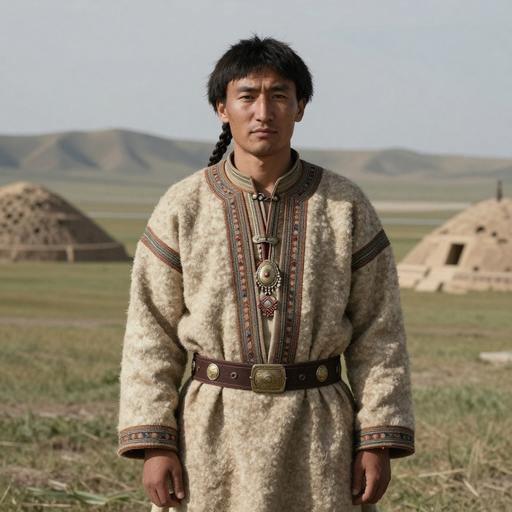
Portrait of ancient individual I8218 from Pakistan, dated 47 BCE - 62 CE
I8218
Pakistan Aligrama Iron Age Site in Swat Valley, Pakistan 47 BCE - 62 CE Aligrama Culture W6 Direct
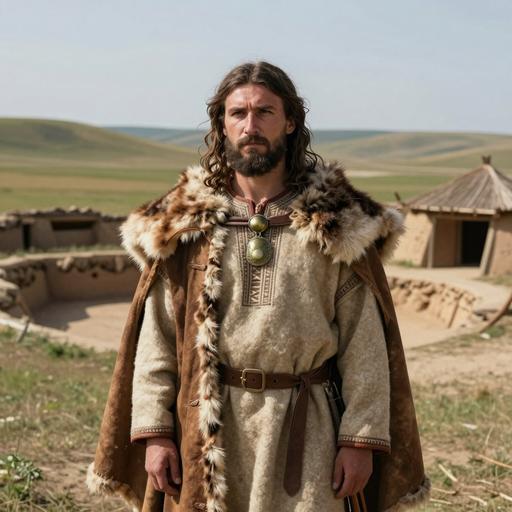
Portrait of ancient individual PCA0001 from Poland, dated 59 CE - 229 CE
PCA0001
Poland Wielbark Culture 59 CE - 229 CE Wielbark W Direct
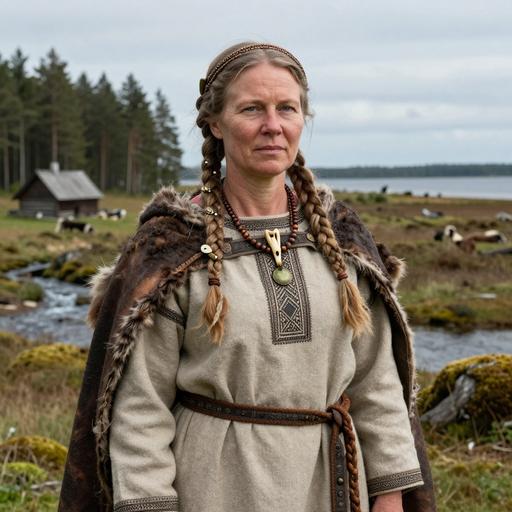
Portrait of ancient individual PCA0007 from Poland, dated 66 CE - 222 CE
PCA0007
Poland Wielbark Culture 66 CE - 222 CE Wielbark W1 Direct
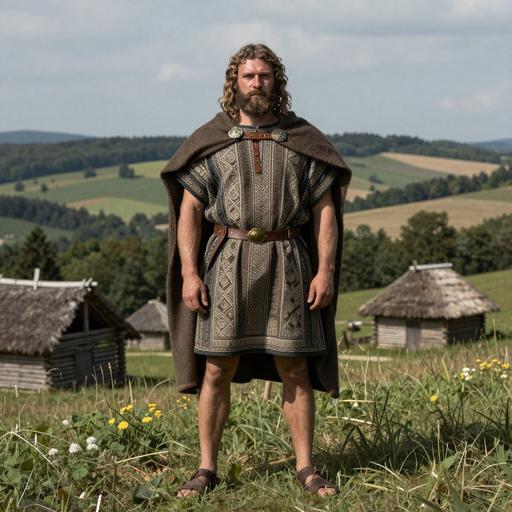
Portrait of ancient individual I1636 from Armenia, dated 72 BCE - 60 CE
I1636
Armenia Late Hellenistic Armenia 72 BCE - 60 CE Late Hellenistic Armenian W3a1 Direct
Portrait of ancient individual C3633 from China, dated 84 CE - 239 CE
C3633
China Historical Sampula, China 84 CE - 239 CE Sampula W3a1 Direct
Portrait of ancient individual KNT003 from Kazakhstan, dated 100 CE - 500 CE
KNT003
Kazakhstan Late Iron Age Kazakhstan 100 CE - 500 CE Late Iron Age W3a1 Direct
Portrait of ancient individual PCA0481 from Poland, dated 100 CE - 300 CE
PCA0481
Poland Wielbark Culture 100 CE - 300 CE Wielbark W5a1 Direct
Portrait of ancient individual UN19_merge from France, dated 120 BCE - 80 BCE
UN19_merge
France Iron Age Culture of Manche 120 BCE - 80 BCE Manche Culture W1c1 Direct
Portrait of ancient individual L8000 from Uzbekistan, dated 150 BCE - 50 CE
L8000
Uzbekistan Iron Age Rabat Culture of Surxondaryo 150 BCE - 50 CE Rabat Culture W1+119 Direct
Portrait of ancient individual MJ-38 from Russia, dated 162 BCE - 17 CE
MJ-38
Russia Sarmatian Culture, Russia 162 BCE - 17 CE Sarmatian W Direct
Chapter VI

Carrier Distribution Map

Geographic distribution of 100 ancient DNA samples carrying haplogroup W1E1

Time Period Filter
All Time Periods
Showing all samples
Each marker represents an ancient individual
Chapter VII

Temporal Distribution

Distribution of carriers across archaeological periods

Chapter VIII

Geographic Distribution

Distribution of carriers by country of origin

Chapter IX

Country × Era Distribution

Cross-tabulation of carrier countries and archaeological periods

Data

Data & Provenance

Source information and data quality

Last Updated 2026-02-16
Confidence Score 50/100
Coverage Low
Data Source

We use the latest phylotree for MTDNA haplogroup classification and data.