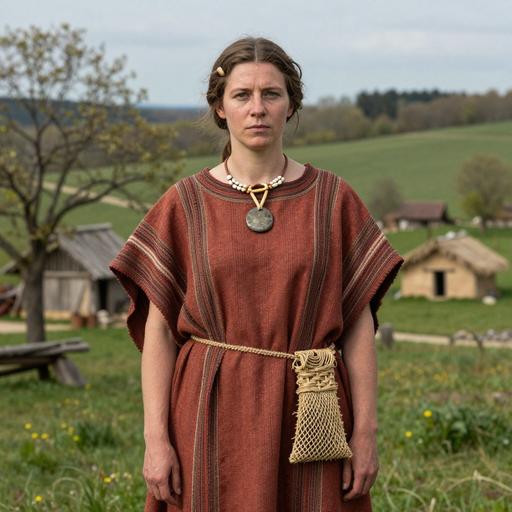
The Story
The journey of mtDNA haplogroup W5B
Origins and Evolution
mtDNA haplogroup W5B is a downstream lineage within the broader W5 branch of haplogroup W. The parent haplogroup W5 likely diversified in the Near East / South Asia during the late Paleolithic to early Holocene (~7.5 kya), and W5B represents a later split that — based on phylogenetic position and contemporary/ancient occurrences — most plausibly arose in the Bronze Age (on the order of a few thousand years ago). As with many low-frequency maternal subclades, precise dating relies on limited modern sequence diversity and sparse ancient DNA calibration; therefore, estimated age should be treated as provisional and sensitive to future aDNA discoveries.
Subclades (if applicable)
W5B is a subclade of W5. At present it is reported as a relatively terminal, low-diversity branch with few named downstream named sub-branches in public datasets. Because W5 and its subclades are relatively rare and often represented by singletons in population surveys, the internal structure of W5B may expand as additional full mitogenomes from under-sampled regions (Caucasus, South Asia, Central Asia) are generated.
Geographical Distribution
Modern occurrences of W5B are scattered and low-frequency, reflecting a pattern of episodic dispersal rather than a strong regional founder effect. Observed and inferred locations include Eastern and Northern Europe, the Caucasus, the Near East, Central Asia, and parts of South Asia, with sporadic detections further east into western China and southern Siberia. The distribution is consistent with an origin in the Near East / South Asia followed by multi-directional dispersals into Europe and across Central Asia during Bronze Age and later periods. Two archaeological (ancient DNA) samples assigned to the broader W5 lineage or W5B in some databases suggest the clade was present in prehistoric contexts, but the small number of aDNA hits limits firm conclusions about past frequencies.
Historical and Cultural Significance
Because W5B is low-frequency and geographically dispersed, it does not define a single archaeological culture. Instead, it likely rode along with multiple demographic processes: Neolithic farmer expansions from the Near East established a background of West Eurasian maternal lineages; later Bronze Age migrations and contacts (steppe-related and regional movements across the Caucasus and Central Asia) redistributed rarer maternal lineages like W5B. In historical times, trade, population movements, and localized founder events could explain scattered presences in South Asia and northern Eurasia. W5B should therefore be considered a marker of complex, multi-phase West Eurasian maternal gene flow rather than a signature of a single people or culture.
Conclusion
W5B is a rare, regionally scattered descendant of W5 with a most likely Bronze Age origin in the Near East / South Asia and subsequent low-frequency dispersal into Europe, the Caucasus, Central Asia and South Asia. Its rarity in both modern and ancient datasets means that conclusions remain provisional: expanded full mitogenome sequencing and additional ancient DNA from understudied regions will be required to refine the age, branching pattern, and migration history of W5B.
Notes on interpretation: molecular-clock age estimates and geographic inferences for rare mtDNA subclades are sensitive to sampling bias and the small number of observed lineages; careful phylogeographic work combining mitogenomes and archaeological context is recommended to resolve outstanding uncertainties.
Key Points
- Origins and Evolution
- Subclades (if applicable)
- Geographical Distribution
- Historical and Cultural Significance
- Conclusion