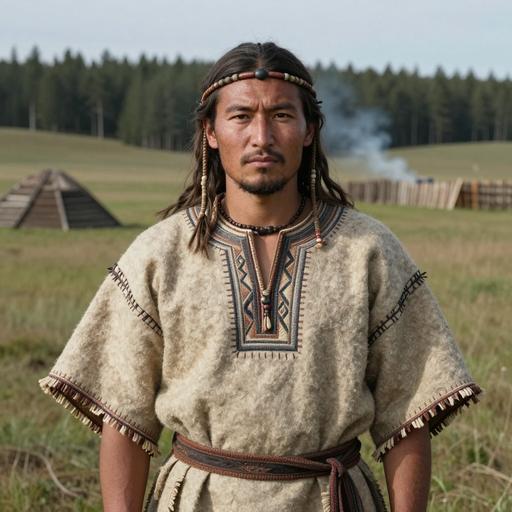
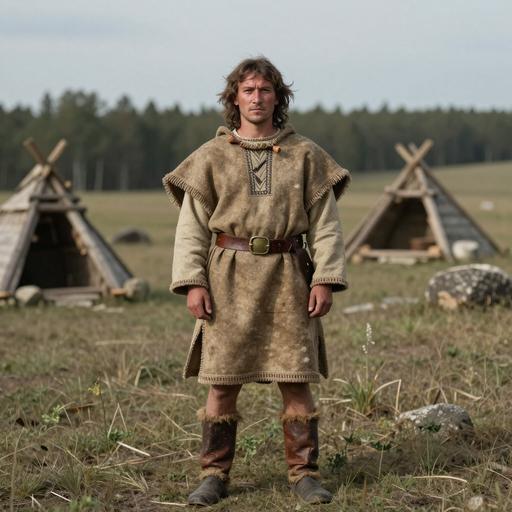
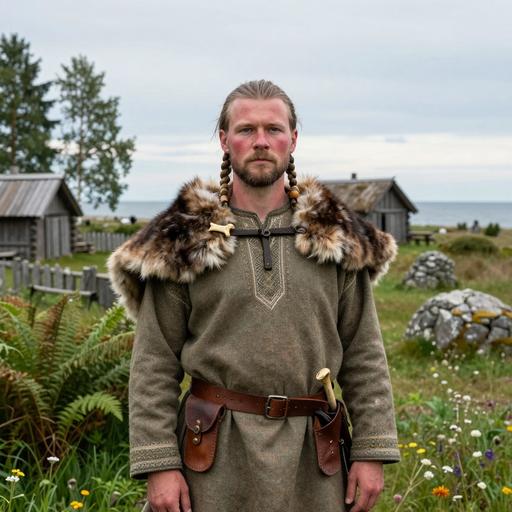
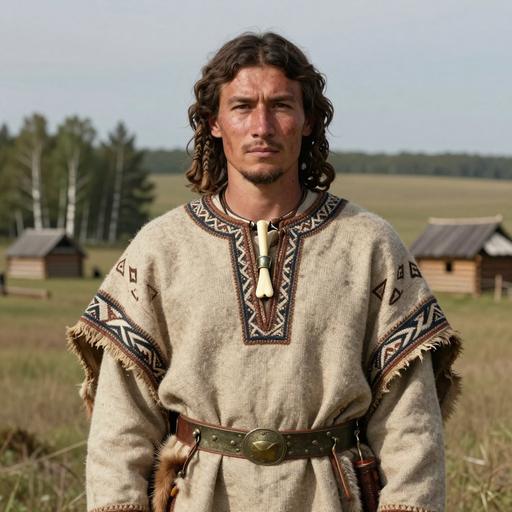
The Story
The journey of Y-DNA haplogroup N1A1A1A1A1A1A1A4
Origins and Evolution
Y-DNA haplogroup N1A1A1A1A1A1A1A4 sits as a very deep terminal branch beneath the recently derived Fennoscandian subclade N1A1A1A1A1A1A1A. Given its phylogenetic position, the clade almost certainly arose from a single or very small number of paternal founders in northern Fennoscandia (northern Finland / Sámi region). The time depth is extremely shallow — on the order of a few decades to a few centuries — consistent with a post-medieval founder event and rapid local drift that produced a distinct SNP-defined lineage with minimal internal diversity.
The pattern (one or a very small number of unique derived SNPs defining the branch, very low STR variance, and tight geographic clustering) is typical of recent regional founder effects and pedigree-bottleneck phenomena observed in other highly downstream Y-lineages.
Subclades
At present N1A1A1A1A1A1A1A4 appears to be a terminal or near-terminal leaf with very limited or no well-differentiated downstream substructure identified in available public and private datasets. If additional samples from the localized Fennoscandian/Sámi region are genotyped at high resolution, minor downstream branches may be discovered, but the current profile is that of a single, low-diversity founder lineage.
Geographical Distribution
The distribution of N1A1A1A1A1A1A1A4 is highly localized to northern Fennoscandia. Observations and reasonable inference from its parent clade indicate the highest frequencies are in northern Finnish communities (particularly Lapland) and among Sámi populations in Finland, Sweden, and Norway. Rare, scattered occurrences may be found in adjacent northern Sweden and northern Norway, and very occasional cases appear in neighboring parts of northwestern Russia (including among some Komi or other northern groups) due to recent gene flow or historical contact. Extremely low-frequency, sporadic occurrences in coastal Baltic populations (Estonia/Latvia) or in diaspora communities (descendants of migrants from Fennoscandia) are plausible but not indicative of any historical wide-ranging expansion.
Historical and Cultural Significance
Because N1A1A1A1A1A1A1A4 is so recent, it is not tied to broad archaeological complexes such as Corded Ware, Bell Beaker, or Yamnaya in any direct way. Instead, its significance is primarily for microevolutionary and genealogical interpretation within modern Fennoscandian and Sámi contexts. The lineage likely reflects a recent paternal founder event — which could be associated with a small family group, a prominent local pedigree, or population bottlenecks in a geographically isolated community — followed by genetic drift that allowed the derived SNP(s) to reach detectable frequency locally.
This clade can be useful for recent genealogical reconstructions (hundreds of years), studying local demographic events in northern Finland and Sámi areas, and for illustrating how strong drift and founder effects shape Y-chromosome diversity in small or isolated populations.
Conclusion
N1A1A1A1A1A1A1A4 represents a textbook case of a very recent, localized Y-haplogroup formed by a founder event in northern Fennoscandia. It is characterized by near-zero internal diversity, a restricted geographic footprint focused on northern Finland and Sámi communities, and minimal deeper historical/archaeological associations. Continued high-resolution sequencing and increased sampling in northern Fennoscandia may resolve finer substructure or provide clearer estimates of the precise time and demographic circumstances of its origin.
Note on evidence and sampling: conclusions about such shallow clades are sensitive to sampling density and reporting bias; additional targeted Y-SNP testing in northern Fennoscandia and among Sámi communities would refine frequency estimates and the estimated time to most recent common ancestor (TMRCA).
Key Points
- Origins and Evolution
- Subclades
- Geographical Distribution
- Historical and Cultural Significance
- Conclusion