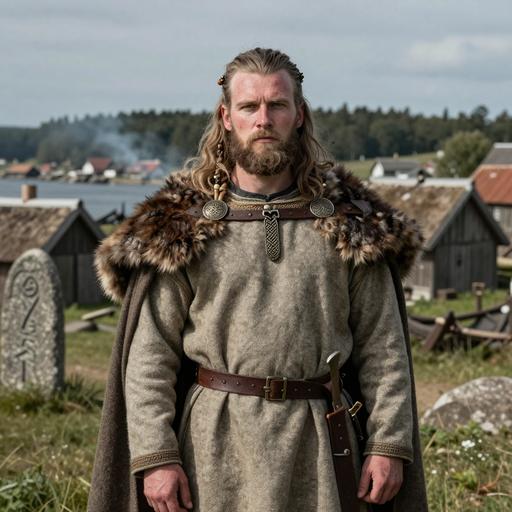
The Story
The journey of Y-DNA haplogroup N1A1A1A1A1A2A1A
Origins and Evolution
Y‑DNA haplogroup N1A1A1A1A1A2A1A is a very recent branching of the northern Eurasian haplogroup N1. As a terminal subclade nested beneath N1A1A1A1A1A2A1, it almost certainly arose within Fennoscandia (northern Finland / adjacent parts of Sweden and Norway) during the historical/post‑medieval period. The phylogenetic position — many derived mutations down a long nested path — and the extremely shallow time to most recent common ancestor (TMRCA) indicate a single or small number of recent male founders whose lineages expanded locally, producing the characteristic pattern of a localized founder effect and limited diversification.
Subclades
At present N1A1A1A1A1A2A1A appears to be a terminal or near‑terminal tip in published trees and commercial testing databases, with little or no well‑documented downstream branching. That pattern is consistent with a recent origin where insufficient time has elapsed for deep downstream diversification. Any future subclades would be expected to be defined by very few private SNPs and to coalesce within the same small geographic area.
Geographical Distribution
This haplogroup is highly localized. Modern sequencing and high‑resolution SNP testing find it primarily among individuals with ancestry from northern Finland and adjacent Fennoscandian areas, including some Sámi‑identified lineages. Low‑frequency occurrences can appear in neighbouring Baltic coastal populations and northern Russian groups due to historical movement and gene flow, and very rare hits may be observed in broader Uralic‑speaking or northeast Eurasian samples as isolated instances. Published ancient DNA examples for this exact terminal subclade are, as of now, absent or extremely rare — the lineage is primarily detected in modern genealogical datasets.
Historical and Cultural Significance
Because of its very recent origin, N1A1A1A1A1A2A1A is unlikely to be tied to major prehistoric migration events (e.g., Mesolithic, Neolithic, Bronze Age). Instead, its significance is primarily genealogical and regional: it can mark parish‑level founder events, recent patrilineal surnames, or small community expansions in post‑medieval Fennoscandia. Its presence among Sámi and Finnish males may reflect local demographic processes such as drift, endogamy, or the amplification of a single male lineage through historical social structures.
Conclusion
N1A1A1A1A1A2A1A exemplifies a class of Y‑chromosome lineages that are extremely useful for fine‑scale demographic and surname‑level studies but offer limited insight into deep prehistoric population movements. High‑resolution testing (full Y‑SEQ or targeted SNP panels) and dense regional sampling are the best ways to resolve any further branching and to document the recent microevolutionary history of this Fennoscandian founder lineage.
Key Points
- Origins and Evolution
- Subclades
- Geographical Distribution
- Historical and Cultural Significance
- Conclusion