Menu
Y-DNA Haplogroup • Paternal Lineage

N1A1A1A1A3A

Y-DNA Haplogroup N1A1A1A1A3A

~300 years ago
Northern Fennoscandia / Northwestern Russia
1 subclades
11 ancient samples
Scroll to explore
Chapter I

The Story

The journey of Y-DNA haplogroup N1A1A1A1A3A

Origins and Evolution

Y-DNA haplogroup N1A1A1A1A3A is a downstream branch of the northeastern Eurasian N1 lineage that has a very shallow time depth compared with deeper N1 subclades. As a recent derivative of N1A1A1A1A3, it most likely formed within the last few hundred years in the high-latitude zone of northern Fennoscandia and the adjacent Russian north. The shallow branching, localized geographic signal, and its concentration in small, historically isolated communities are consistent with a recent founder event and subsequent local drift rather than an early Holocene expansion.

Genetically, this subclade sits within the broader N1 family that spread across northeastern Europe and northern Asia from earlier postglacial movements. N1A1A1A1A3A represents one of the terminal, population-specific lineages that illustrate how the broader N1 background has subdivided into micro-regional markers in the historic and medieval periods.

Subclades

At present N1A1A1A1A3A is recognized as a terminal or near-terminal branch beneath N1A1A1A1A3. Due to its recent origin and limited geographic range, there are few (if any) well-differentiated downstream subclades recorded in public phylogenies; further high-resolution sequencing in northern populations may reveal additional splits reflecting pedigrees and local founder events.

It is helpful to view N1A1A1A1A3A as a population-specific tag within the spectrum of N1: it retains the ancestral N1 markers that define northeastern Eurasian paternal ancestry while carrying private derived SNPs that identify it as a localized modern lineage.

Geographical Distribution

The modern distribution of N1A1A1A1A3A is strongly concentrated in the extreme north of Europe and adjoining Russian Arctic regions. Observed occurrences and frequency patterns indicate high local frequency in northern Finland and among some Sámi groups, with moderate to low frequencies in neighboring northern Russian populations (Kola Peninsula, Arkhangelsk) and scattered, low-level occurrences in adjacent Finnic (Estonian/Latvian coastal) and some indigenous Siberian/Arctic groups (e.g., Nenets, occasional samples from Evenk-related populations). Small occurrences are also seen in historically admixed communities of northwest Russia.

The pattern—high frequency in narrow northern pockets and near-absence elsewhere—is characteristic of a lineage amplified by drift in small, semi-isolated communities (for example reindeer-herding or coastal fishing groups) rather than a broad prehistoric migration.

Historical and Cultural Significance

Because N1A1A1A1A3A is so recent, its significance is largely regional and contextual rather than representing a broad archaeological horizon. It is most relevant for studies of late-medieval to modern population structure in Fennoscandia and adjacent Russian Arctic zones. Elevated frequencies in some Sámi and northern Finnish coastal groups point to its role as a marker for recent paternal continuity, founder effects, and localized male-line expansions that may be associated with social or economic practices (e.g., patterns of patrilineal residence, small effective population size among reindeer-herding communities, or coastal settlement continuity).

From an applied perspective, the haplogroup is useful for fine-scale genealogical and population studies: its presence can indicate recent northern regional ancestry and can help resolve relationships among modern male lineages in northern Scandinavia and northwest Russia.

Conclusion

N1A1A1A1A3A exemplifies how the broad N1 paternal background has been partitioned into very recent, regionally restricted lineages through founder effects and drift in small northern populations. It is best interpreted as a modern, localized marker of northern Fennoscandian and adjacent Russian Arctic male ancestry that complements broader genetic signals from older N1 subclades and from mitochondrial lineages typical of northern Europe.

Key Points

  • Origins and Evolution
  • Subclades
  • Geographical Distribution
  • Historical and Cultural Significance
  • Conclusion
Chapter II

Tree & Relationships

Phylogenetic context and subclades

Evolution Path

This haplogroup's evolutionary journey from its earliest ancestor to the present.

Steps Haplogroup Age Estimate Archaeology Era Time Passed Immediate Descendants Tested Modern Descendants Ancient Connections
1 N1A1A1A1A3A Current ~300 years ago 🏭 Modern 300 years 1 0 11
Chapter III

Where in the World

Geographic distribution and modern presence

Place of Origin

Northern Fennoscandia / Northwestern Russia

Modern Distribution

The populations where Y-DNA haplogroup N1A1A1A1A3A is found include:

  1. Finns (particularly in northern Finland and coastal areas)
  2. Sámi (various groups across Fennoscandia)
  3. Northern Russians (including populations of the Kola Peninsula and Arkhangelsk region)
  4. Komi and other northeastern Uralic-speaking groups
  5. Coastal Baltic samples (Estonians, some Latvians) at low to moderate frequency
  6. Indigenous Siberian and Arctic groups at low frequency (e.g., Nenets, occasional Evenk samples)
  7. Small occurrences among historically admixed populations in northwest Russia and adjacent areas

Regional Presence

Northern Europe (Fennoscandia) High
Eastern Europe (Northwest Russia, Baltic fringes) Moderate
Northern Asia / Arctic Siberia Low
CHAPTER IV

When in Time

Your haplogroup in the context of human history

~10k years ago

Neolithic Revolution

Agriculture begins, settled communities form

~5k years ago

Bronze Age

Metalworking, writing, and early civilizations

~3k years ago

Iron Age

Iron tools, expanded trade networks

~2k years ago

Classical Antiquity

Greek and Roman civilizations flourish

~300 years ago

Haplogroup N1A1A1A1A3A

Your Y-DNA haplogroup emerged in Northern Fennoscandia / Northwestern Russia

Northern Fennoscandia / Northwestern Russia
Present

Present Day

Modern era

Your Haplogroup
Historical Era
Chapter IV-B

Linked Cultures

Ancient cultures associated with Y-DNA haplogroup N1A1A1A1A3A

Cultural Heritage

These ancient cultures have been linked to haplogroup N1A1A1A1A3A based on matching ancient DNA samples from archaeological excavations. The presence of this haplogroup in these cultures provides insights into the migrations and population movements of populations carrying this haplogroup.

Avar Culture Early Avar Late Avar Late Medieval Mongolian Medieval Khuvsgul Middle Avar Slab Grave Culture
Culture assignments are based on archaeological context of ancient DNA samples and may represent regional associations during specific time periods.
Chapter V

Sample Catalog

Top 11 ancient DNA samples directly related to haplogroup N1A1A1A1A3A or parent clades

11 / 11 samples
Portrait Sample Country Era Date Culture Y-DNA Match
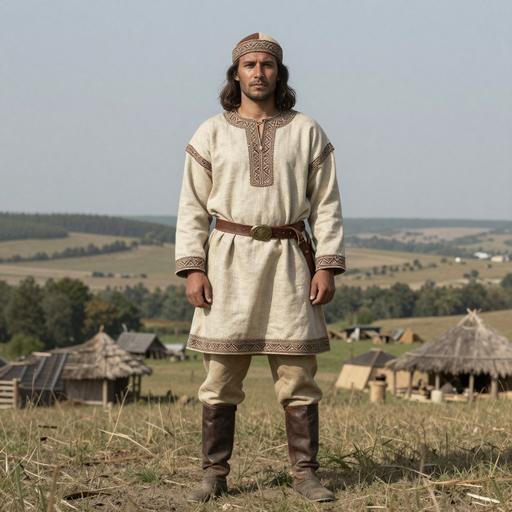
Portrait of ancient individual A1813 from Hungary, dated 600 CE - 800 CE
A1813
Hungary Late Avar Period Danube-Tisza, Hungary 600 CE - 800 CE Late Avar N1a1a1a1a3a Direct
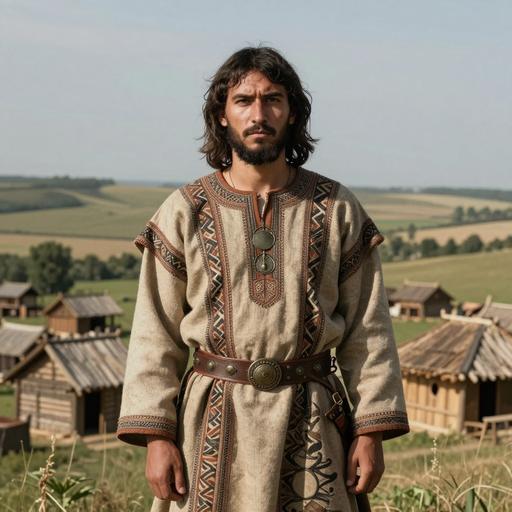
Portrait of ancient individual A1801 from Hungary, dated 630 CE - 670 CE
A1801
Hungary Early Avar Period Danube-Tisza, Hungary 630 CE - 670 CE Early Avar N1a1a1a1a3a2 Direct
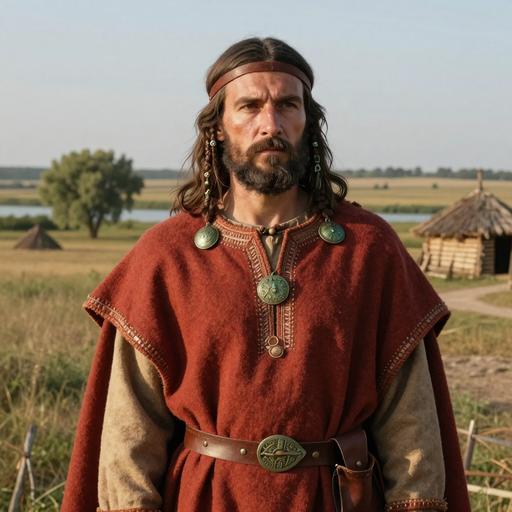
Portrait of ancient individual A1802 from Hungary, dated 630 CE - 670 CE
A1802
Hungary Early Avar Period Danube-Tisza, Hungary 630 CE - 670 CE Early Avar N1a1a1a1a3a Direct
Portrait of ancient individual A1812 from Hungary, dated 630 CE - 670 CE
A1812
Hungary Middle Avar Period Danube-Tisza, Hungary 630 CE - 670 CE Middle Avar N1a1a1a1a3a Direct
Portrait of ancient individual A1817 from Hungary, dated 630 CE - 670 CE
A1817
Hungary Early Avar Period Danube-Tisza, Hungary 630 CE - 670 CE Early Avar N1a1a1a1a3a Direct
Portrait of ancient individual A1819 from Hungary, dated 630 CE - 670 CE
A1819
Hungary Early Avar Period Danube-Tisza, Hungary 630 CE - 670 CE Early Avar N1a1a1a1a3a Direct
Portrait of ancient individual A1821 from Hungary, dated 630 CE - 670 CE
A1821
Hungary Early Avar Period Danube-Tisza, Hungary 630 CE - 670 CE Early Avar N1a1a1a1a3a Direct
Portrait of ancient individual A1822 from Hungary, dated 630 CE - 670 CE
A1822
Hungary Early Avar Period Danube-Tisza, Hungary 630 CE - 670 CE Early Avar N1a1a1a1a3a Direct
Portrait of ancient individual A1823 from Hungary, dated 630 CE - 670 CE
A1823
Hungary Early Avar Period Danube-Tisza, Hungary 630 CE - 670 CE Early Avar N1a1a1a1a3a Direct
Portrait of ancient individual A1815 from Hungary, dated 700 CE - 800 CE
A1815
Hungary Late Avar Period Danube-Tisza, Hungary 700 CE - 800 CE Late Avar N1a1a1a1a3a Direct
Chapter VI

Carrier Distribution Map

Geographic distribution of 11 ancient DNA samples carrying haplogroup N1A1A1A1A3A

Time Period Filter
All Time Periods
Showing all samples
Each marker represents an ancient individual
Chapter VII

Temporal Distribution

Distribution of carriers across archaeological periods

Chapter VIII

Geographic Distribution

Distribution of carriers by country of origin

Chapter IX

Country × Era Distribution

Cross-tabulation of carrier countries and archaeological periods

Data

Data & Provenance

Source information and data quality

Last Updated 2026-02-16
Confidence Score 50/100
Coverage Low
Data Source

We use the latest phylotree for YDNA haplogroup classification and data.