The Story
The journey of Y-DNA haplogroup O1B
Origins and Evolution
Y-DNA haplogroup O1B (a subclade of O1) likely arose in southern East Asia after the initial split of O1 from other O lineages. Based on its phylogenetic position under O1 (which has a deeper time depth around ~30 kya) and the geographic patterning of its descendant lineages, O1B probably diversified during the late Pleistocene to early Holocene (roughly ~20 kya to the early Holocene). Its emergence and later expansion are consistent with population growth and coastal/subsistence changes in southern China and adjacent regions, which set the stage for later Neolithic farming and maritime dispersals.
Subclades
O1B splits into recognizable downstream branches that show different geographic affinities. Two commonly discussed subdivisions (using different marker nomenclatures in the literature) include a branch that is frequent across mainland Southeast Asia and parts of Island Southeast Asia, and a branch that reaches higher frequencies in the Japanese archipelago and some northeastern island populations. These subclades show contrasting regional histories: one lineage expanded extensively with inland and coastal Southeast Asian populations (including many Austroasiatic and Tai–Kadai groups), while the other has a clearer association with populations of the Japanese archipelago and nearby islands, indicating localized founder effects and later regional expansions.
Geographical Distribution
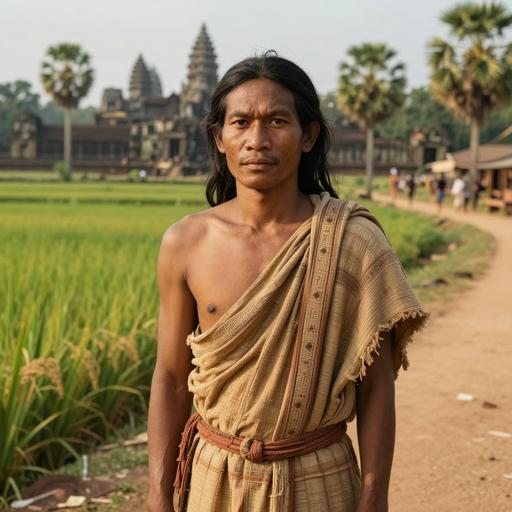
O1B is concentrated in Southeast Asia and southern East Asia, with measurable frequencies across diverse groups. It is widespread among mainland Southeast Asian populations (for example, in parts of Vietnam, Cambodia and Thailand), present at moderate to high frequencies in many Austronesian-speaking groups across Island Southeast Asia, and occurs at lower but notable frequencies in some southern Chinese populations (including coastal Han groups). A derived branch is observed in Japan and nearby islands where it can reach appreciable frequency due to founder effects and island demographic history. Low-frequency occurrences farther afield (e.g., coastal South Asia or Central Asia) reflect historical contact, migration, and trading networks rather than primary centers of origin.
Historical and Cultural Significance
Genetic patterns of O1B align with archaeological and linguistic evidence for Neolithic coastal and maritime expansions originating in southern China/Taiwan and moving into Island Southeast Asia and the Pacific. O1B lineages are therefore informative for studies of the Austronesian expansion (including the Lapita cultural horizon in the western Pacific) and for the demographic transformations associated with the spread of rice agriculture and coastal fishing economies in the Holocene. In mainland Southeast Asia, O1B lineages also intersect with the histories of Austroasiatic and Tai–Kadai-speaking populations, reflecting complex admixture and multiple dispersal layers over the last several thousand years.
Conclusion
Haplogroup O1B is a key regional marker for male-line ancestry in Southeast and parts of East Asia and provides genetic evidence for coastal Neolithic and later maritime expansions, including Austronesian movements into Island Southeast Asia and the Pacific. Its subclade structure and distribution illustrate a mix of deep regional roots and more recent demographic events (founder effects, cultural expansions, and admixture) that shaped the modern genetic landscape of East and Southeast Asia.
Key Points
- Origins and Evolution
- Subclades
- Geographical Distribution
- Historical and Cultural Significance
- Conclusion