Menu
Y-DNA Haplogroup • Paternal Lineage

O2A2A1A2A2

Y-DNA Haplogroup O2A2A1A2A2

~800 years ago
Mainland Southeast Asia / southern China
0 subclades
Scroll to explore
Chapter I

The Story

The journey of Y-DNA haplogroup O2A2A1A2A2

Origins and Evolution

Haplogroup O2A2A1A2A2 sits within the O2a (O‑M95) sublineage phylogeny as a downstream branch of O2A2A1A2A. Given its phylogenetic position beneath a parent clade that is reconstructed to have formed in Mainland Southeast Asia / southern China during the late Holocene, O2A2A1A2A2 is inferred to be a relatively recent lineage (on the order of centuries to a few millennia). The time estimate used here (approximately 0.8 kya) places its origin in the late first millennium CE, consistent with a pattern of local diversification within already-established Southeast Asian paternal pools.

The formation of this subclade is best interpreted as part of continued microevolution and regional differentiation of O‑M95-related lineages after the major Austroasiatic-associated dispersals. Small-scale demographic processes—population splits, founder effects, and localized expansions—are the most plausible mechanisms for generating such terminal subclades in the late Holocene.

Subclades

At present, O2A2A1A2A2 is recognized as a terminal or near-terminal branch within fine-scale O2a phylogenies reported in targeted Y-SNP surveys and high-resolution sequencing projects. If additional downstream SNPs are identified by dense sequencing or targeted genotyping in diverse Southeast Asian samples, new subclades may be defined that track localized expansions (for example, ethnolinguistic group–specific lineages). Because high-resolution sampling in many parts of Southeast Asia remains incomplete, the internal structure of O2A2A1A2A2 is subject to refinement.

Geographical Distribution

The geographic signal for O2A2A1A2A2 is concentrated in Mainland Southeast Asia with spillover at low frequencies into adjacent regions. The strongest occurrences are among populations historically associated with Austroasiatic languages (Mon-Khmer and Vietic branches), and there are sporadic detections in nearby Tai-Kadai, Tibeto-Burman, and southern Chinese groups consistent with local admixture. Low and variable frequencies in Island Southeast Asia and among Austronesian-speaking populations likely reflect later gene flow from mainland sources rather than primary Austronesian dispersal.

Empirical surveys of O‑M95 substructure show that many fine-scale O2a branches are geographically localized; O2A2A1A2A2 fits this pattern as a late-forming lineage with a patchy distribution tied to regional demographic histories in mainland Southeast Asia.

Historical and Cultural Significance

While O2A2A1A2A2 is too recent and localized to be unequivocally tied to large, continent-spanning prehistoric migrations, its presence is informative about regional demographic continuity and later medieval-period population processes. In areas where Austroasiatic-speaking groups remained demographically significant, sublineages such as O2A2A1A2A2 may mark local paternal continuity or post-Neolithic microexpansions.

Because ancient DNA from tropical Southeast Asia is still comparatively sparse, direct archaeological associations for terminal O2a subclades are limited. When present, such lineages can help refine models of linguistic and cultural spread (for example, distinguishing older Austroasiatic-associated paternal ancestries from later admixture introduced by Tai, Sino-Tibetan, or Austronesian movements).

Conclusion

O2A2A1A2A2 represents a recent, geographically focused offshoot of the broader O2a (O‑M95) radiation centered on Mainland Southeast Asia and southern China. Its study is valuable for resolving recent demographic events in Austroasiatic-speaking and neighboring populations. Further high-resolution Y-chromosome sequencing and denser population sampling—alongside ancient DNA from archaeological contexts—will clarify its internal structure, precise age, and the demographic episodes that generated its present-day distribution.

Key Points

  • Origins and Evolution
  • Subclades
  • Geographical Distribution
  • Historical and Cultural Significance
  • Conclusion
Chapter II

Tree & Relationships

Phylogenetic context and subclades

Evolution Path
This haplogroup's evolutionary journey from its earliest ancestor to the present.

Steps Haplogroup Age Estimate Archaeology Era Time Passed Immediate Descendants Tested Modern Descendants Ancient Connections
1 O2A2A1A2A2 Current ~800 years ago 🏰 Medieval 800 years 0 2 0

Subclades (0)

Terminal branch - no known subclades

Chapter III

Where in the World

Geographic distribution and modern presence
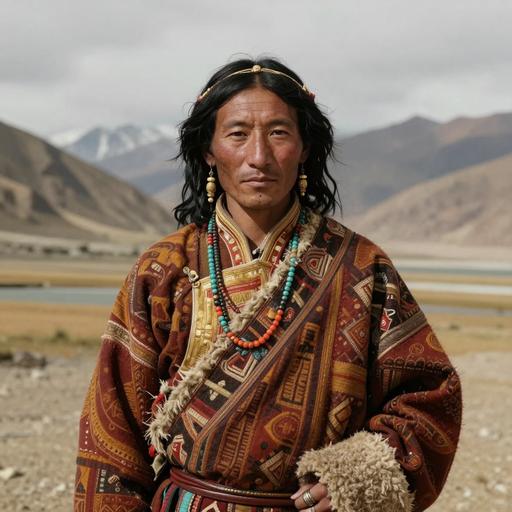
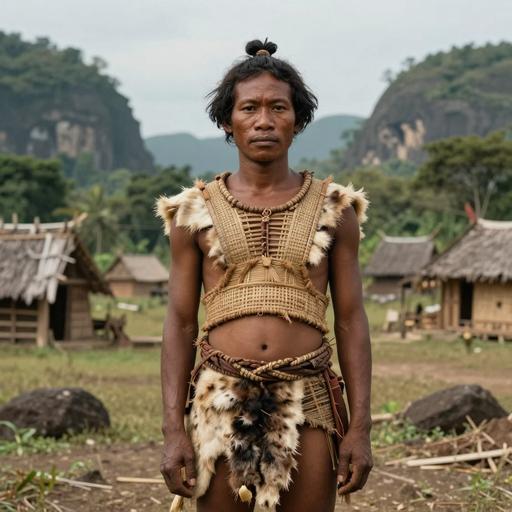
Place of Origin

Mainland Southeast Asia / southern China

Modern Distribution

The populations where Y-DNA haplogroup O2A2A1A2A2 is found include:

  1. Austroasiatic-speaking populations (e.g., Khmer, Mon, some Vietic groups, Khmu)
  2. Mainland Southeast Asian populations (Thai, Lao and related groups) due to regional admixture
  3. Southern Han Chinese and other ethnicities in southern China (low to moderate levels)
  4. Austronesian-speaking groups in Island Southeast Asia and Taiwan (low and variable frequencies)
  5. Munda-speaking groups in eastern and central India (sporadic/low — possible downstream sharing or independent retention of O2a diversity)
  6. Tibeto-Burman and Burmese populations (sporadic/low frequencies due to local admixture)
  7. Diaspora and admixed groups across South and Southeast Asia (sporadic occurrences)

Regional Presence

Southeast Asia High
East Asia (southern China) Moderate
South Asia Low
Island Southeast Asia / Near Oceania Low
CHAPTER IV

When in Time

Your haplogroup in the context of human history

~10k years ago

Neolithic Revolution

Agriculture begins, settled communities form

~5k years ago

Bronze Age

Metalworking, writing, and early civilizations

~3k years ago

Iron Age

Iron tools, expanded trade networks

~2k years ago

Classical Antiquity

Greek and Roman civilizations flourish

~800 years ago

Haplogroup O2A2A1A2A2

Your Y-DNA haplogroup emerged in Mainland Southeast Asia / southern China

Mainland Southeast Asia / southern China
Present

Present Day

Modern era

Your Haplogroup
Historical Era
Chapter IV-B

Linked Cultures

Ancient cultures associated with Y-DNA haplogroup O2A2A1A2A2

Cultural Heritage

These ancient cultures have been linked to haplogroup O2A2A1A2A2 based on matching ancient DNA samples from archaeological excavations. The presence of this haplogroup in these cultures provides insights into the migrations and population movements of populations carrying this haplogroup.

Chinese Historical Malaysian Nudagang Culture Taiwanese Iron West Liao River Culture
Culture assignments are based on archaeological context of ancient DNA samples and may represent regional associations during specific time periods.
Chapter V

Sample Catalog

Top 50 ancient DNA samples directly related to haplogroup O2A2A1A2A2 or parent clades

50 / 50 samples
Portrait Sample Country Era Date Culture Y-DNA Match
Portrait of ancient individual I3736 from Taiwan, dated 1 CE - 800 CE
I3736
Taiwan Iron Age Taiwan 1 CE - 800 CE Taiwanese Iron O1a1a1a1-CTS1711 Direct
Portrait of ancient individual I3614 from Taiwan, dated 1 CE - 800 CE
I3614
Taiwan Iron Age Taiwan 1 CE - 800 CE Taiwanese Iron O2a2b2-CTS1366 Direct
Portrait of ancient individual I3618 from Taiwan, dated 1 CE - 800 CE
I3618
Taiwan Iron Age Taiwan 1 CE - 800 CE Taiwanese Iron O2a2b2a2-F706 Direct
Portrait of ancient individual I3731 from Taiwan, dated 1 CE - 800 CE
I3731
Taiwan Iron Age Taiwan 1 CE - 800 CE Taiwanese Iron O1a1a1a1-CTS1711 Direct
Portrait of ancient individual I8076 from Taiwan, dated 1 CE - 800 CE
I8076
Taiwan Iron Age Taiwan 1 CE - 800 CE Taiwanese Iron O-M119 Direct
Portrait of ancient individual I8080 from Taiwan, dated 1 CE - 800 CE
I8080
Taiwan Iron Age Taiwan 1 CE - 800 CE Taiwanese Iron O1a1a1a-F518 Direct
Portrait of ancient individual I14933 from Taiwan, dated 1 CE - 800 CE
I14933
Taiwan Iron Age Taiwan 1 CE - 800 CE Taiwanese Iron O1a2-F1081 Direct
Portrait of ancient individual I14931 from Taiwan, dated 1 CE - 800 CE
I14931
Taiwan Iron Age Taiwan 1 CE - 800 CE Taiwanese Iron O2a2-P201 Direct
Portrait of ancient individual I14929 from Taiwan, dated 1 CE - 800 CE
I14929
Taiwan Iron Age Taiwan 1 CE - 800 CE Taiwanese Iron O2a2b-F130 Direct
Portrait of ancient individual I14934 from Taiwan, dated 1 CE - 800 CE
I14934
Taiwan Iron Age Taiwan 1 CE - 800 CE Taiwanese Iron O1a1a1a1-CTS10963 Direct
Chapter VI

Carrier Distribution Map

Geographic distribution of 100 ancient DNA samples carrying haplogroup O2A2A1A2A2

Time Period Filter
All Time Periods
Showing all samples
Each marker represents an ancient individual
Chapter VII

Temporal Distribution

Distribution of carriers across archaeological periods

Chapter VIII

Geographic Distribution

Distribution of carriers by country of origin

Chapter IX

Country × Era Distribution

Cross-tabulation of carrier countries and archaeological periods

Data

Data & Provenance

Source information and data quality

Last Updated 2026-02-16
Confidence Score 50/100
Coverage Low
Data Source

We use the latest phylotree for YDNA haplogroup classification and data.