The Story
The journey of Y-DNA haplogroup O2A2B1A2
Origins and Evolution
Y‑DNA haplogroup O2A2B1A2 is nested within the broader O‑M95 (often written O2a2) radiation that expanded across Mainland Southeast Asia during the Holocene. Based on the phylogenetic position beneath O2A2B1A and on observed diversity patterns, O2A2B1A2 most plausibly coalesced in the Late Holocene (on the order of a few thousand years ago) in southern China / Mainland Southeast Asia and subsequently diversified as Austroasiatic‑associated populations dispersed over the region. Its time depth is shallower than the parent clade (O2A2B1A), indicating a relatively recent local diversification within the Austroasiatic sphere.
Subclades
O2A2B1A2 functions as an intermediate subclade in the O2a2 phylogeny. Published sampling to date shows limited deep branching publicly documented beneath this label compared with some older lineages; many downstream markers are still being resolved as more targeted sequencing and high‑coverage sampling of Austroasiatic, Munda and adjacent groups is completed. Because of ongoing refinement of the O haplogroup tree, researchers often identify additional terminal or near‑terminal subbranches unique to particular ethnic groups (for example, localized lineages found only in certain Vietic, Khmer or Munda communities).
Geographical Distribution
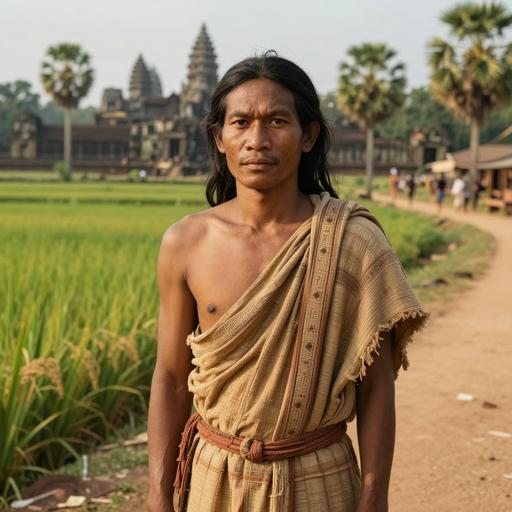
The highest frequencies and diversities of O2A2B1A2 are found in Mainland Southeast Asia, where it is strongly associated with Austroasiatic‑speaking populations (e.g., Khmer, Mon, multiple Vietic groups). It is also present at appreciable frequencies among several Munda‑speaking communities in eastern and central India, consistent with a westward migration or gene flow from Mainland Southeast Asia into South Asia during the Bronze–Iron Age interval. Low to moderate levels occur in southern Han Chinese and ethnic minorities of southern China, and sporadic/low frequencies are reported in some Tibeto‑Burman, Burmese, and Austronesian groups in Island Southeast Asia—generally reflecting historical admixture rather than an Austronesian homeland signature.
Historical and Cultural Significance
Population‑genetic and linguistic concordance links O2A2B1A2 with the expansion of Austroasiatic languages and associated agricultural technologies (e.g., wet‑rice and other early Holocene farming practices) across Mainland Southeast Asia. The observed presence of the clade in Munda speakers of India supports models in which portions of Austroasiatic‑linked ancestry moved westwards into South Asia, contributing paternal lineages during the Bronze–Iron Age period. Within Mainland Southeast Asia, O2A2B1A2 likely participated in the demographic transformations tied to early farming communities and later Bronze/Iron Age cultural networks (e.g., Ban Chiang region, Dong Son cultural sphere), although it is not a unique marker of any single archaeological culture.
Conclusion
O2A2B1A2 is a geographically and culturally informative Y‑chromosome lineage that helps track Holocene movements of Austroasiatic‑associated populations across Mainland Southeast Asia and into South Asia. Continued dense sampling and high‑resolution sequencing in understudied groups (several Vietic populations, Mon, Khmer, Munda communities, and southern Chinese minorities) will further clarify the internal structure and precise migration history of this clade.
Key Points
- Origins and Evolution
- Subclades
- Geographical Distribution
- Historical and Cultural Significance
- Conclusion