Menu
Store
Blog
Lebanon_EjJaouze_Phoenician Eastern Mediterranean, Anatolia & Balkans (Turkey, Greece, Balkans, Italy, Levant)

Echoes of Byzantium

A genetic and archaeological portrait of the Eastern Roman world across Anatolia and the Balkans

100 BCE - 1636 CE
4 Ancient Samples
Scroll to begin
Chapter I

The Story

Understanding the Echoes of Byzantium culture

Archaeological remains and 131 ancient genomes from 100 BCE–1636 CE reveal the Byzantine Empire's layered population history across Turkey, the Balkans, Italy and the Levant. Material culture and DNA together trace local continuity, mobility, and Near Eastern–European admixture.

Time Period

100 BCE–1636 CE

Region

Eastern Mediterranean, Anatolia & Balkans (Turkey, Greece, Balkans, Italy, Levant)

Common Y-DNA

J, E, I, G (J most frequent in dataset)

Common mtDNA

U, H, T, K, X (U and H abundant)

Chapter II

Timeline

Key moments in the history of this culture

330 CE

Foundation of Constantinople (symbolic)

Emperor Constantine refounds Byzantium as Constantinople, marking the center of the Eastern Roman administration and accelerating urban continuity and imperial networks.

1204 CE

Fourth Crusade: Sack of Constantinople

The 1204 sack fractured imperial control, redistributed elites, and altered population dynamics across Byzantine territories.

1453 CE

Fall of Constantinople

Ottoman capture of Constantinople marks the end of Byzantine statehood and precedes new demographic layers in the region.

1636 CE

Late sample horizon (Ottoman Era contexts)

The latest genomes in the dataset fall within Ottoman-period contexts, reflecting continued occupation and shifting imperial structures.

Chapter III

Origins & Emergence

The Byzantine world grew from the palimpsest of Late Antique Anatolia, the Hellenized cities of the Aegean, and a patchwork of Balkan hinterlands. Archaeological strata from sites such as Tilbeşar Höyük and Oylum Höyük (southeastern Turkey), Ryahovets (Gorna Oryahovitsa, Bulgaria), and coastal caves in Sardinia record continuous habitation, fortress-building, and shifting trade across centuries. Coins, ceramics, church architecture and fortified towns document administrative continuity from the late Roman provincial system into medieval Byzantine institutions.

Genetic samples in this dataset span 100 BCE to 1636 CE, so a portion of the earliest genomes predate the formal Byzantine polity; they capture the ancestral populations that the Eastern Roman state governed. Archaeological data indicates persistent local populations in Anatolian plateaus and Balkan plains, intermittently augmented by soldiers, merchants and migrants from the Levant, Caucasus and Mediterranean islands.

Limited evidence suggests episodes of population movement at times of military crisis and trade expansion — for example, the 6th–7th century transformations after Justinianic wars and the 11th century migrations associated with frontier reorganization. While material culture marks imperial structures, ancient DNA helps reveal the biological threads that underpinned those cultural mosaics and highlights continuities and admixture over more than a millennium.
  • Continuity from Late Antiquity visible in urban and rural sites across Anatolia and the Balkans
  • Material culture (coins, ceramics, churches) shows imperial administration and Mediterranean trade
  • Samples include pre-Byzantine and Ottoman-era individuals, capturing long-term demographic change
Chapter IV

Daily Life & Society

Lives in the Byzantine world were shaped by coastal trade, fortified towns, agricultural hinterlands and imperial bureaucracy. Excavated domestic assemblages from Ilıpınar (Marmara region, Bursa) and rural burials in Kolonja Plateau (Shtikë, Albania) show diets rich in cereals, pulses and marine resources where available; isotopic work elsewhere in the region supports mixed farming and coastal provisioning. Urban centers and military sites — for example, finds linked to the late Roman/Byzantine layers at Sirmium and Naissus in the Balkans — reveal specialized crafts, imported luxury goods, and movement of people and ideas.

Burial practices vary: simple inhumations in rural cemeteries contrast with richly furnished graves in some urban contexts, reflecting social hierarchy, Christian rites, and localized customs. Archaeobotanical and zooarchaeological remains from sites such as Grotta Colombi (Sardinia) and coastal Levantine sites hint at pantry exchanges that connected the Aegean, Anatolia and the western Mediterranean.

Archaeology documents a society of merchants, soldiers, clerics and peasants; ancient DNA complements this picture by showing biological connections that often follow trade and military routes. Mobility was not uniform — some rural populations display long-term genetic continuity, while port towns and frontier posts show greater admixture from diverse regions.

  • Urban and rural contrast: fortified towns and agricultural villages with distinct material signatures
  • Commerce and military networks drove mobility; coastal and frontier sites show more external inputs
Chapter V

Genetic Profile

This dataset of 131 ancient individuals provides a broad window into the genetic landscape associated with Byzantine-era contexts across Turkey, the Balkans, Italy, the Crimea and the Levant. Maternal lineages are diverse: mtDNA haplogroups U (18), H (14), T (9), K (5), and X (5) are common in the collection, a pattern consistent with long-standing European and West Asian maternal ancestry across coastal and inland populations. These mtDNA counts support archaeological evidence for continuity of local female-lineage pools alongside incoming elements.

Y-chromosome data in the catalogue is sparser: reported counts include J (4), E (2), I (1), and G (1). Because these Y-haplogroup counts are low (several under 10), conclusions on paternal structure must be treated as preliminary. Nevertheless, the presence of J and G is compatible with Near Eastern and Anatolian paternal lines, while E and I reflect Mediterranean and Balkan inputs.

Combined autosomal signals (where available) indicate a mix of Anatolian farmer ancestry, Balkan/European input, and eastern Mediterranean/Levantine components — consistent with archaeological records of trade, soldiering and administrative mobility. Specific locales show variation: samples from Crimea and coastal Italian contexts trend toward stronger Mediterranean signatures, while southeastern Turkish and Armenian cave samples contain more West Asian and Caucasus-related ancestry.

Overall, genetics corroborate a mosaic model: long-standing local ancestry with episodic admixture tied to commerce, military recruitment and imperial connections. Where sample subsets are small, especially for Y-DNA, further sampling is required to refine paternal lineage histories.

  • mtDNA diversity (U, H, T, K, X) indicates mixed European–West Asian maternal ancestry
  • Y-DNA counts are low; J and G suggest Near Eastern/Anatolian paternal inputs, but conclusions are preliminary
Chapter VI

Legacy & Modern Connections

The biological and cultural legacy of the Byzantine world endures across the eastern Mediterranean and the Balkans. Modern populations in Turkey, Greece, the Levant and the western Balkans inherit a complex palette of maternal lineages (H and U remain common) and regional autosomal affinities that reflect both millennia of local continuity and episodic contact with distant regions. Archaeology and genetics together show how urban centers, military colonies and ports functioned as nodes of admixture.

Caution is warranted: later events — Arab conquests, Crusades, Ottoman expansions, and early modern movements — also shaped the genetic landscape after the Byzantine period, and many later demographic layers are visible in modern genomes. Nevertheless, the ancient genomes sampled here illuminate threads of continuity that tie village cemeteries and urban strata to present-day populations, offering a richer, multi-sourced narrative of persistence and change.

  • Modern regional genetics reflect layered inheritance from Byzantine-era and later movements
  • Archaeology + DNA highlight continuity in maternal lineages and episodic influxes tied to trade and warfare
Chapter VII

Sample Catalog

4 ancient DNA samples associated with the Echoes of Byzantium culture

Ancient DNA samples from this era, providing genetic insights into the people who lived during this period.

4 / 4 samples
Portrait Sample Country Era Date Culture Sex Y-DNA mtDNA
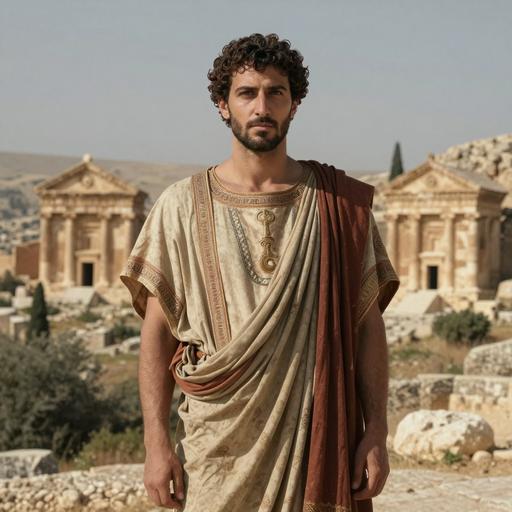
Portrait of ancient individual R12229 from Lebanon, dated 431 CE
R12229
Lebanon Lebanon_EjJaouze_Phoenician 431 CE Byzantine Empire M - -
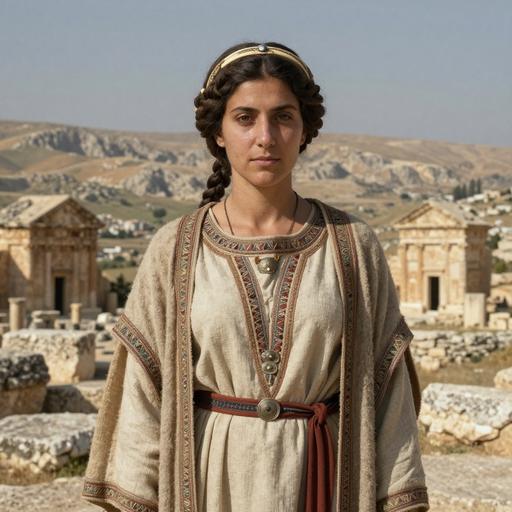
Portrait of ancient individual R12233 from Lebanon, dated 432 CE
R12233
Lebanon Lebanon_EjJaouze_Phoenician 432 CE Byzantine Empire F - -
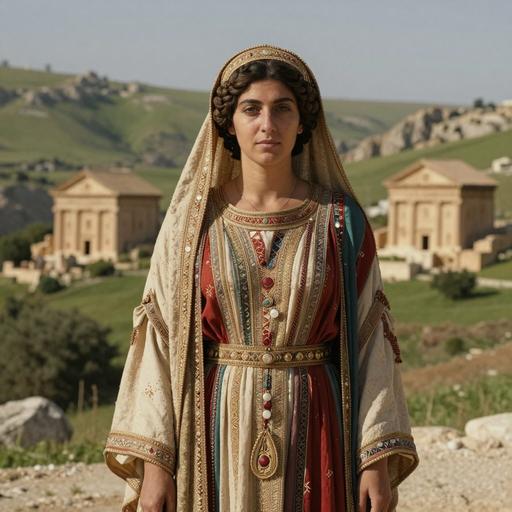
Portrait of ancient individual R12245 from Lebanon, dated 592 CE
R12245
Lebanon Lebanon_EjJaouze_Phoenician 592 CE Byzantine Empire F - -
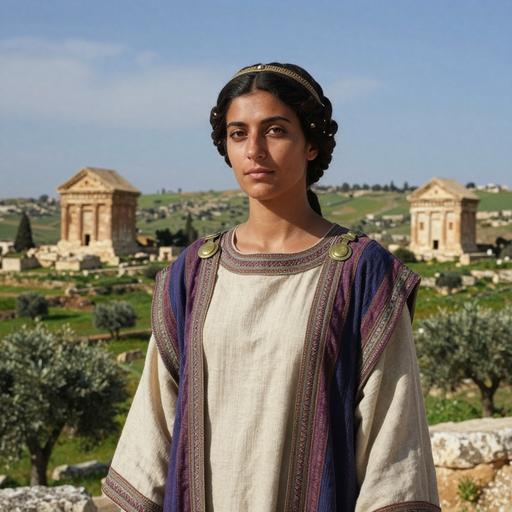
Portrait of ancient individual R12246 from Lebanon, dated 558 CE
R12246
Lebanon Lebanon_EjJaouze_Phoenician 558 CE Byzantine Empire F - -
AI Powered

AI Assistant

Ask questions about the Echoes of Byzantium culture

AI Assistant by DNAGENICS

Unlock this feature
Ask questions about the Echoes of Byzantium culture. Our AI assistant can explain genetic findings, historical context, archaeological evidence, and modern connections.
Sample AI Analysis

The Echoes of Byzantium culture represents a fascinating chapter in human history...

Genetic analysis reveals connections to earlier populations while showing evidence of unique adaptations and cultural innovations. The ancient DNA samples provide insights into migration patterns, social structures, and the biological relationships between ancient populations.

This is a preview of the AI analysis. Unlock the full AI Assistant to explore detailed insights about:

  • Genetic composition and ancestry
  • Migration patterns and origins
  • Daily life and cultural practices
  • Modern genetic legacy
Use code for 50% off Expires Mar 03