Menu
Store
Blog
Peru_Chincha_LH Peru, Bolivia, Chile (Andes & coast)

Echoes of the Andean Civilizations

A genetic and archaeological portrait from Early Holocene foragers to Inca-era communities.

7000 BCE - 2000 CE
12 Ancient Samples
Scroll to begin
Chapter I

The Story

Understanding the Echoes of the Andean Civilizations culture

Synthesis of 108 ancient genomes across Peru, Bolivia, and Chile (7000 BCE–2000 CE). Connects archaeological sites such as Lauricocha, Huaca Pucllana, and Arica with lineage patterns (Y Q; mtDNA B2, C1b, D1), showing long-term highland continuity with episodic coastal and lowland interactions.

Time Period

7000 BCE – 2000 CE

Region

Peru, Bolivia, Chile (Andes & coast)

Common Y-DNA

Q (majority, 53), CT (2), P (1)

Common mtDNA

B2 (28), C1b (22), D1 (12), C1c (11), B2b (9)

Chapter II

Timeline

Key moments in the history of this culture

7000 BCE

Early Holocene occupation

Evidence of foragers inhabiting high valleys and coastal terraces; early use of lakeside resources and hunting-gathering economies.

2500 BCE

Shift toward horticulture

Archaeological traces of irrigation, plant cultivation, and initial sedentary villages appear in multiple Andean valleys.

500 CE

Tiwanaku cultural florescence

Tiwanaku-related centers around Lake Titicaca expand influence, visible at Akapana, Pumapunku, and Lukurmata.

1400 CE

Late Horizon consolidation

Regional polities, including Chimú and later Inca expansions, reorganize Andean sociopolitical landscapes before European contact.

Chapter III

Origins & Emergence

From wind-swept highland lakes to fog-draped Pacific terraces, the Andean cultural mosaic emerged over millennia. Archaeological data indicate human presence in high valleys such as Lauricocha (Highlands, samples spanning ~8600–3500 years ago) and coastal localities near Arica (Late Archaic Chinchorro contexts). Early Holocene foragers exploited diverse ecologies — puna wetlands, river canyons like Cotahuasi, and coastal fisheries — laying the foundations for later sedentary life.

Sedentism and horticulture gradually intensified during the mid-Holocene and into the second millennium BCE, visible in mound-building, irrigation traces, and early ceremonial architecture at sites like La Galgada and early Lima coast occupations. Limited evidence suggests regional differentiation by 1000 BCE, with emerging highland polities and coastal specialists. Over the first and second millennia CE, more visible political centers arose: Pukara and later Tiwanaku-linked sites (Akapana, Pumapunku in the Lake Titicaca basin) created stylistic and economic networks that would reshape Andean social landscapes.

Because preservation and sampling density vary widely across sites and periods, precise demographic reconstructions remain cautious. The 108 ancient genomes analyzed here offer a broad temporal sweep, supporting a narrative of long-term highland occupation punctuated by episodes of regional interaction and mobility.
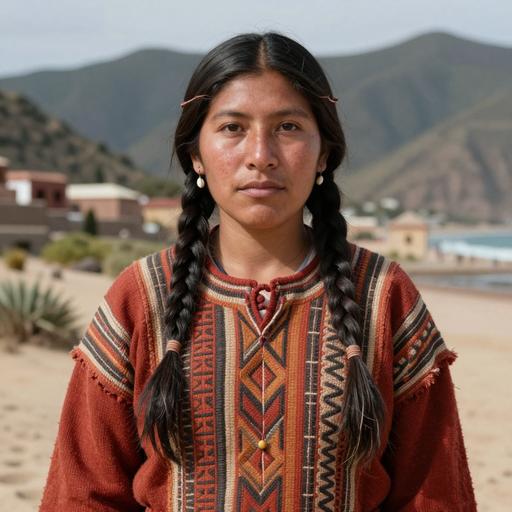
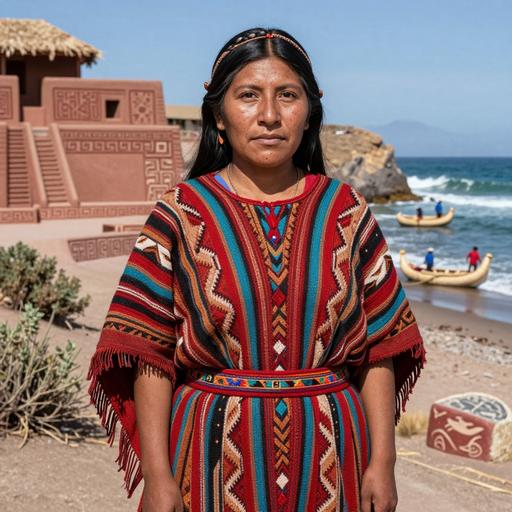
  • Early Holocene foragers recorded at Lauricocha and coastal Arica
  • Mid-Holocene shift toward horticulture, irrigation, and mound construction
  • First complex centers by late first millennium BCE; Tiwanaku and coastal polities rise later
Chapter IV

Daily Life & Society

Material traces paint a textured picture of everyday life across Andean elevations. In high valleys such as Laramate and Botigiriayocc, terraced agriculture and camelid herding structured seasonal movement and social obligations. Coastal sites like Huaca Pucllana (Lima) and Arica show specialized marine exploitation, preserved middens, and craft economies in textiles and fishing gear. Architectural variation — from stone platforms at Tiwanaku-linked Antaura and Maucallacta to adobe complexes of the Lima and Chimu traditions — reflects diverse strategies for ritual, administration, and household life.

Burial practices are especially informative: mummification and bundled interments in coastal Chinchorro contexts contrast with highland cave burials in Lauricocha and communal tombs in Pukara-era sites. Artifact assemblages (ceramics, textile fragments, lithics) indicate craft specialization, long-distance exchange of obsidian and Spondylus shell, and symbolic repertoires that linked communities across ecotones. Seasonal mobility, reciprocal labor obligations, and ritual calendar observances likely structured production and social cohesion.

Archaeobotanical and zooarchaeological evidence supports diets dominated by maize, tubers (including potatoes), quinoa, and camelids at higher elevations, with greater marine protein along the coast. These practices left genetic and isotopic signatures that help tie skeletal remains to lifeways recorded in the archaeological record.

  • Terraced agriculture and camelid herding structured highland economies
  • Coastal communities specialized in marine resources and complex mortuary traditions
Chapter V

Genetic Profile

Genetic analysis of 108 ancient individuals from Peru, Bolivia, and Chile reveals a coherent Andean signature through time, with nuanced regional variation. Male lineages are dominated by Y-haplogroup Q (53/56 Y-calls), consistent with longstanding paternal continuity in South America; rare CT and P calls (2 and 1 respectively) may reflect technical ambiguity or low-frequency inputs. Maternal diversity is richer: mtDNA haplogroups B2 (28), C1b (22), D1 (12), C1c (11), and B2b (9) together indicate multiple maternal lineages persisting across millennia.

Population structure inferred from genomes suggests strong highland continuity, particularly in central Andean valleys (Lauricocha, Laramate, Cotahuasi), punctuated by episodes of gene flow. Coastal samples (Arica, Huaca Pucllana) show affinities to highland groups but also signals compatible with coastal-forager ancestry found in Late Archaic Chinchorro contexts. Middle Horizon and Tiwanaku-period individuals (Akapana, Lukurmata, Pumapunku, Putuni) show genetic homogeneity across parts of the Titicaca basin, reflecting demographic expansion or increased connectivity during that era.

While 108 samples provide robust temporal coverage, uneven geographic sampling and preservation bias limit fine-scale inferences. Limited samples from some periods or sites mean conclusions about local migrations or elite-specific mobility should be treated as provisional pending broader sampling.

  • Dominant paternal lineage Q across 108 individuals, indicating long-term continuity
  • Maternal lineages B2, C1b, D1 and C1c show multiple maternal ancestries and regional mixing
Chapter VI

Legacy & Modern Connections

The genetic and archaeological tapestry of ancient Andean civilizations continues to shape biological and cultural heritage in modern Andean populations. Contemporary communities in Peru, Bolivia, and northern Chile retain many linguistic, agricultural, and ritual continuities traceable to pre-Hispanic traditions. Genetically, modern Andean populations often mirror the deep highland signal seen in ancient genomes, although colonial-era admixture and later movements introduced new layers.

Archaeological sites — Lauricocha, Huaca Pucllana, Tiwanaku complexes, and coastal Chinchorro deposits — remain focal points for public memory and scientific study. Ancient DNA provides a powerful lens that complements artifacts and ecofacts: it helps quantify continuity, reveal past connections across ecological zones, and identify periods of increased mobility. Because some regions remain undersampled, continued, ethically guided sampling and collaboration with descendant communities are essential to refine this living story.

  • Modern Andean populations retain genetic continuity with many ancient highland groups
  • Ancient DNA complements archaeology; community collaboration and further sampling remain crucial
Chapter VII

Sample Catalog

12 ancient DNA samples associated with the Echoes of the Andean Civilizations culture

Ancient DNA samples from this era, providing genetic insights into the people who lived during this period.

12 / 12 samples
Portrait Sample Country Era Date Culture Sex Y-DNA mtDNA
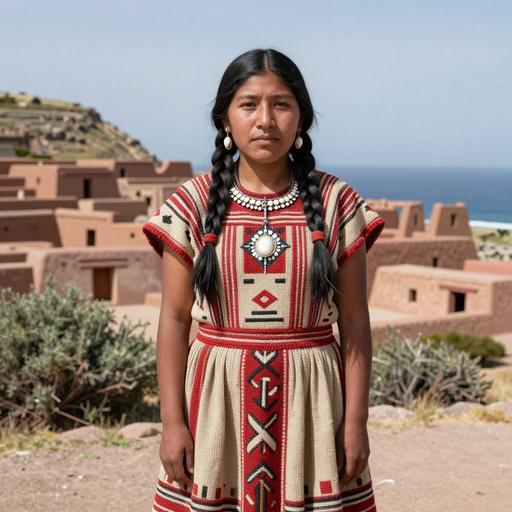
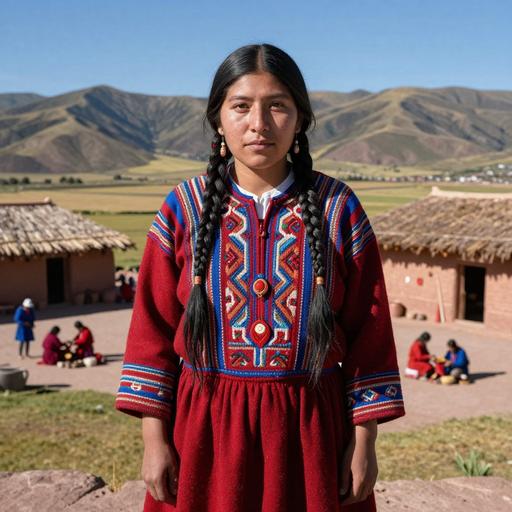
Portrait of ancient individual UC8-8168 from Peru, dated 1400 CE
UC8-8168
Peru Peru_Chincha_LH 1400 CE Andean Civilizations U - B2b
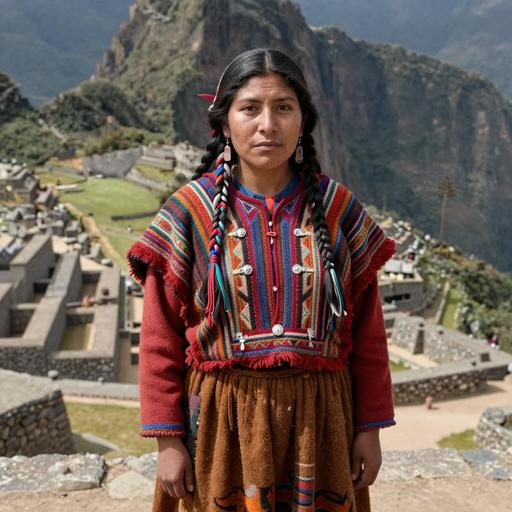
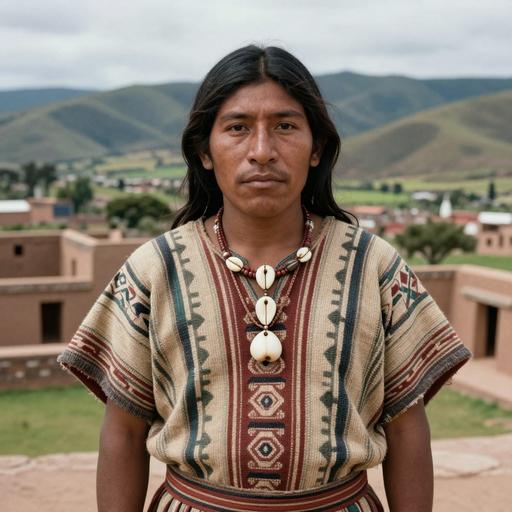
Portrait of ancient individual UC8-8173 from Peru, dated 1400 CE
UC8-8173
Peru Peru_Chincha_LH 1400 CE Andean Civilizations U Q-M3 B2b
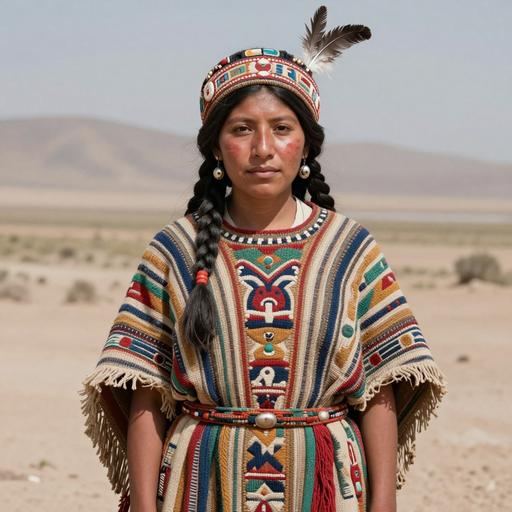
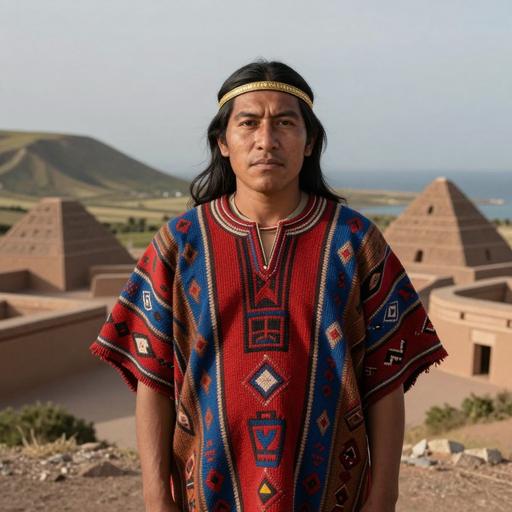
Portrait of ancient individual UC12-12 from Peru, dated 1400 CE
UC12-12
Peru Peru_Chincha_LH 1400 CE Andean Civilizations U - A2-a2
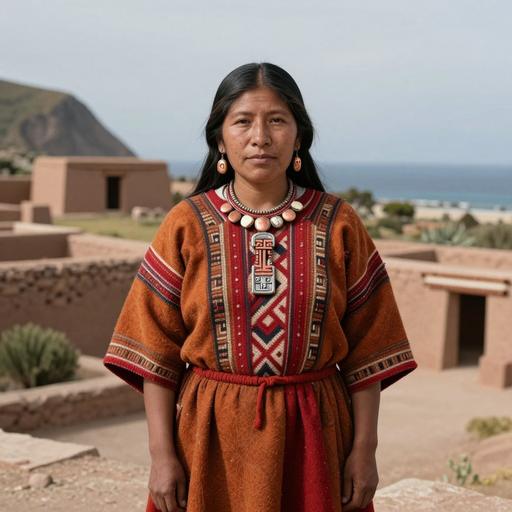
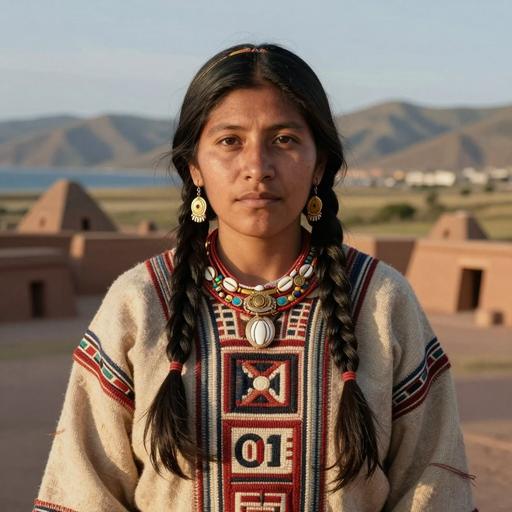
Portrait of ancient individual UC12-20 from Peru, dated 1400 CE
UC12-20
Peru Peru_Chincha_LH 1400 CE Andean Civilizations U - C1b-a
Portrait of ancient individual UC12-24 from Peru, dated 1400 CE
UC12-24
Peru Peru_Chincha_LH 1400 CE Andean Civilizations U - C1b
Portrait of ancient individual UC12-25 from Peru, dated 1400 CE
UC12-25
Peru Peru_Chincha_LH 1400 CE Andean Civilizations U - C1c
Portrait of ancient individual UC12_25 from Peru, dated 1250 CE
UC12_25
Peru Peru_Chincha_LH 1250 CE Andean Civilizations F - -
Portrait of ancient individual UC12_20 from Peru, dated 1250 CE
UC12_20
Peru Peru_Chincha_LH 1250 CE Andean Civilizations M - -
Portrait of ancient individual UC8_8173 from Peru, dated 1398 CE
UC8_8173
Peru Peru_Chincha_LH 1398 CE Andean Civilizations M Q1a2a1a -
Portrait of ancient individual UC12_12 from Peru, dated 1307 CE
UC12_12
Peru Peru_Chincha_LH 1307 CE Andean Civilizations F - -
AI Powered

AI Assistant

Ask questions about the Echoes of the Andean Civilizations culture

AI Assistant by DNAGENICS

Unlock this feature
Ask questions about the Echoes of the Andean Civilizations culture. Our AI assistant can explain genetic findings, historical context, archaeological evidence, and modern connections.
Sample AI Analysis

The Echoes of the Andean Civilizations culture represents a fascinating chapter in human history...

Genetic analysis reveals connections to earlier populations while showing evidence of unique adaptations and cultural innovations. The ancient DNA samples provide insights into migration patterns, social structures, and the biological relationships between ancient populations.

This is a preview of the AI analysis. Unlock the full AI Assistant to explore detailed insights about:

  • Genetic composition and ancestry
  • Migration patterns and origins
  • Daily life and cultural practices
  • Modern genetic legacy
Use code for 50% off Expires Mar 05