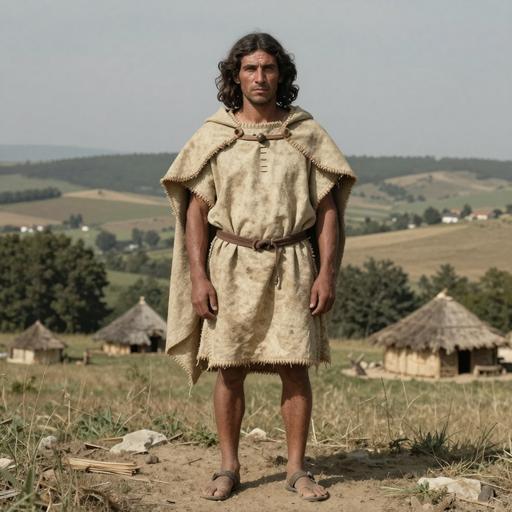
Across foothills and river valleys from the Carpathian Basin to northern Italy, the Chalcolithic horizon unfolds as a patchwork of communities experimenting with copper, complex pottery, and shifting burial rites. Archaeological evidence at named sites — Grottina dei Covoloni del Broion (Vicenza, Italy), Grotta La Sassa (Sonnino, Italy), Urziceni (Romania), and settlements such as Pusztataskony-Ledence I and Nemesnádudvar-Papföld (Hungary) — shows continuity with Neolithic farming lifeways alongside new material expressions. Radiocarbon dates from the broader assemblage place these contexts between c. 4500 and 2488 BCE, a period when local ceramic traditions were recomposed into regional styles associated with Bodrogkeresztur and related cultures.
Archaeological data indicates metallurgy in the form of small copper tools and ornaments appears unevenly: some communities adopted copper slowly, others used it symbolically. Settlement patterns suggest mixed economies — intensive agriculture in river plains and continued exploitation of upland resources in the Berici and other hills. Trade connections are visible through exotic raw materials and shared pottery motifs between the Italian Grotta contexts and Carpathian Basin sites, implying networks of exchange rather than mass migrations. Limited evidence suggests shifts in ritual practice — mortuary variability at Abony (Turjányos-dűlő) and Brandýsek (Czech Republic) points to emerging social differentiation, but preservation and sampling biases mean interpretations remain cautious.