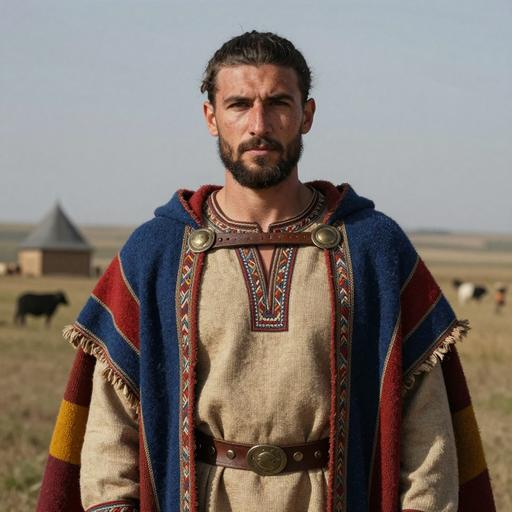
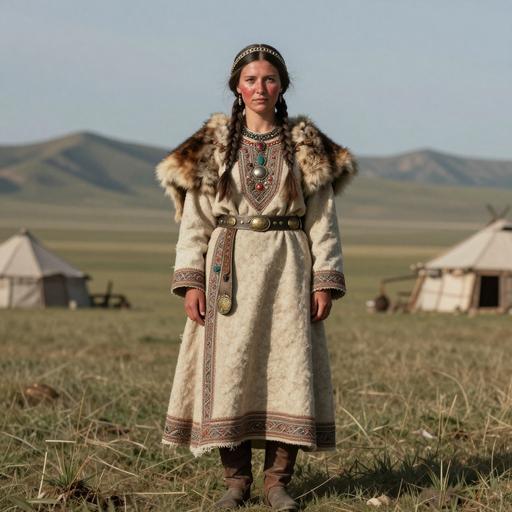
Across the wide horizon of the Eurasian steppe, a tapestry of mobile societies emerged and reconfigured over more than two millennia. Archaeological strata and burial grounds dated between 1000 BCE and the early medieval centuries show a succession of material cultures—Sarmatian-mounted warriors, Pazyryk-style grave rites in the Altai and Kazakhstan, and later Saltovo-Mayaki and Avar assemblages—each reflecting shifting alliances and long-distance connections. In the Carpathian Basin, the Danube–Tisza interfluve yields rich burial contexts (for example Kunbábony and Kunpeszér) whose grave goods and horse burials echo steppe traditions adapted to local landscapes.
Caution is essential: material culture can travel independently of genes, and the archaeological record preserves selective snapshots—elite burials are overrepresented in many datasets. Still, continuity in burial practices, metallurgical styles, and horse gear across sites in Hungary and into Russia and Kazakhstan suggests repeated influxes or cultural transmission from eastern steppe zones into the Carpathian Basin. Limited evidence also points to reciprocal influence: local Carpathian groups adopted steppe elements, producing hybrid material cultures by the Early to Middle Avar periods.
By matching calibrated dates from cemeteries (6th–9th centuries CE for classic Avar contexts) with broader steppe chronologies, we can place the Eurasian_Nomadic sequence within a long trajectory of mobility that culminates, in different regions, in medieval nomadic polities and eventually in settlements influenced by incoming Magyar populations.