Menu
Store
Blog
Kazakhstan_Botai_Eneolithic Russia, Mongolia, Kazakhstan, China (Eurasian Steppe)

Echoes of the Eurasian Steppe

From Okunevo mounds to Mongolian highlands: archaeology and DNA reveal steppe mobility across millennia

3782 BCE - 775 CE
3 Ancient Samples
Scroll to begin
Chapter I

The Story

Understanding the Echoes of the Eurasian Steppe culture

A synthesis of archaeological sites (Bitiya, Bogdanovka, Khovsgol, Khovd) and 182 ancient genomes (3782 BCE–775 CE) showing complex west-east gene flow, pastoral lifeways, and a mosaic of Y and mtDNA lineages across the Eurasian Steppe.

Time Period

3782 BCE – 775 CE

Region

Russia, Mongolia, Kazakhstan, China (Eurasian Steppe)

Common Y-DNA

Q (48), R (31), N (22), C (4), J (4)

Common mtDNA

U (22), A (22), H (20), D (17), C (16)

Chapter II

Timeline

Key moments in the history of this culture

3782 BCE

Earliest sampled individuals

Earliest radiocarbon-associated samples in the dataset date to ca. 3782 BCE, marking early Bronze Age steppe occupation in the region.

2200 BCE

Bronze Age pastoral expansion

Material culture and genetics indicate expanding pastoral networks and metallurgy across Western Siberia and Mongolia in the third millennium BCE.

1600 BCE

Sintashta-related movements

Middle–Late Bronze Age Sintashta horizons (~2100–1600 BCE) are archaeogenetically linked to later steppe populations in this record.

775 CE

Latest sampled horizons

The youngest individuals (ca. 775 CE) show continued genetic heterogeneity into the early medieval period.

Chapter III

Origins & Emergence

Beneath the rolling horizons of the steppe, pockets of burial mounds and isolated cemeteries preserve the first visible chapters of a mobile, metallurgic world. Archaeological data indicate persistent occupation and long-distance exchange from the early Bronze Age into the early medieval period (earliest sampled ca. 3782 BCE). Key sites in this dataset include the Bitiya Burial Ground (Western Siberia; mounds 1 and 3), Bogdanovka in Bashkortostan, and mountain burials at Berkh Mountain and Arbulag sorum in Khovsgol and Khovd (Mongolia).

Material traces — copper and bronze artifacts, kurgan burials, and horse-related gear — suggest a pastoral economy increasingly oriented around mobility and mounted herding from the third to the second millennium BCE. Cultures with archaeological continuity or interaction in this record include Okunevo (Russia_BA_Okunevo), Afanasievo, Sintashta, and later Iron Age groups such as Sargat. Limited evidence suggests that some of the earliest steppe communities synthesized elements from western steppe metallurgy and eastern forager traditions, producing a cultural mosaic rather than a single homogeneous culture.

Because the dataset spans nearly four millennia and broad territories, regional variation is pronounced; early Bronze Age signatures in Western Siberia and Mongolia are not identical to later Iron Age assemblages in Bashkortostan. Archaeological chronologies, when combined with ancient DNA, help trace pulses of migration and local continuity across this vast landscape, but many fine-scale social dynamics remain uncertain pending more targeted excavation and dating.
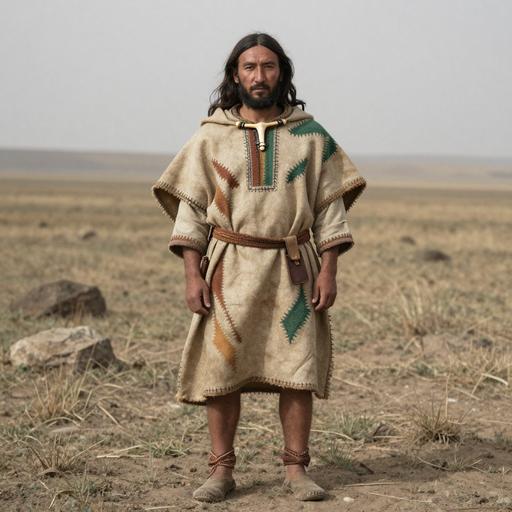
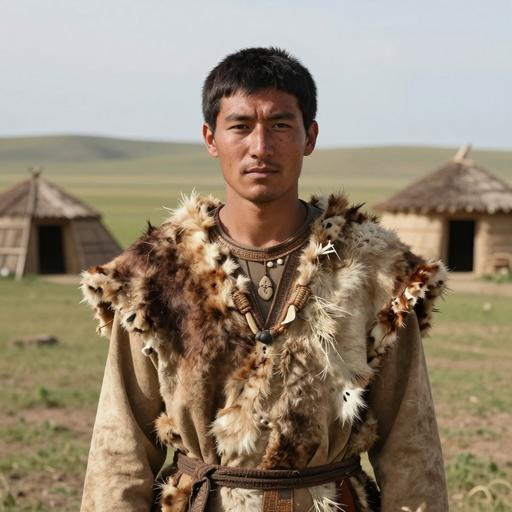
  • Sites: Bitiya Burial Ground (mounds 1, 3); Bogdanovka #228; Khovsgol and Khovd mountain burials
  • Artifacts: bronze/copper objects, kurgan burials, horse gear indicate pastoral mobility
  • Heterogeneous origins: mixing of western steppe metallurgy with eastern hunter-gatherer traditions
Chapter IV

Daily Life & Society

Life on the steppe was shaped by seasonal movement, herd management, and networks of exchange that linked river valleys, mountain passes, and oasis towns. Burials at sites such as Bogdanovka and the Bitiya mounds reveal funerary variability: some individuals were interred with rich metal items and possible status markers, while others show simpler rite patterns. This pattern suggests emerging social differentiation, but archaeological evidence for strict hierarchy is mixed and regionally specific.

Animal herding — particularly sheep, goat, cattle, and later horse husbandry — formed the economic backbone. Horse use, attested by bridles and bit wear in some contexts, amplified mobility and enabled longer-range contact between the steppe interior and peripheral zones in Xinjiang and Central Asia. Seasonal mobility shaped craft production: portable ceramic traditions, leatherworking, and modest metalworking adapted to nomadic contexts.

Settlement patterns range from ephemeral camps to more permanent burial landscapes and ritual loci in mountain valleys such as Berkh Mountain and Arbulag. Botanical preservation is limited on the open steppe, so crop use is unevenly documented; however, contacts with agricultural societies to the south and west likely supplied grain and new technologies.

Archaeological data indicate resilience and adaptability across millennia, but many aspects of household structure, gender roles, and inheritance remain poorly understood without more in-depth contextual excavation and grave inventories.

  • Economy centered on pastoralism (sheep, goats, cattle, horses)
  • Burials show variability: some elite accoutrements but also modest graves, signaling regional social diversity
Chapter V

Genetic Profile

The genetic portrait drawn from 182 ancient genomes across Russia, Mongolia, Kazakhstan, and China reveals a dynamic tapestry of ancestry. Y-chromosome counts in this dataset highlight haplogroups Q (48) and R (31) as common paternal lineages, with significant contributions of N (22), and smaller numbers of C and J. Maternal lineages are diverse: mtDNA U (22), A (22), H (20), D (17), and C (16) together indicate both West Eurasian and East Eurasian maternal ancestry.

These patterns are consistent with recurrent admixture events along the steppe corridor. Haplogroup R is often associated with west Eurasian steppe pastoralists, while Q, N, and C are frequently linked to Siberian and eastern Eurasian groups. The balanced presence of western mtDNA lineages (U, H) alongside eastern lineages (A, D, C) suggests multi-directional gene flow and possibly sex-biased processes — for example, episodes where incoming male lineages mixed with local maternal pools, or alternately, complex bi-directional admixture over centuries. Genetic affinities in some individuals mirror archaeological ties to Afanasievo and Okunevo traditions, while others show connections to Sintashta-related genetic backgrounds known from the mid–late Bronze Age.

Because the dataset spans 3782 BCE to 775 CE and covers broad geography, temporal trends are crucial: early Bronze Age individuals may carry different ancestry proportions than Iron Age samples. Although 182 samples provide substantial resolution, regional sampling gaps and uneven preservation mean some conclusions remain provisional; more targeted chronology-aware sampling will refine timing and direction of gene flow.

  • Dataset (n=182) shows mixed west-east ancestry: Y haplogroups Q and R predominate
  • Maternal diversity (U, A, H, D, C) indicates sustained female-mediated gene flow across the steppe
Chapter VI

Legacy & Modern Connections

The archaeological and genetic resonance of the Eurasian Steppe persists in the genetic landscape of modern Central Asia, Siberia, and Mongolia. Present-day populations carry varying mixes of the paternal and maternal lineages seen in this ancient dataset, reflecting a long history of migrations, language shifts, and cultural exchange. Haplogroup Q, abundant here, has deep connections across northern Eurasia and into the Americas at earlier times, while R and N continue as major components in many contemporary steppe and forest-steppe groups.

Linguistic and cultural legacies — including pastoral economies, mounted warfare traditions, and trans-regional trade — have roots in the Bronze and Iron Age dynamics documented archaeologically. However, causality between specific ancient groups and modern ethnic identities is complex: genetic continuity exists in places, but later migrations (for example, Turkic and Mongolic expansions) layered new ancestries over older ones. Ongoing ancient DNA work, combined with precise archaeological contexts, will continue to clarify how the steppe's past shaped living populations. Researchers should interpret links cautiously, emphasizing admixture and continuity rather than direct one-to-one descent.

  • Modern Central Asian and Siberian gene pools reflect mixed steppe ancestries
  • Cultural continuities include pastoralism and mounted mobility, but identities formed through multiple later migrations
Chapter VII

Sample Catalog

3 ancient DNA samples associated with the Echoes of the Eurasian Steppe culture

Ancient DNA samples from this era, providing genetic insights into the people who lived during this period.

3 / 3 samples
Portrait Sample Country Era Date Culture Sex Y-DNA mtDNA
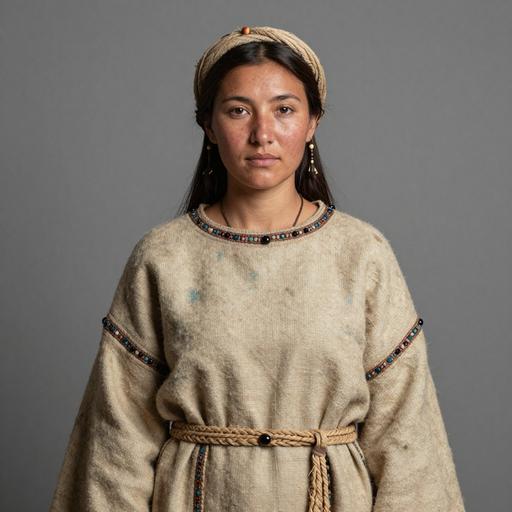
Portrait of ancient individual BOT14 from Kazakhstan, dated 3517 BCE
BOT14
Kazakhstan Kazakhstan_Botai_Eneolithic 3517 BCE Eurasian Steppe M R-L1432 K1b2c
Portrait of ancient individual BOT15 from Kazakhstan, dated 3345 BCE
BOT15
Kazakhstan Kazakhstan_Botai_Eneolithic 3345 BCE Eurasian Steppe M N-FT324 R1b1*
Portrait of ancient individual BOT2016 from Kazakhstan, dated 3516 BCE
BOT2016
Kazakhstan Kazakhstan_Botai_Eneolithic 3516 BCE Eurasian Steppe F - Z1*
AI Powered

AI Assistant

Ask questions about the Echoes of the Eurasian Steppe culture

AI Assistant by DNAGENICS

Unlock this feature
Ask questions about the Echoes of the Eurasian Steppe culture. Our AI assistant can explain genetic findings, historical context, archaeological evidence, and modern connections.
Sample AI Analysis

The Echoes of the Eurasian Steppe culture represents a fascinating chapter in human history...

Genetic analysis reveals connections to earlier populations while showing evidence of unique adaptations and cultural innovations. The ancient DNA samples provide insights into migration patterns, social structures, and the biological relationships between ancient populations.

This is a preview of the AI analysis. Unlock the full AI Assistant to explore detailed insights about:

  • Genetic composition and ancestry
  • Migration patterns and origins
  • Daily life and cultural practices
  • Modern genetic legacy
Use code for 50% off Expires Mar 05