Menu
Store
Blog
Turkey_Ottoman Spain; Turkey; Lebanon; Syria; Pakistan

Echoes of the Islamic Golden Age

Archaeology and DNA reveal a transregional tapestry from Iberia to South Asia (665–1652 CE)

665 CE - 1652 CE
3 Ancient Samples
Scroll to begin
Chapter I

The Story

Understanding the Echoes of the Islamic Golden Age culture

Fifty-three genomes from sites across Spain, Turkey, Lebanon, Syria and Pakistan (665–1652 CE) illuminate mobility, admixture, and local continuity during the Islamic Golden Age. Archaeology and DNA together trace Iberian, Levantine, Anatolian and South Asian connections, while noting geographic and sampling limits.

Time Period

665–1652 CE

Region

Spain; Turkey; Lebanon; Syria; Pakistan

Common Y-DNA

R (13), E (9), J (6), CT (3), T (2)

Common mtDNA

H (17), U (7), J (7), HV (3), H1 (2)

Chapter II

Timeline

Key moments in the history of this culture

711 CE

Umayyad invasion of Iberia

Muslim forces enter the Iberian Peninsula, initiating centuries of Islamic rule and cultural exchange across al-Andalus.

756 CE

Emirate of Córdoba established

The Umayyad emirate consolidates in Córdoba, fueling urban growth, scholarship and long-distance trade in Iberia.

1030 CE

Ghaznavid influence in Swat (Udegram)

Ghaznavid-era burials and material culture in Swat reflect South-Central Asian political and cultural networks.

1147 CE

Almohad expansion into Iberia

North African Almohad forces reshape Iberian politics, increasing trans-Mediterranean connections.

1492 CE

Fall of Granada

The Nasrid kingdom of Granada falls, marking the end of major Muslim rule in Iberia and initiating demographic shifts.

1517 CE

Ottoman control of Levant and parts of Anatolia

Ottoman consolidation alters administrative and population dynamics across the eastern Mediterranean.

Chapter III

Origins & Emergence

The period captured by these samples spans the early Islamic expansions into Iberia and centuries of dynastic change across the Mediterranean and South Asia. Archaeological contexts include urban and rural deposits from Palau Castell de Betxí and Plaza Parroquial in Vinaròs, late-medieval stratigraphy at Calle Panaderos and Cueva Romero in Granada province, Anatolian island and inland sites such as Zeytinliada (Erdek) and Yenişehirkapı (İznik), the Mesopotamian frontier at Aktaş Mevki (Midyat), and the Ghaznavid-era cemetery at Udegram in Swat Valley.

These places testify to networks of trade, pilgrimage and military movement that intensified after the 7th century. Archaeological data indicates urban continuity and reuse of Roman and Visigothic infrastructure in al-Andalus, while Anatolian and Levantine contexts show Byzantine, early Islamic and later Ottoman layers. Genetic evidence aligns with this picture of mobility: there are clear signatures of western Eurasian maternal lineages alongside Y-chromosome diversity reflecting both local European and broader Near Eastern/North African paternal inputs.

Limited evidence suggests regional differences in ancestry; however, the dataset’s temporal span (665–1652 CE) and uneven geographic coverage mean that fine-grained demographic reconstructions remain provisional.
  • Samples cover urban, rural, and funerary contexts across five modern countries
  • Archaeology shows continuity and reuse of older infrastructure in Iberia and Anatolia
  • Genetic signals reflect a mix of local European and wider Near Eastern/North African ancestries
Chapter IV

Daily Life & Society

Material culture and burial practices recovered at these sites paint a cinematic but variegated portrait of life under Islamic polities. In al-Andalus — from Betxí and Vinaròs to Granada’s Calle Panaderos and Cueva Romero — excavations reveal domestic architecture, ceramics, irrigation works and coins that attest to thriving markets and agricultural intensification under Umayyad, Taifa and later Almohad and Nasrid authorities. At Udegram in the Swat Valley, funerary contexts reflect Ghaznavid-period connections to Central and South Asian political spheres.

In Anatolia and the Levant, coastal and inland assemblages (Zeytinliada, İznik, Midyat, and sites in Lebanon and Syria) show layered occupations: Byzantine buildings reused, new mosque precincts and markets established, and material ties across the eastern Mediterranean. Bioarchaeological indicators (where available) suggest diverse diets and health profiles, with local variation in workload markers and childhood stress.

Archaeology indicates vibrant urbanism, long-distance trade in metals, textiles and spices, and social stratification expressed in burial treatments. While many everyday details remain invisible in the skeletal and material record, combining artifacts with DNA provides a fuller portrait of communities shaped by commerce, conversion, and conquest.

  • Urban markets, irrigation and craft production visible in Iberian and Anatolian sites
  • Burial and material variability reflect social status and regional customs
Chapter V

Genetic Profile

The dataset of 53 genomes reveals a mosaic of ancestries consistent with a multi-center Islamic world. Y-chromosome haplogroup R (n=13) — common in Europe — is frequent in Iberian samples, indicating substantial local male-line continuity or admixture with European lineages. Haplogroup E (n=9), often associated with North African and some Levantine populations, appears across Iberian and eastern Mediterranean contexts and may document North African connections important during the Almoravid and Almohad periods. Haplogroup J (n=6), widespread in the Near East, appears in Anatolian and Levantine samples and signals eastern Mediterranean paternal ancestry. Less frequent lineages (CT, T) reflect deeper or more diverse paternal inputs.

Mitochondrial DNA is dominated by West Eurasian maternal lineages: H (n=17), U (n=7), J (n=7), HV (n=3), and subclades like H1. These maternal profiles suggest substantial continuity with local European and Near Eastern populations, consistent with female-mediated local ancestry or long-standing regional maternal lineages.

Population-level analyses show admixture gradients: Iberian individuals tend toward mixed European/Levantine/North African ancestry, Anatolian and Levantine samples cluster with eastern Mediterranean genepools, and the Udegram individuals show South-Central Asian affinities linked to Ghaznavid-era networks. Sample size (53) permits robust regional signals but geographic and temporal sampling biases mean some subregional conclusions remain tentative.

  • Y-DNA shows both European (R) and Near Eastern/North African (E, J) paternal lineages
  • mtDNA dominated by West Eurasian lineages (H, U, J) indicating maternal continuity
Chapter VI

Legacy & Modern Connections

The genetic and archaeological portrait of the Islamic Golden Age is one of entangled legacies. In Iberia, surviving genetic signals of R alongside E and J haplogroups echo centuries of interaction among Visigothic, North African and ʻimmigrantʼ populations during Umayyad, Almoravid and Nasrid rule. In the eastern Mediterranean and Anatolia, genetic continuity into Ottoman periods is visible, while the Ghaznavid-linked individuals at Udegram remind us that medieval South Asia participated in the same circuits of movement.

Modern populations across Spain, the Levant, Anatolia and parts of South Asia retain this layered heritage. Archaeogenetics underscores that cultural change — conversion, language shift, and political realignment — often proceeded with a complex admixture of people. Yet caution is essential: uneven sampling and the long time span represented mean that not every modern population will show the same patterns observed here. Ongoing sampling and ancient DNA from underrepresented locales will clarify how these medieval demographic threads were woven into modern genomes.

  • Modern genetic variation in Iberia and the eastern Mediterranean carries layered medieval signals
  • Cultural transformations often involved complex demographic mixtures rather than simple replacement
Chapter VII

Sample Catalog

3 ancient DNA samples associated with the Echoes of the Islamic Golden Age culture

Ancient DNA samples from this era, providing genetic insights into the people who lived during this period.

3 / 3 samples
Portrait Sample Country Era Date Culture Sex Y-DNA mtDNA
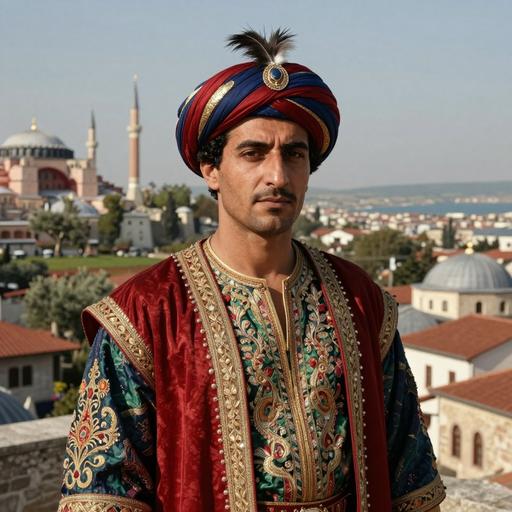
Portrait of ancient individual I14820 from Turkey, dated 1479 CE
I14820
Turkey Turkey_Ottoman 1479 CE Islamic Golden Age F - U5b1b1+@16192
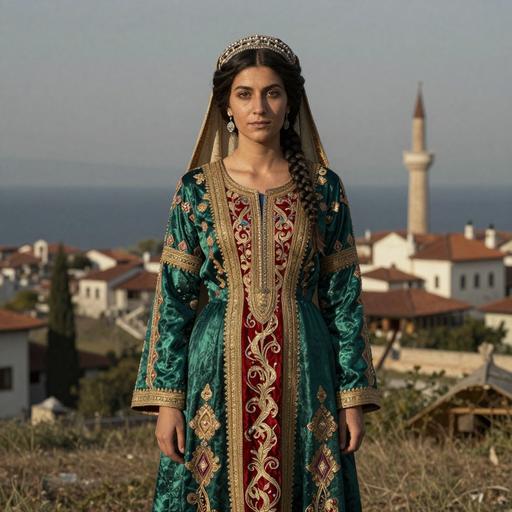
Portrait of ancient individual I14823 from Turkey, dated 1515 CE
I14823
Turkey Turkey_Ottoman 1515 CE Islamic Golden Age M - T1a2
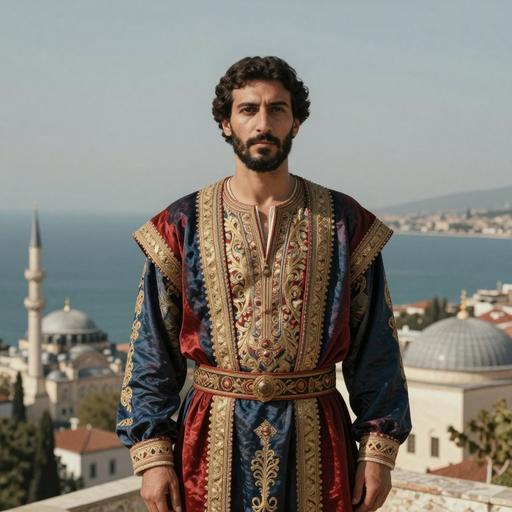
Portrait of ancient individual I14844 from Turkey, dated 1490 CE
I14844
Turkey Turkey_Ottoman 1490 CE Islamic Golden Age M - H47a
AI Powered

AI Assistant

Ask questions about the Echoes of the Islamic Golden Age culture

AI Assistant by DNAGENICS

Unlock this feature
Ask questions about the Echoes of the Islamic Golden Age culture. Our AI assistant can explain genetic findings, historical context, archaeological evidence, and modern connections.
Sample AI Analysis

The Echoes of the Islamic Golden Age culture represents a fascinating chapter in human history...

Genetic analysis reveals connections to earlier populations while showing evidence of unique adaptations and cultural innovations. The ancient DNA samples provide insights into migration patterns, social structures, and the biological relationships between ancient populations.

This is a preview of the AI analysis. Unlock the full AI Assistant to explore detailed insights about:

  • Genetic composition and ancestry
  • Migration patterns and origins
  • Daily life and cultural practices
  • Modern genetic legacy
Use code for 50% off Expires Mar 05