Menu
Store
Blog
Poland_Medieval_1 Italy, Spain, France, UK, Czechia, Poland, Slovakia, Hungary

Echoes of Western Europe

Archaeology and ancient DNA trace lives from Bell Beaker fields to Early Modern Italian towns

2453 BCE - 1700 CE
1 Ancient Samples
Scroll to begin
Chapter I

The Story

Understanding the Echoes of Western Europe culture

A survey of 64 Western European individuals (2453 BCE–1700 CE) linking archaeological sites across Italy, Spain, France, Britain and Central Europe with genetic patterns that reflect migration, trade, and local continuity.

Time Period

2453 BCE – 1700 CE

Region

Italy, Spain, France, UK, Czechia, Poland, Slovakia, Hungary

Common Y-DNA

R (most frequent), E, J, G, I

Common mtDNA

H, U, J, T, HV

Chapter II

Timeline

Key moments in the history of this culture

2500 BCE

Bell Beaker expansions and coastal exchanges

Burial assemblages and genetic markers link coastal and inland communities, reflecting Bronze Age mobility and the spread of new cultural practices across Western Europe.

Chapter III

Origins & Emergence

Across a millennium and a half of Europe’s long second millennium BCE and into the medieval centuries, the human story recorded at sites such as Sant Julià de Ramis and Pla de l'Horta (Girona), Port Bara (Saint-Pierre Quiberon, Morbihan), Roda de Ter (L'Esquerda, Barcelona), Marsiliana d'Albegna and Poggio Pelliccia (Grosseto, Tuscany), and inland sites in NW Bohemia (Most, Teplice) reads as a palimpsest of migrations, coastal trade and local resilience.

Archaeological evidence — pottery forms, burial rites, and settlement layers — places some individuals within well-known horizons: Bell Beaker-related assemblages in England and continental links to Bronze Age trade, Roman and post-Roman occupation layers in Italy and Slovakia, and medieval to early modern urban stratigraphy in Tuscany and Catalonia. Radiocarbon dates in this dataset span ca. 2453 BCE to 1700 CE, highlighting both long-term continuity and episodic change.

Limited evidence from isolated graves requires caution: single burials or small cemetery samples can reflect individual life histories rather than population-wide events. Where multiple samples come from the same site or region, patterns become clearer — demonstrating both local continuity and pulses of external influence. Archaeological context remains essential to interpret genetic signals: grave goods, stratigraphy and historical records help anchor DNA into a cultural story rather than a bare lineage chart.
  • 64 individuals dated 2453 BCE–1700 CE across eight modern countries
  • Key sites: Sant Julià de Ramis, Port Bara, L'Esquerda, Marsiliana d'Albegna, Poggio Pelliccia, Konobrže, Chouč, Westbourne
  • Caution: some sites yield only a few samples; contextual archaeology is essential
Chapter IV

Daily Life & Society

Material culture and osteological traces paint vivid scenes: coastal fishing and seafaring at Port Bara and Catalan sites, pastoral and arable economies in Tuscan and Bohemian landscapes, and the shifting priorities of medieval towns such as Grosseto and Roda de Ter. Human remains often preserve isotopic signals of diet — a mix of terrestrial cereals, legumes and varying marine input near coastal sites — and markers of workload that reveal labor divisions and life stress.

Burial practices differ by time and place. Bronze Age and early medieval burials may be accompanied by distinctive pottery, personal ornaments or weaponry; later medieval and early modern interments within urban cemeteries show different funerary economies and social stratification. In England, the so-called 'Racton Man' burial (Westbourne, Sussex) sits within narratives of ritual landscapes and episodic mobility.

Archaeobotanical and zooarchaeological evidence from excavations at L'Esquerda and Tuscan settlements indicates mixed farming with regional specializations. Limited ancient DNA from pathogens and isotopes can hint at health, mobility and diet, but such inferences are strongest when integrated with the full archaeological record. Together, bones and objects give us a cinematic but empirically grounded view of daily lives across centuries.

  • Economies: mixed farming inland; fishing and maritime trade at coastal sites
  • Burial variability reflects changing social and religious practices
Chapter V

Genetic Profile

The genetic snapshot from 64 individuals shows a tapestry of lineages consistent with Western European diversity shaped by prehistoric migrations, historical empires and medieval mobility. Y-chromosome diversity is led by haplogroup R (12 instances), frequently associated in Europe with R1b lineages that expanded during the late Neolithic and Bronze Age (for example, Bell Beaker related movements into Britain). Haplogroups E (6) and J (5) appear at multiple locations and likely reflect Mediterranean and Near Eastern affinities introduced by long-distance trade, Roman-era contacts, and later medieval connections across the Mediterranean.

Haplogroups G (4) and I (3) often trace to older Neolithic farmer and Mesolithic European roots respectively, indicating persistence of local paternal lines in some regions. Mitochondrial DNA is dominated by haplogroup H (18) and U (10), common maternal lineages in Europe, with notable representation of J, T and HV. These maternal patterns suggest broad continuity of female-line ancestry alongside episodic male-mediated dispersals.

Population-level interpretation is strengthened by sample size (n=64), but caution remains: site-by-site counts can be low and some haplogroups cluster in specific locales. Limited ancient-pathogen or autosomal summaries in this dataset mean that inferences about fine-scale admixture, kinship, or social structure should be treated as provisional. Integrating autosomal ancient DNA, archaeological context, and historic records provides the most robust narrative linking genes to lives.

  • Y-DNA: R most common; E and J signal Mediterranean/Near Eastern links
  • mtDNA: H and U dominate, indicating maternal continuity across regions
Chapter VI

Legacy & Modern Connections

The genetic and archaeological strands from these sites contribute to modern European diversity. Many of the Y and mtDNA lineages found here persist in present-day populations of Italy, France, Spain and Britain, reflecting both ancient expansions (Bronze Age) and later historical processes (Roman imperial networks, medieval trade, and early modern migrations).

Modern genetic landscapes are mosaics: some haplogroups reflect continental-wide Bronze Age movements, others mirror localized continuity or Mediterranean connectivity. Where sample counts at individual sites are small, conclusions about local ancestry must remain tentative; however, the broader signal across 64 individuals supports a picture of long-term demographic stability punctuated by episodes of migration and exchange. For descendants and curious visitors, these bones and genomes are tangible links to the everyday and extraordinary lives that shaped modern Europe’s genetic heritage.

  • Many lineages mirror those common in contemporary Western Europeans
  • Dataset supports continuity with punctuated influxes from Mediterranean and northern sources
Chapter VII

Sample Catalog

1 ancient DNA samples associated with the Echoes of Western Europe culture

Ancient DNA samples from this era, providing genetic insights into the people who lived during this period.

1 / 1 samples
Portrait Sample Country Era Date Culture Sex Y-DNA mtDNA
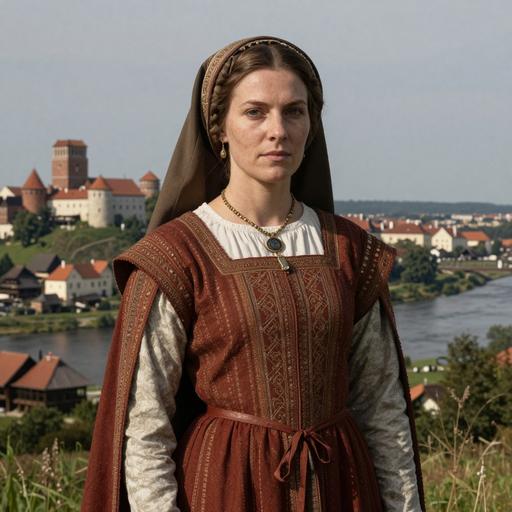
Portrait of ancient individual VK210 from Poland, dated 1000 CE
VK210
Poland Poland_Medieval_1 1000 CE Western European U I2a H5e1a1
AI Powered

AI Assistant

Ask questions about the Echoes of Western Europe culture

AI Assistant by DNAGENICS

Unlock this feature
Ask questions about the Echoes of Western Europe culture. Our AI assistant can explain genetic findings, historical context, archaeological evidence, and modern connections.
Sample AI Analysis

The Echoes of Western Europe culture represents a fascinating chapter in human history...

Genetic analysis reveals connections to earlier populations while showing evidence of unique adaptations and cultural innovations. The ancient DNA samples provide insights into migration patterns, social structures, and the biological relationships between ancient populations.

This is a preview of the AI analysis. Unlock the full AI Assistant to explore detailed insights about:

  • Genetic composition and ancestry
  • Migration patterns and origins
  • Daily life and cultural practices
  • Modern genetic legacy
Use code for 50% off Expires Mar 05