Menu
Store
Blog
Italy_Gattolino_CA Central Europe (Croatia, Hungary, Czech Rep., Italy, France)

European Chalcolithic Mosaic

Copper‑age tapestry linking Lasinja and central Chalcolithic communities through archaeology and DNA

4341 CE - 2208 BCE
1 Ancient Samples
Scroll to begin
Chapter I

The Story

Understanding the European Chalcolithic Mosaic culture

A synthesis of 92 Chalcolithic genomes (4341–2208 BCE) across Croatia, Hungary, Czech Republic, Italy and France. Archaeology and ancient DNA reveal a mosaic of Neolithic farmer continuity, local hunter‑gatherer persistence, and limited incoming lineages tied to later cultural shifts.

Time Period

4341–2208 BCE

Region

Central Europe (Croatia, Hungary, Czech Rep., Italy, France)

Common Y-DNA

G (19), I (14), R (4), C (3), CT (1)

Common mtDNA

H (13), U (11), K (10), T (10), T2b (7)

Chapter II

Timeline

Key moments in the history of this culture

3300 BCE

Lasinja cultural horizon forms

Regional Lasinja pottery and burial traditions appear in the Pannonian and Adriatic zones, marking intensified local cultural identities and exchange networks across the central Balkans.

Chapter III

Origins & Emergence

The European Chalcolithic represented here (4341–2208 BCE) unfolds as a patchwork of regional traditions rooted in Neolithic agricultural societies and shaped by local hunter‑gatherer legacies. Archaeological sites such as Necropoli di Gattolino (Cesena, Italy), Potočani (Croatia) and Makotrasy (Czech Republic) document funerary variability, copper use, and shifting settlement patterns. In the Pannonian basin and along the Adriatic, the Lasinja and Balaton‑Lasinja horizons show pottery styles and burial rites that link southern Carpathian influences with local innovations. In northern Italy, Remedello and Gattolino cemeteries carry distinct mortuary practices and early metal artifacts that reflect long‑distance interactions.

Material culture suggests incremental changes rather than a single sweeping migration: metal objects, new pottery shapes, and exchange networks appear layered atop farming lifeways. Limited evidence suggests episodes of mobility and cultural contact—for example, Bell Beaker influences in parts of France and Italy—while archaeological data indicates persistent local traditions in central and eastern sites. The chronology of the region is transitional: copper technologies spread unevenly and regional populations maintained diverse social strategies as they negotiated new materials and networks.
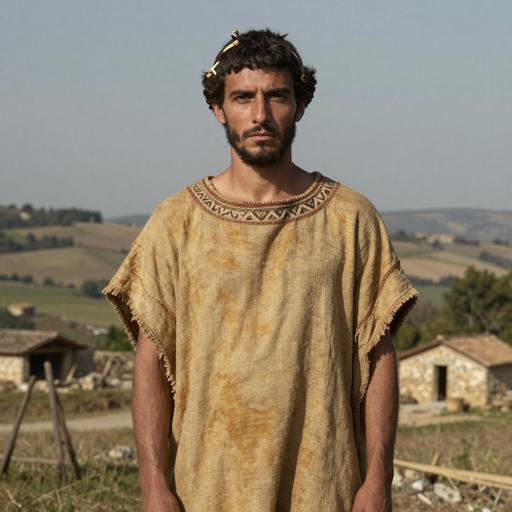
  • Emergence from Neolithic farmer communities with local hunter‑gatherer continuity
  • Key sites: Gattolino (Italy), Potočani (Croatia), Makotrasy & Prague‑Jinonice (Czechia)
  • Material signs of exchange (copper, pottery) rather than uniform migration
Chapter IV

Daily Life & Society

Daily life in Chalcolithic communities combined intensive cereal cultivation, animal husbandry, and craft specializations centered on copper and stone tools. Archaeobotanical and zooarchaeological remains from central European settlements indicate mixed farming economies: wheat and barley fields, herds of cattle and sheep, and local wild resource use. Houses were typically rectangular or long‑house forms in some regions, while burial practices ranged from single inhumations to larger cemeteries with rich grave goods (e.g., objects from Cesena’s Necropoli di Gattolino).

Social organization appears variable: some communities show structured burial differentiation suggesting emerging social ranking, while others emphasize communal deposition and collective markers. Craft producers—metallurgists, potters, and flint workers—likely played key roles in interregional exchange. Coastal and riverine routes enabled movement of raw copper and finished goods; mountain passes funneled contacts between the Adriatic and inland basins. Limited isotopic data from human remains suggest both local residence and individuals with nonlocal signatures, implying mobility for marriage, trade, or craft networks.

Archaeological evidence indicates innovation lived alongside continuity: new metal objects and pottery styles augmented, rather than replaced, long‑standing subsistence and social patterns.

  • Mixed farming with specialized craft production (copper, pottery)
  • Variable burial customs hint at emerging social differentiation and mobility
Chapter V

Genetic Profile

Genomic data from 92 individuals spanning Croatia, Hungary, Czech Republic, Italy and France afford a broad, though regionally uneven, view of Chalcolithic population dynamics. Y‑DNA counts show a predominance of haplogroup G (19) and substantial representation of I (14), both commonly associated with Neolithic farmers and local Mesolithic continuity in Europe. The smaller numbers of R lineages (4) suggest limited presence of steppe‑associated paternal ancestry in this dataset, while rarer C (3) and CT (1) lineages point to occasional diverse paternal inputs. Because haplogroup counts do not directly equate to ancestry proportions, caution is needed when inferring demographic processes from them alone.

Mitochondrial diversity—dominated by H (13), U (11), K (10), T (10), and a notable T2b subset (7)—reflects a mixture of farmer‑associated maternal lineages (H, K, T) and lineages often linked to hunter‑gatherer ancestry (U). This balance supports an interpretation of substantial Neolithic farmer continuity admixed with local hunter‑gatherer gene pools. Across the region, genetic signatures align with archaeological complexity: sites linked to Lasinja, Baden or Vucedol horizons show varying degrees of local continuity and incoming influence.

With 92 samples the picture is robust relative to many ancient datasets, but geographic sampling remains uneven. Therefore, while broad trends (farmer majority with hunter‑gatherer admixture and limited steppe signal) are supported, local nuance and later transitions (e.g., Bell Beaker, Early Bronze Age) require denser sampling and careful temporal resolution.

  • Predominant Y‑DNA: G and I indicate Neolithic farmer and local continuity
  • mtDNA mix (H, U, K, T) shows farmer majority with hunter‑gatherer maternal input
Chapter VI

Legacy & Modern Connections

The genetic and archaeological legacy of the Chalcolithic in Central Europe is a chapter of continuity and cautious change. Traits established during this period—agriculture, craft specialization, and regional exchange networks—laid foundations for later Bronze Age societies such as Vucedol and the spread of Bell Beaker phenomena in parts of western Europe. Modern populations of Central and Southern Europe carry echoes of these ancestries: farmer‑derived lineages remain widespread, while hunter‑gatherer contributions persist at lower levels.

However, the Chalcolithic is not a simple ancestor of modern ethno‑linguistic groups. Later migrations and demographic shifts in the Bronze Age and Iron Age substantially reshaped genealogies. Genetic data from this period therefore offer a window into one stage of a long, layered prehistory: a time when local communities adopted new metals and practices while largely retaining the biological legacy of the earlier Neolithic.

  • Contributed foundational ancestry to later Bronze Age populations
  • Modern European genomes retain a blend of Chalcolithic farmer and hunter‑gatherer signals
Chapter VII

Sample Catalog

1 ancient DNA samples associated with the European Chalcolithic Mosaic culture

Ancient DNA samples from this era, providing genetic insights into the people who lived during this period.

1 / 1 samples
Portrait Sample Country Era Date Culture Sex Y-DNA mtDNA
Portrait of ancient individual GLR003 from Italy, dated 2880 BCE
GLR003
Italy Italy_Gattolino_CA 2880 BCE European Chalcolithic M - -
AI Powered

AI Assistant

Ask questions about the European Chalcolithic Mosaic culture

AI Assistant by DNAGENICS

Unlock this feature
Ask questions about the European Chalcolithic Mosaic culture. Our AI assistant can explain genetic findings, historical context, archaeological evidence, and modern connections.
Sample AI Analysis

The European Chalcolithic Mosaic culture represents a fascinating chapter in human history...

Genetic analysis reveals connections to earlier populations while showing evidence of unique adaptations and cultural innovations. The ancient DNA samples provide insights into migration patterns, social structures, and the biological relationships between ancient populations.

This is a preview of the AI analysis. Unlock the full AI Assistant to explore detailed insights about:

  • Genetic composition and ancestry
  • Migration patterns and origins
  • Daily life and cultural practices
  • Modern genetic legacy
Use code for 50% off Expires Mar 05