Menu
Store
Blog
Italy_Sicily_N_Stentinello Italy, Sardinia, Croatia, Gibraltar

Mediterranean Neolithic Shores

Early farming communities from Sardinia to Gibraltar, visible in bones, pottery and DNA

6068 CE - 2786 BCE
5 Ancient Samples
Scroll to begin
Chapter I

The Story

Understanding the Mediterranean Neolithic Shores culture

Archaeological and genetic evidence from 50 Neolithic individuals (6068–2786 BCE) links Sardinia, Sicily, mainland Italy, Croatia and Gibraltar to the Cardial/Stentinello spread of farming. Ancient DNA shows Anatolian farmer ancestry with local hunter‑gatherer admixture.

Time Period

6068–2786 BCE

Region

Italy, Sardinia, Croatia, Gibraltar

Common Y-DNA

G(7), I(3), C(3), H(2), J(2)

Common mtDNA

K(12), U(10), N(6), H(6), J(5)

Chapter II

Timeline

Key moments in the history of this culture

6000 BCE

Early Cardial Expansion

Cardial-style pottery and farmer genomes reach western Mediterranean coasts, initiating island colonisation including Sardinia and Sicily.

Chapter III

Origins & Emergence

The Mediterranean_Neolithic assemblage evokes a coastline remade by the first farmers. Archaeological data indicates early Cardial-style colonisation and related Stentinello traditions moving along the coasts of Italy and across to islands such as Sardinia and Sicily between the early 7th and mid-3rd millennia BCE. Sites represented in the dataset include Anghelu Ruju and Sa Ucca de su Tintirriolu (Sardinia), Fossato di Stretto Partana (Sicily), Ripabianca di Monterado (Marche), Zemunica Cave (Croatia) and Europa 1 (Gibraltar). Radiocarbon-supported dates in this sample set range from 6068 to 2786 BCE, reflecting both early arrivals and later island communities.

Material culture—impressed and cardial-decorated ceramics, coastal shell middens, and simple polished stone tools—speaks to a maritime pulse to expansion. Limited evidence suggests some coastal sites functioned as seasonal aggregation points where exchange and marriage networks formed. Archaeology indicates the Neolithic arrival brought new subsistence: cereal cultivation, caprine herding and structured habitation, layered atop or alongside persistent foraging traditions.

Uncertainty remains about precise migration routes: maritime leaps from the western Mediterranean versus stepwise coastal diffusion are both plausible. Genetic data (see next section) help distinguish demic movement from cultural transmission, but in some locations sample sizes remain modest and conclusions preliminary.
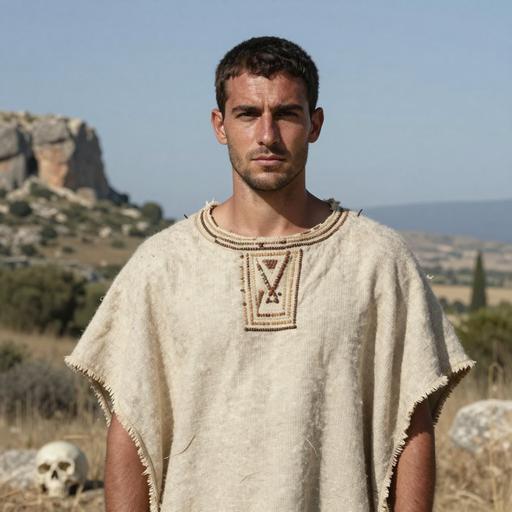
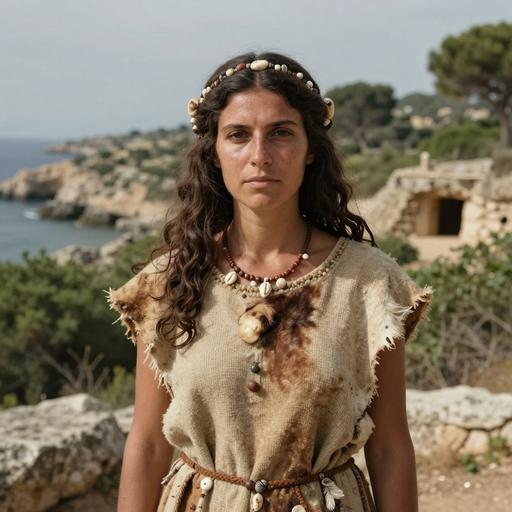
  • Cardial and Stentinello ceramic traditions across coasts and islands
  • Key sites: Anghelu Ruju, Europa 1, Zemunica Cave, Fossato di Stretto Partana
  • Dates span 6068–2786 BCE; maritime dispersal likely but routes debated
Chapter IV

Daily Life & Society

Daily life in these Neolithic communities combined fields and sea: wheat and barley fields, herded sheep and goats, and an intimate relationship with coastal fisheries and shellfish beds. At caves and rock shelters such as Grutta I de Longu Fresu (Seulo, Sardinia) and Zemunica Cave (Croatia) archaeologists have recovered hearths, pottery sherds and faunal remains that point to mixed economies of farming, herding and foraging. House structures are often ephemeral or constructed of perishable materials, but stone-lined features and midden piles imply repeated seasonal use.

Craft and symbolic life left cinematic traces: shell‑impressed pottery and incised stone tools, personal ornaments made from Mediterranean shells and bone, and burial practices ranging from simple interments to collective deposits. Social organization likely revolved around small kin groups with long-distance ties—exchange of pottery styles and exotic raw materials suggests networks stretching across the Tyrrhenian and into the western Mediterranean.

Archaeological evidence indicates variable sedentism: some sites show long-term occupation, others seasonal aggregation. Preservation bias and uneven sampling mean our picture is partial; in several locales sample counts are low and interpretations remain tentative.

  • Mixed farming, herding and coastal foraging economy
  • Material culture: cardial-impressed pottery, shell ornaments, hearths and middens
Chapter V

Genetic Profile

The dataset of 50 individuals provides a regional genetic snapshot of Neolithic maritime Europe. Broadly, the ancestry profile is consistent with Anatolian Neolithic farmer-derived genomes dispersing westward into the Mediterranean, accompanied by varying degrees of local hunter‑gatherer admixture. Y‑chromosome results show a plurality of G haplogroups (7 samples), commonly associated with early farming populations in Europe, alongside haplogroups I and C (3 each) and smaller counts of H and J—signaling either local male-line diversity or later inputs.

Mitochondrial DNA is dominated by haplogroups K (12) and U (10), with notable N, H and J lineages. Maternal lineages reflect both farmer-associated matrilines (K, N) and persisting hunter‑gatherer signals (some U subclades). Archaeogenetic patterns suggest that across sites—Sardinia (Anghelu Ruju, Ossi Noeddale), Sicily (Fossato di Stretto Partana), Croatia (Zemunica Cave) and Gibraltar (Europa 1)—communities share a common farmer-derived backbone but vary in local WHG (Western Hunter‑Gatherer) contributions.

Temporal trends in other Neolithic contexts show increasing hunter‑gatherer ancestry over centuries; limited evidence here hints at similar dynamics, but more dense temporal sampling is needed. Because the sample size is moderate overall (n=50) but uneven by site, specific local inferences should be considered preliminary where fewer than ~10 individuals represent a location.

  • Anatolian‑derived farmer ancestry with variable local hunter‑gatherer admixture
  • Y: G most common; mtDNA: K and U frequent—maternal continuity and admixture
Chapter VI

Legacy & Modern Connections

The genetic and archaeological echoes of the Mediterranean_Neolithic persist in modern populations of Sardinia and parts of coastal Italy. Sardinia, in particular, retains unusually high levels of Neolithic farmer-related ancestry in many modern genomic studies—consistent with island continuity and partial isolation. Archaeology and aDNA together suggest that the first farmers established demographic and cultural templates—agriculture, pottery styles, maritime routes—that shaped subsequent Bronze Age and historical populations.

However, continuity is complex: later migrations (Bronze Age movements, historical shifts) reconfigured regional genomes and cultures. Limited sample densities for some sites caution against overgeneralisation. Still, the cinematic image of cardial impressions stamped into wet clay—an imprint of people, movement and memory—remains a useful metaphor for how early farmers left durable marks on both landscapes and genomes.

  • Sardinia shows strong continuity of Neolithic farmer ancestry into the present
  • Early maritime networks set cultural trajectories later recomposed by subsequent migrations
Chapter VII

Sample Catalog

5 ancient DNA samples associated with the Mediterranean Neolithic Shores culture

Ancient DNA samples from this era, providing genetic insights into the people who lived during this period.

5 / 5 samples
Portrait Sample Country Era Date Culture Sex Y-DNA mtDNA
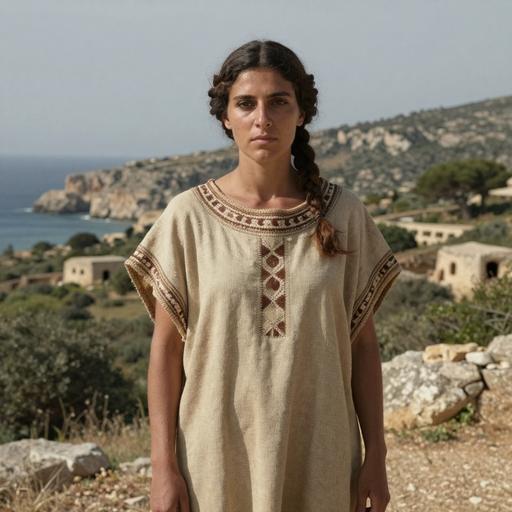
Portrait of ancient individual UZZ033 from Italy, dated 5380 BCE
UZZ033
Italy Italy_Sicily_N_Stentinello 5380 BCE Mediterranean Neolithic M H2 U8b1b1
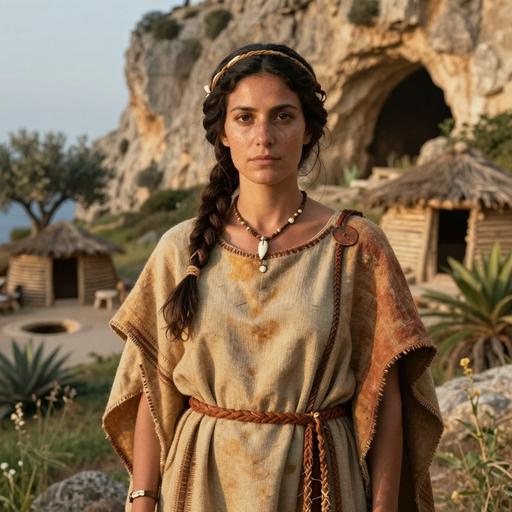
Portrait of ancient individual UZZ034 from Italy, dated 5376 BCE
UZZ034
Italy Italy_Sicily_N_Stentinello 5376 BCE Mediterranean Neolithic F - U8b1b1
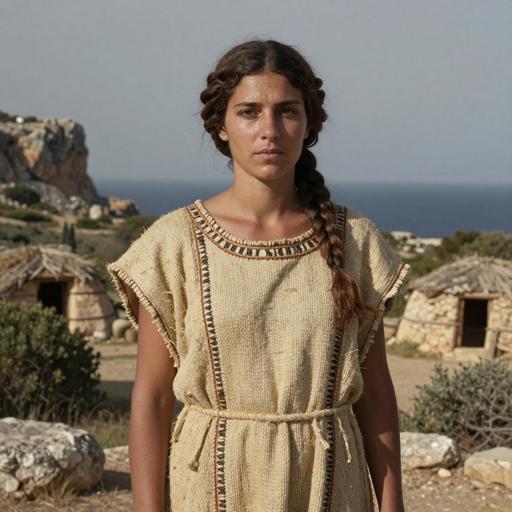
Portrait of ancient individual UZZ074 from Italy, dated 5327 BCE
UZZ074
Italy Italy_Sicily_N_Stentinello 5327 BCE Mediterranean Neolithic F - N1a1a1
Portrait of ancient individual UZZ075 from Italy, dated 5327 BCE
UZZ075
Italy Italy_Sicily_N_Stentinello 5327 BCE Mediterranean Neolithic F - J1c5
Portrait of ancient individual UZZ087 from Italy, dated 5311 BCE
UZZ087
Italy Italy_Sicily_N_Stentinello 5311 BCE Mediterranean Neolithic F - -
AI Powered

AI Assistant

Ask questions about the Mediterranean Neolithic Shores culture

AI Assistant by DNAGENICS

Unlock this feature
Ask questions about the Mediterranean Neolithic Shores culture. Our AI assistant can explain genetic findings, historical context, archaeological evidence, and modern connections.
Sample AI Analysis

The Mediterranean Neolithic Shores culture represents a fascinating chapter in human history...

Genetic analysis reveals connections to earlier populations while showing evidence of unique adaptations and cultural innovations. The ancient DNA samples provide insights into migration patterns, social structures, and the biological relationships between ancient populations.

This is a preview of the AI analysis. Unlock the full AI Assistant to explore detailed insights about:

  • Genetic composition and ancestry
  • Migration patterns and origins
  • Daily life and cultural practices
  • Modern genetic legacy
Use code for 50% off Expires Mar 05