Menu
Store
Blog
Mongolia_EIA_SlabGrave_1 Mongolia, Kyrgyzstan, Kazakhstan

Nomadic Steppe Cultures — Hunnic Horizon

Mobile horse societies of the Eurasian steppe traced through archaeology and ancient DNA

1650 BCE - 1500 CE
14 Ancient Samples
Scroll to begin
Chapter I

The Story

Understanding the Nomadic Steppe Cultures — Hunnic Horizon culture

Archaeological and genetic evidence from Mongolia, Kyrgyzstan, and Kazakhstan (1650 BCE–1500 CE) illuminates nomadic steppe lifeways across the Hun-era horizon. 232 genomes reveal mixed West/East Eurasian ancestry, varied paternal lineages, and maternal diversity tied to repeated migrations.

Time Period

c. 1650 BCE – 1500 CE

Region

Mongolia, Kyrgyzstan, Kazakhstan

Common Y-DNA

R (~23%), Q (~19%), J, N, O

Common mtDNA

D (~13%), C (~12%), U, G, F

Chapter II

Timeline

Key moments in the history of this culture

1650 BCE

Earliest pastoral horizon

Pastoral lifeways and mobile herding emerge in parts of the steppe; early kurgans form the archaeological backdrop for later traditions.

200 BCE

Xiongnu period expansions

Xiongnu-era polities expand across Mongolia and parts of Kazakhstan, leaving mixed archaeological and genetic signatures.

400 CE

Hun period dispersals

Cultural and population movements associated with Hunnic groups reshape steppe demography and burial practices.

1200 CE

Mongol-era reshaping

Mongol expansions create new demographic layers and amplify east–west connections across the steppe.

Chapter III

Origins & Emergence

From the rolling grasslands of central Eurasia to the mountain-girded passes of the Alai Valley, the peoples grouped here as Nomadic_Steppe_Cultures trace a long history of mobility and cultural fusion. Archaeological strata from Tuyuk II mounds (Osh Province, Kyrgyzstan), the Bidayk kurgans (Central Kazakhstan), and the Atsyn Gol and Buural Uul sites in Mongolia preserve burials, horse gear, and portable metalwork that signal pastoral nomadism dating back to the second millennium BCE.

Archaeological data indicate successive pulses of pastoral economies, horse-borne warfare, and burial traditions that shift in form from Bronze Age camps through Early Iron Age kurgans into the historic Hun period. Key loci such as Birlik (Pavlodar Region, mound 25) show material connections with contemporaneous Tasmola and Wusun-era practices in Kazakhstan. In Mongolia, slab-grave and Pazyryk-affiliated contexts reflect cultural mosaics that incorporated both local and immigrant elements.

Genetic data over the long timespan suggest repeated admixture between western steppe-derived populations and eastern Siberian/East Asian groups. Limited evidence from early horizons points to local continuity in some valleys, while later horizons — especially around the Hun period — exhibit intensified long-distance connections. Precision remains uneven: while many sites provide secure radiocarbon dates and genomic samples, regional sampling biases (concentration in certain valleys and kurgans) mean some narratives stay provisional. Ongoing integration of archaeology and paleogenomics is gradually resolving how migration, horse pastoralism, and political transformations repeatedly re-shaped steppe demography.
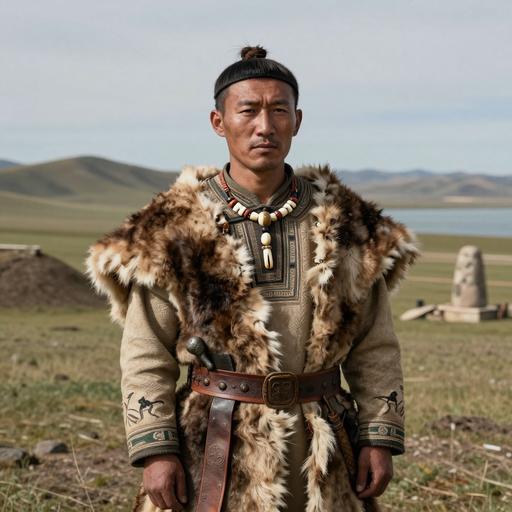
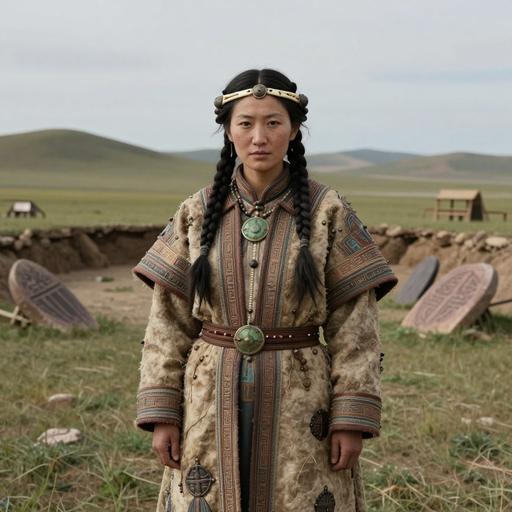
  • Evidence spans c. 1650 BCE–1500 CE across Mongolia, Kyrgyzstan, Kazakhstan
  • Key sites: Tuyuk II mounds; Bidayk mounds 1–5; Birlik mound 25; Atsyn Gol; Buural Uul
  • Archaeology indicates layered pastoral and burial traditions with shifting external contacts
Chapter IV

Daily Life & Society

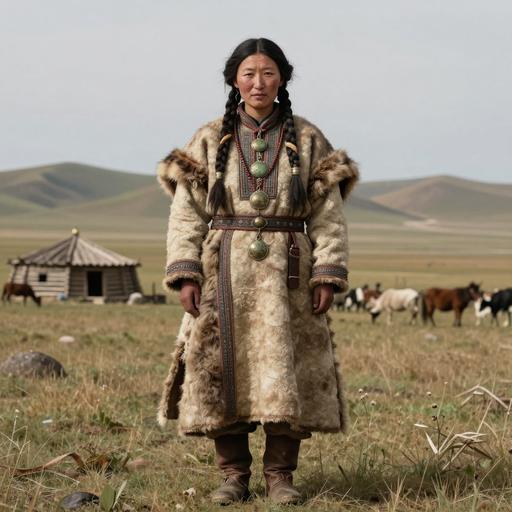
Life on the steppe was shaped by mobility, herds, and the horse. Material culture recovered from burial mounds and seasonal camps — bits, bridles, portable hearths, and small metal tools — paints a picture of communities whose seasons were synchronized with pasture cycles. Nomadic dwellings (felt tents and light timber frames) left ephemeral archaeological signatures, so much of the reconstruction relies on grave goods, wear patterns on horse equipment, and palaeoenvironmental data.

Burials range from simple pit graves to elaborate kurgans containing mounted burials with bridles and weapons, suggesting social differentiation and warrior status markers in some groups. Women and men are found with different suites of grave goods, indicating complementary roles in pastoral economies and craft transmission. Ceramic fragments, spindle whorls, and worked bone show domestic craft and textile production embedded within mobile lifeways.

Archaeological indicators of long-distance contact — non-local metal alloys, decorative motifs resembling Sarmatian or Kangju styles, and exotic horse gear — imply networks of exchange and raiding that connected these steppe communities to broader Eurasian circuits. The landscape itself, from the high Khuvsgul valleys to the rolling Kazakh steppe, structured routes of movement and seasonal congregation at springs and mountain pastures. While everyday housing rarely survives, the cumulative record of burials, tools, and animal remains gives a vivid, if partial, view of a horse-centered society where mobility was cultural strategy and survival.

  • Pastoral economy centered on horses, sheep, cattle; seasonal mobility
  • Burial variability reflects social ranking, warrior status, and gendered craft roles
Chapter V

Genetic Profile

This dataset includes 232 ancient genomes spanning c. 1650 BCE–1500 CE from sites across Mongolia, Kyrgyzstan, and Kazakhstan. The sample size provides robust insight into long-term trends: Y-chromosome lineages show a mix of Western and Eastern Eurasian paternal inputs, with haplogroup R most frequent (54/232 ≈ 23.3%) and Q also common (44/232 ≈ 19.0%). Smaller counts of J (11; ~4.7%), N (9; ~3.9%), and O (6; ~2.6%) indicate heterogeneous male ancestry streams.

Maternally, haplogroups D (30; ~12.9%) and C (28; ~12.1%) are prominent and are commonly associated with East Asian/Siberian maternal lineages, while haplogroup U (22; ~9.5%) points to enduring West Eurasian maternal contributions. Haplogroups G (14; ~6.0%) and F (13; ~5.6%) further underscore the mosaic of steppe matrilines.

Genomic analyses indicate repeated admixture events: many individuals carry mixed West Eurasian steppe ancestry (often associated with R-lineages) combined with eastern genomic components typical of Siberia and East Asia (reflected in mtDNA D/C and Y haplogroups N/O/Q). This admixture pattern intensifies and becomes more heterogeneous during historically attested mobility episodes — for example, the Xiongnu and later Hun horizons — consistent with archaeological signals of expanded networks and warrior migrations.

Because haplogroup labels collapse large, diverse clades, caution is warranted when linking a haplogroup directly to a single language group or polity. Nevertheless, the large sample confirms that the steppe's population history was dynamic: local continuity punctuated by influxes from both west and east, producing the genetic tapestry visible in these 232 genomes.

  • 232 genomes show mixed West/East Eurasian ancestry with repeated admixture
  • Y-DNA: R (~23.3%), Q (~19.0%); mtDNA: D (~12.9%), C (~12.1%), U (~9.5%)
Chapter VI

Legacy & Modern Connections

The genetic and material legacies of these nomadic steppe cultures persist in modern populations across Central and East Asia. Contemporary genetic landscapes in Mongolia, Kazakhstan, and Kyrgyzstan reflect many of the same paternal and maternal lineages seen in the ancient samples, though later historical events (Turkic expansions, Mongol empire, medieval trade) layered additional ancestry.

Archaeological motifs, equestrian technologies, and burial customs from the Hun-period horizon have analogues in later medieval steppe polities, indicating cultural transmission across centuries. In genetic terms, the persistence of both West Eurasian (R, U) and East Eurasian (D, C, Q, N, O) lineages demonstrates long-term connectivity between western steppe and Siberian/East Asian gene pools. While associations between haplogroups and modern ethnic identity must be treated cautiously, the combined archaeological-genetic record offers a cinematic, evidence-based narrative of a mobile, interconnected steppe world that shaped Eurasian history.

  • Modern Central Asian genomes retain the mixed West/East Eurasian signature visible in ancient samples
  • Material and genetic continuity links Bronze Age pastoralism through the Hun and medieval eras
Chapter VII

Sample Catalog

14 ancient DNA samples associated with the Nomadic Steppe Cultures — Hunnic Horizon culture

Ancient DNA samples from this era, providing genetic insights into the people who lived during this period.

14 / 14 samples
Portrait Sample Country Era Date Culture Sex Y-DNA mtDNA
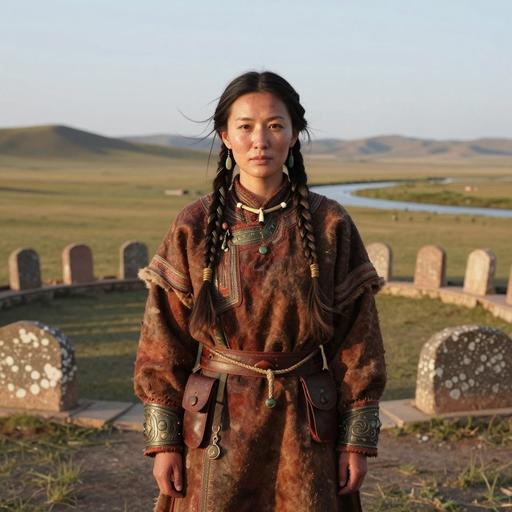
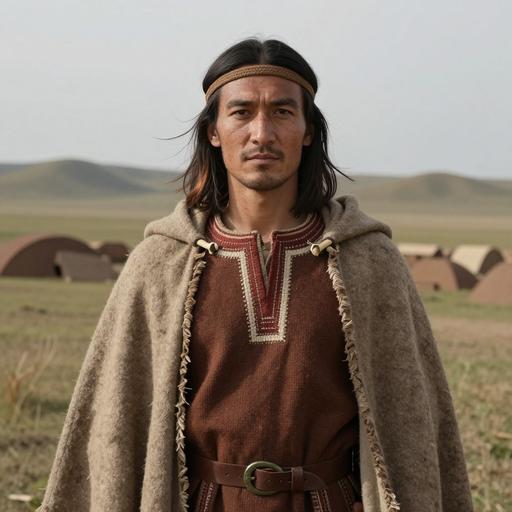
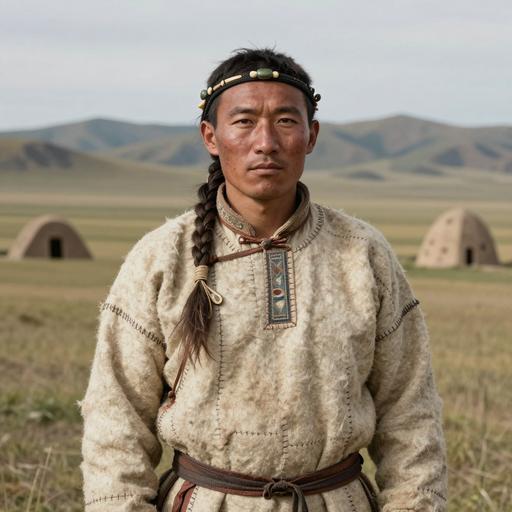
Portrait of ancient individual I6359 from Mongolia, dated 1100 BCE
I6359
Mongolia Mongolia_EIA_SlabGrave_1 1100 BCE Nomadic Steppe Cultures M Q1b1a3a-YP779 C5c
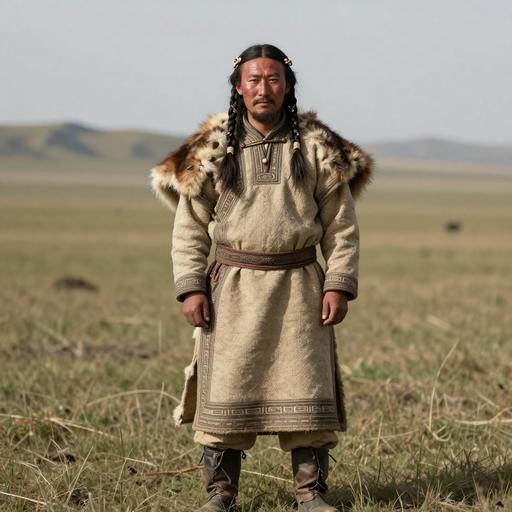
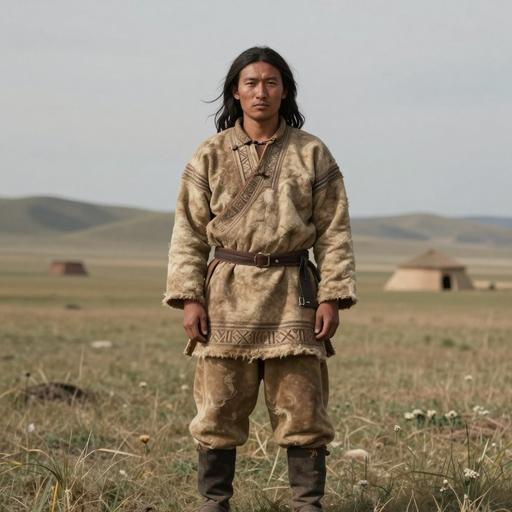
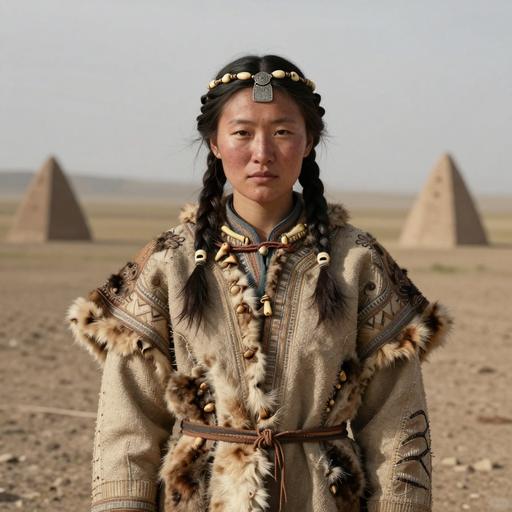
Portrait of ancient individual I7032 from Mongolia, dated 981 BCE
I7032
Mongolia Mongolia_EIA_SlabGrave_1 981 BCE Nomadic Steppe Cultures F - C4a2a1
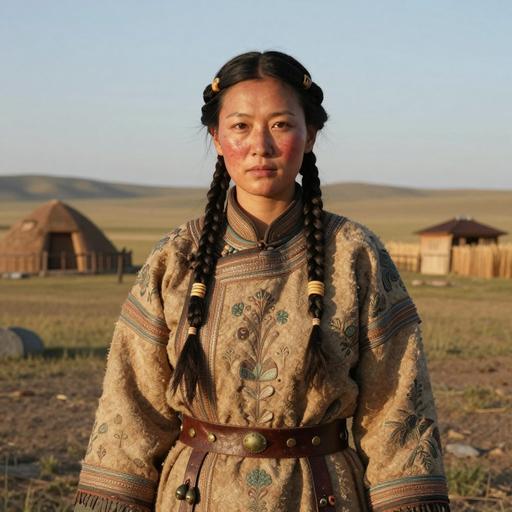
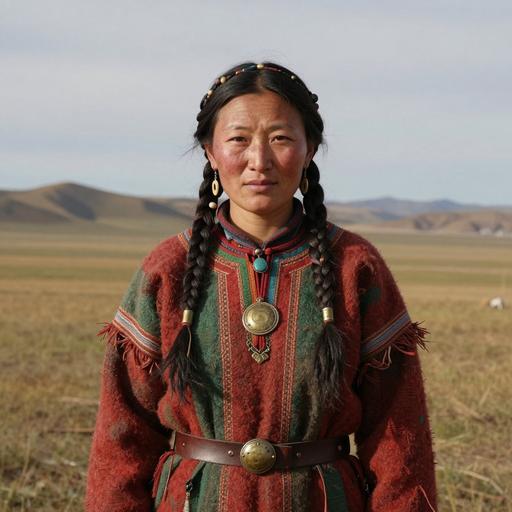
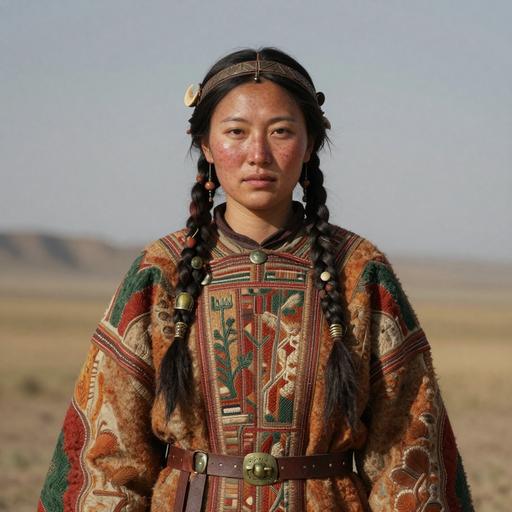
Portrait of ancient individual I12971 from Mongolia, dated 981 BCE
I12971
Mongolia Mongolia_EIA_SlabGrave_1 981 BCE Nomadic Steppe Cultures F - D4j7
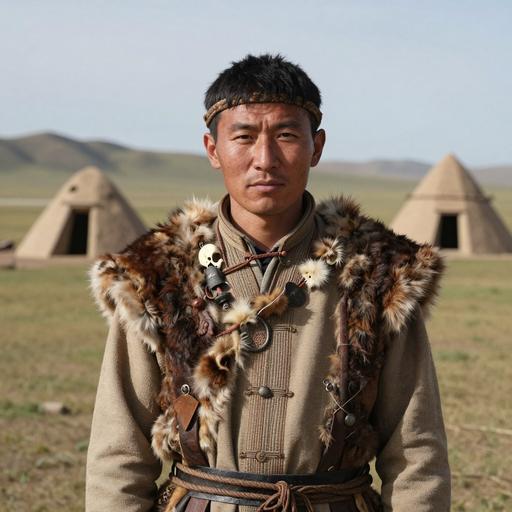
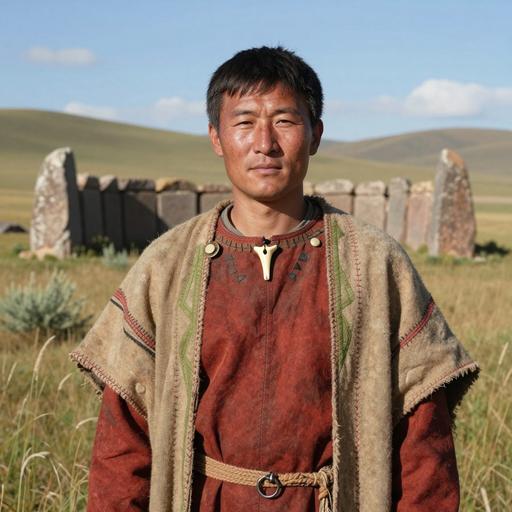
Portrait of ancient individual I12969 from Mongolia, dated 1124 BCE
I12969
Mongolia Mongolia_EIA_SlabGrave_1 1124 BCE Nomadic Steppe Cultures M Q1a1a-Z19198 F1b1-a
Portrait of ancient individual I6369 from Mongolia, dated 752 BCE
I6369
Mongolia Mongolia_EIA_SlabGrave_1 752 BCE Nomadic Steppe Cultures F - B5b
Portrait of ancient individual I6353 from Mongolia, dated 1010 BCE
I6353
Mongolia Mongolia_EIA_SlabGrave_1 1010 BCE Nomadic Steppe Cultures M Q1a1a-F1340 G2b2
Portrait of ancient individual I6352 from Mongolia, dated 1107 BCE
I6352
Mongolia Mongolia_EIA_SlabGrave_1 1107 BCE Nomadic Steppe Cultures M Q1a1a-F745 F1b1b
Portrait of ancient individual I6349 from Mongolia, dated 898 BCE
I6349
Mongolia Mongolia_EIA_SlabGrave_1 898 BCE Nomadic Steppe Cultures M Q1a1a-M265 D4m2
Portrait of ancient individual I13963 from Mongolia, dated 967 BCE
I13963
Mongolia Mongolia_EIA_SlabGrave_1 967 BCE Nomadic Steppe Cultures F - C5b1b
Portrait of ancient individual I6365 from Mongolia, dated 809 BCE
I6365
Mongolia Mongolia_EIA_SlabGrave_1 809 BCE Nomadic Steppe Cultures M N1a1a1a1a-M1999 D4o1
AI Powered

AI Assistant

Ask questions about the Nomadic Steppe Cultures — Hunnic Horizon culture

AI Assistant by DNAGENICS

Unlock this feature
Ask questions about the Nomadic Steppe Cultures — Hunnic Horizon culture. Our AI assistant can explain genetic findings, historical context, archaeological evidence, and modern connections.
Sample AI Analysis

The Nomadic Steppe Cultures — Hunnic Horizon culture represents a fascinating chapter in human history...

Genetic analysis reveals connections to earlier populations while showing evidence of unique adaptations and cultural innovations. The ancient DNA samples provide insights into migration patterns, social structures, and the biological relationships between ancient populations.

This is a preview of the AI analysis. Unlock the full AI Assistant to explore detailed insights about:

  • Genetic composition and ancestry
  • Migration patterns and origins
  • Daily life and cultural practices
  • Modern genetic legacy
Use code for 50% off Expires Mar 05