


Across a horizon of windswept grass and river valleys, the archaeological signature we call "Scythian" emerges in the first millennium BCE as a pan-steppe style of mounted pastoralism, metalwork and burial rites. Classic Scythian assemblages — richly furnished kurgans with weaponry and gold ornament — appear in the Pontic-Caspian steppe and radiate eastward into the Kazakh steppe and Tian Shan. Key sites in this dataset include Pontic kurgans from Kup'evaha and Medwin in Ukraine, steppe burials in Samara Oblast (Nadezhdinka), Iron Age cemeteries in Kazakhstan's Tian Shan, and farther east a likely Wusun/Scythian-associated individual (G218) from Nileke County, Xinjiang. Archaeological data indicates cultural connections across this vast zone, but the term "Scythian" covers a mosaic of local groups rather than a single polity. The genetic samples span a wide chronological window (5296 BCE–411 CE), so some individuals predate or postdate the classic Scythian horizon; accordingly, genetic interpretations focus primarily on the Iron Age subset where possible. Limited evidence suggests interactions with neighboring traditions — Cimmerian, Saka and later Hunnic and Sarmatian groups — producing regional variability in material culture and population makeup.


Scythians: Riders of the Steppe
Kurgans, goldwork and a mixed genetic legacy stretching from the Black Sea to Xinjiang
The Story
Understanding the Scythians: Riders of the Steppe culture
Archaeology and ancient DNA from 89 individuals reveal a diverse Scythian-era population across Ukraine, Kazakhstan, Russia, Hungary and Xinjiang. Material culture and genomes show dominant steppe ancestry with eastern and western inputs, regional differences, and complex mobility across the Iron Age Eurasian steppe.
Time Period
c. 9th–3rd century BCE (Scythian peak)
Region
Pontic–Central Steppe, Kazakhstan, Xinjiang, Hungary
Common Y-DNA
R (dominant), Q, E, G, J
Common mtDNA
U, H, J, A, T
Timeline
Key moments in the history of this culture
Earliest sampled individual in dataset
A pre-Scythian steppe-associated individual (5296 BCE) shows that the genetic series includes much earlier ancestry layers.
Emergence of Scythian-style kurgans
Regional kurgan burial traditions and mounted pastoral lifeways coalesce into what archaeologists call Scythian material culture across the Pontic Steppe.
Classical era Scythian prominence
Herodotus and others describe Scythian polities; rich kurgan burials in Ukraine, Crimea and the steppe date to this period.
Latest sampled individual in dataset
A late sample (411 CE) reflects post-Scythian occupation and continuity in some steppe regions.
Origins & Emergence
- Scythian material culture prominent in kurgan burials across the Pontic–Central Steppe
- Key archaeological sites: Kup'evaha, Medwin, Nadezhdinka, Kesznyéten-Szérűskert, G218 (Xinjiang)
- The label "Scythian" covers diverse local groups connected by mobility and shared artistic styles
Daily Life & Society
Life on the Iron Age steppe combined mobility and craft. Herding of horses, sheep and cattle formed the economic backbone; the horse transformed warfare, travel and social status. Archaeological finds from kurgans — horse harness elements, composite bows, iron weapons and portable luxury goods — evoke a world of mounted elites whose graves could be lavishly furnished. Sites such as Kesznyéten-Szérűskert on the Great Hungarian Plain and numerous Pontic mounds record high-status burials alongside more modest interments, suggesting social stratification. Gold adornments and zoomorphic art styles display shared aesthetic codes across hundreds of kilometers, while local pottery and burial treatments betray regional traditions. Settlement evidence is patchy: many Scythian peoples left few permanent houses, so camp sites and seasonal settlements are underrepresented in the record. Bioarchaeological data (isotopes, pathology) shows a diet heavy in animal protein and mobility patterns consistent with transhumant herding. Gender roles appear complex: certain graves rich in weaponry and horse equipment include women, but the frequency and societal role of such burials vary by region. Archaeology indicates a dynamic, mobile lifeway with deep regional variation and frequent long-distance contacts.
- Economy: mounted pastoralism, long-distance mobility, seasonal camps
- Material culture: composite bows, horse gear, gold ornamentation; elite kurgans contrast with modest burials
Genetic Profile
The genetic dataset (89 individuals dated between 5296 BCE and 411 CE) spans a broad swath of the steppe, offering a window into population diversity during and around the Scythian archaeological horizon. Y-chromosome results are dominated by haplogroup R (35 individuals), consistent with deep Eurasian steppe paternal lineages; less frequent Y types in this series include Q (4), E (4), G (2) and J (2), indicating multiple paternal inputs. Mitochondrial haplogroups show substantial diversity: U (24) and H (20) are common, alongside J (5), A (4) and T (4). U and H are widespread in European and steppe contexts, while mtDNA A and Y-haplogroup Q point to eastern Eurasian contributions, especially in eastern sites such as G218 (Nileke, Xinjiang) and Tian Shan samples. The mixture of western and eastern markers aligns with archaeological evidence for long-distance contact — trade, migration and mercenary movement. Regional structure is notable: Pontic steppe burials (Kup'evaha, Medwin, Bidylo) show stronger western Eurasian maternal lineages, while Tian Shan and Xinjiang individuals present more eastern-affinity mtDNA and some Q Y-chromosomes. Presence of E, G and J haplogroups suggests occasional gene flow from Near Eastern and Caucasus sources, possibly via Black Sea trade networks. Because the dataset includes pre- and post-Iron Age individuals, and sample coverage is uneven geographically, conclusions about a single "Scythian genotype" should be treated with caution; the evidence points to a mobile, genetically heterogeneous set of populations linked by culture and mobility rather than a genetically uniform people.
- Dominant paternal lineage R (35/89) with eastern contributions (Q) and Near Eastern inputs (E, J)
- Maternal lineages U and H dominate, with eastern-affinity mtDNA A present in eastern sites
Legacy & Modern Connections
The Scythian archaeological and genetic legacy ripples through Eurasia. Linguistically, classical authors report Iranian-language speech among many Scythian groups; linguistics and genetics together suggest substantial Indo-Iranian cultural influence on steppe elites, although local languages and identities likely varied. Genetically, elements of the Scythian-era mixture persist in later steppe populations and in varying degrees among modern populations of Eastern Europe and Central Asia; western Eurasian maternal lineages and steppe-associated paternal lineages contributed to the genetic landscape of successor groups such as Sarmatians, Alans and medieval populations. Eastern contributions visible in Xinjiang and Tian Shan samples presage later Silk Road-era mingling. Cultural motifs — animal-style art, mounted warrior iconography and kurgan burial forms — continued to inspire neighboring peoples. However, modern populations are the end result of many subsequent migrations and admixtures; while Scythian-era genomes are an important chapter, they are only one layer in a long palimpsest of steppe history. Limited and uneven sampling means that connections to specific present-day groups must be proposed cautiously and tested with further data.
- Scythian-era genetic inputs contributed to later steppe populations across Eurasia
- Cultural influence endured in art and burial practice; genetic links to modern groups are complex and layered
Sample Catalog
1 ancient DNA samples associated with the Scythians: Riders of the Steppe culture
Ancient DNA samples from this era, providing genetic insights into the people who lived during this period.
| Portrait | Sample | Country | Era | Date | Culture | Sex | Y-DNA | mtDNA |
|---|---|---|---|---|---|---|---|---|
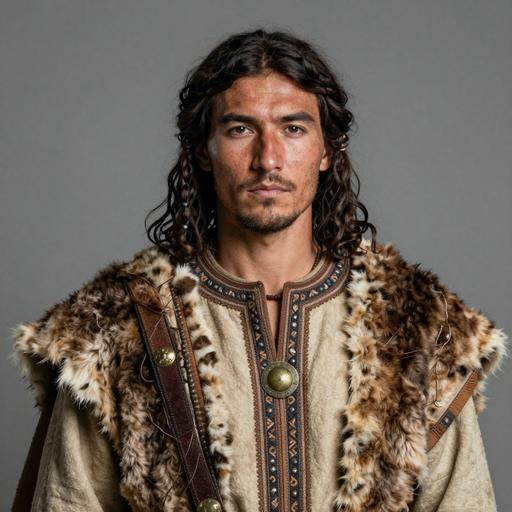
|
NEO902
|
Kazakhstan | Kazakhstan_EIA | 411 BCE | Scythian | M |
Q-L56
|
J1b1a1
|
AI Assistant
Ask questions about the Scythians: Riders of the Steppe culture
AI Assistant by DNAGENICS
Unlock this featureSample AI Analysis
The Scythians: Riders of the Steppe culture represents a fascinating chapter in human history...
Genetic analysis reveals connections to earlier populations while showing evidence of unique adaptations and cultural innovations. The ancient DNA samples provide insights into migration patterns, social structures, and the biological relationships between ancient populations.