Menu
Store
Blog
Hungary_EN_Koros Central & Eastern Europe (Austria, Germany, Hungary, Czech Rep., Poland, Croatia, Serbia, Latvia)

The European Neolithic: LBK Horizons

Archaeological and genetic portrait of Central Europe's first farmers (7244–2039 BCE)

7244 CE - 2039 BCE
10 Ancient Samples
Scroll to begin
Chapter I

The Story

Understanding the The European Neolithic: LBK Horizons culture

A synthesis of archaeological sites (Asparn‑Schletz, Herxheim, Derenburg) and DNA from 494 Neolithic individuals reveals the spread of Linear Pottery (LBK) farmers across Central Europe, their lifeways, and their genetic legacy amid hunter‑gatherer admixture and later population changes.

Time Period

7244–2039 BCE

Region

Central & Eastern Europe (Austria, Germany, Hungary, Czech Rep., Poland, Croatia, Serbia, Latvia)

Common Y-DNA

G (n=71), I (n=54), C (n=41), H2 (n=19), H (n=15)

Common mtDNA

K (n=58), H (n=53), N (n=46), J (n=43), U (n=40)

Chapter II

Timeline

Key moments in the history of this culture

5500 BCE

LBK expansion into Central Europe

Rapid spread of Linear Pottery farming communities along Danube and river valleys, establishing early Neolithic villages and longhouse agriculture.

5200 BCE

Asparn‑Schletz episode

Archaeological evidence at Asparn‑Schletz suggests violent conflict and mass deposition during LBK social stress (interpreted cautiously).

2040 BCE

Late Neolithic persistence

Most recent samples in the set indicate regional persistence of Neolithic‑derived ancestry before major Bronze Age transitions.

Chapter III

Origins & Emergence

The European Neolithic story in this dataset begins with the deliberate movement of farmer lifeways into temperate Europe. Archaeological evidence links the Linear Pottery horizon (LBK) — longhouses, distinctive incised pottery, and rectilinear field systems — with early farming communities that appear in the Carpathian basin and along the Danube during the sixth millennium BCE. Key sites represented here include Asparn‑Schletz and Kleinhadersdorf (Austria) and early LBK settlements in southern Germany and Bohemia (e.g., Blšany, Březno u Loun).

Genetic signals in the region are consistent with ancestry ultimately traceable to Neolithic populations that expanded from southeastern Europe and Anatolia into Central Europe. The earliest dated sample in this dataset (7244 BCE) likely represents the deep temporal reach of farmer‑associated ancestry in the broader region, but chronological resolution varies between sites. Archaeological data indicates phases of rapid colonization, local adaptation, and later interaction with indigenous hunter‑gatherers. Limited evidence suggests episodes of conflict and violence at some LBK localities (for example Asparn‑Schletz), signaling social stress during the Neolithic expansion and subsequent centuries.
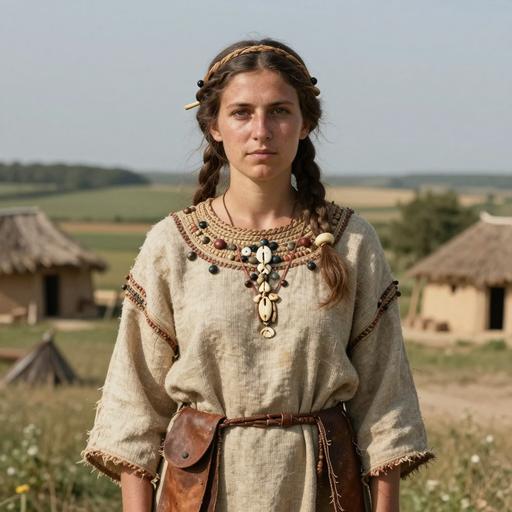
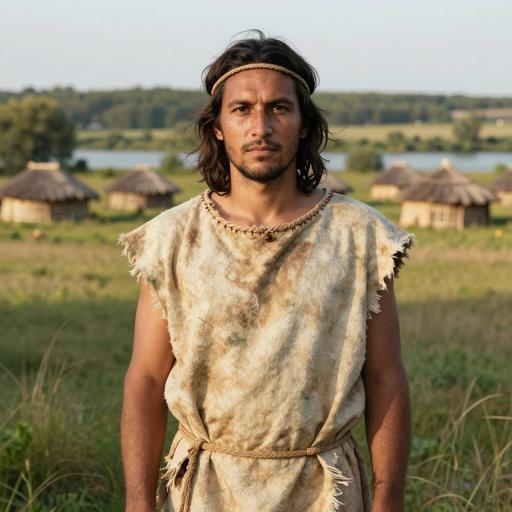
  • LBK spread across Central Europe in the 6th millennium BCE
  • Key early sites: Asparn‑Schletz, Kleinhadersdorf, Blšany, Březno u Loun
  • Anatolian‑derived farmer ancestry mixes with local hunter‑gatherers
Chapter IV

Daily Life & Society

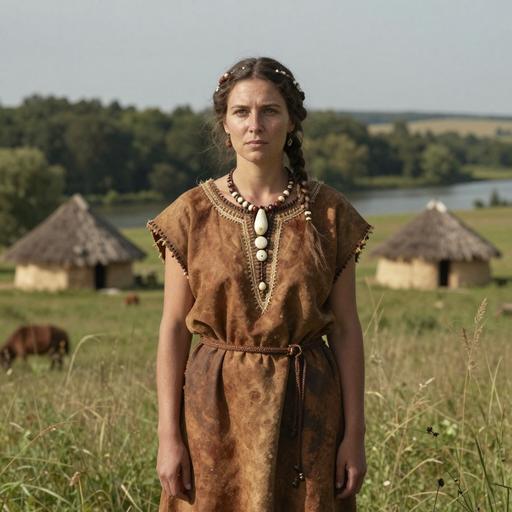
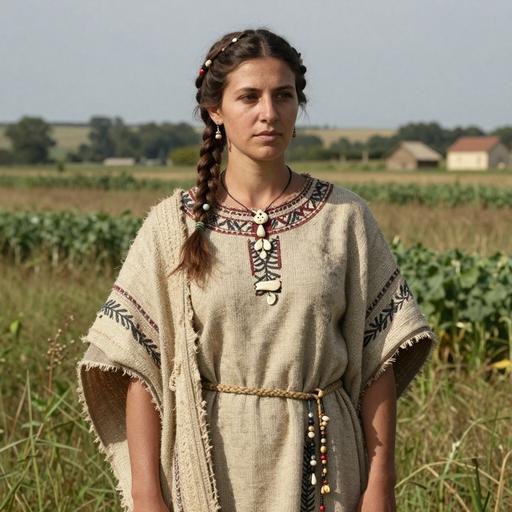
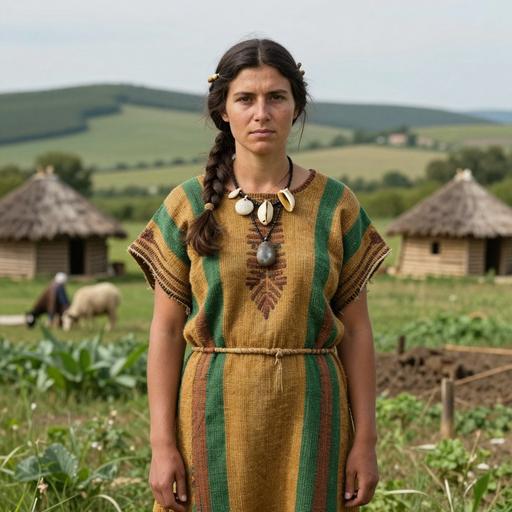
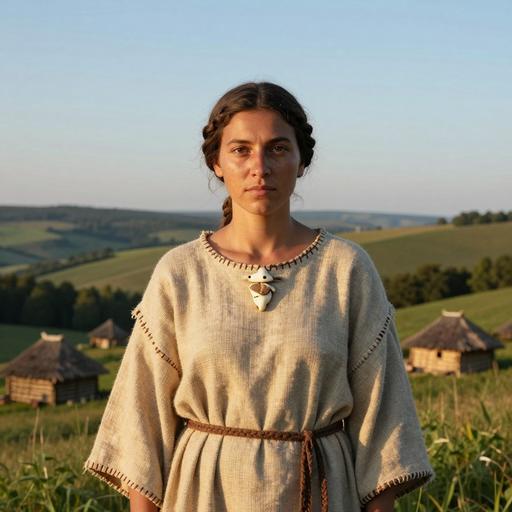
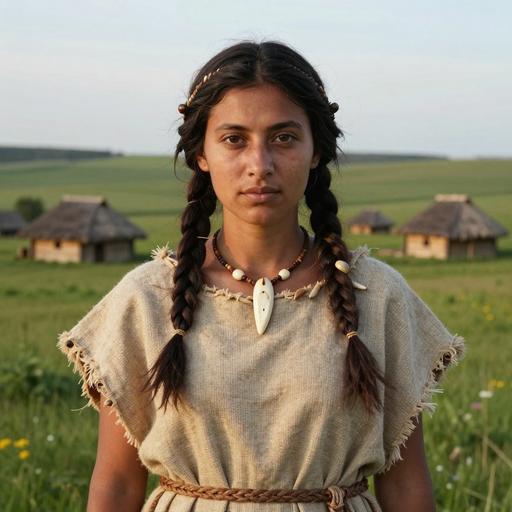
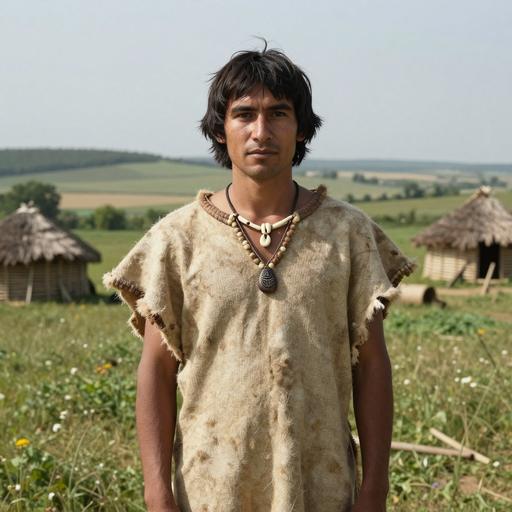
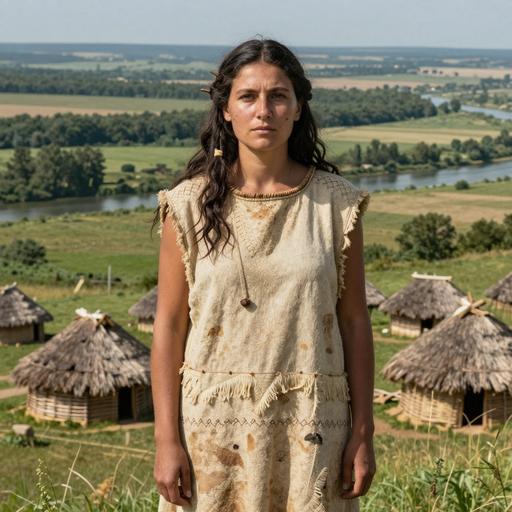
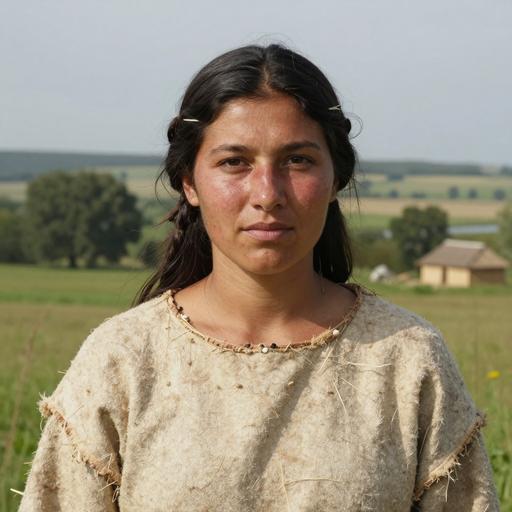
A cinematic landscape of fields and longhouses: LBK villages clustered along river valleys where well‑drained loess soils supported wheat, barley, pulses and domesticated animals. Houses were timber framed and long, sometimes arranged in rows; the material record—pottery, polished stone axes, and flint tools—speaks of craft specialization and landscape engineering.

Mortuary practices varied across the region and through time. Some communities used simple in‑situ burials adjacent to houses, while other contexts — notably Herxheim (Rhineland‑Palatinate) and several late Neolithic pits — preserve complex depositional patterns and disarticulated remains that archaeologists debate as ritual or violent events. Derenburg‑MeerenstiegII and Halberstadt (Saxony‑Anhalt) provide evidence of evolving burial rites into the Middle and Late Neolithic, including collective burial monuments and changes in grave goods.

Social organization likely combined kin‑based households with wider networks for exchange and marriage. Craft items, pottery styles, and the distribution of exotic raw materials reflect connections across hundreds of kilometers, while localized ceramic types (e.g., regional LBK varieties, later Sopot and Lengyel influences) document cultural differentiation.

  • Agricultural villages of longhouses and field systems
  • Variable mortuary rituals: in‑house burials to complex depositional sites
Chapter V

Genetic Profile

This dataset (n = 494 individuals; 7244–2039 BCE) offers a large window into Neolithic population dynamics in Central Europe. Uniparental markers cluster around haplogroups typical of early farmers: mtDNA haplogroups K (n=58), H (n=53), N (n=46), J (n=43), and U (n=40) are prominent, reflecting maternal lineages common among Neolithic populations derived from Anatolian and southeastern European sources. On the paternal side, Y‑DNA haplogroup G (n=71) is the most frequent among reported counts, with substantial representation of I (n=54) and notable occurrences of C (n=41), H2 (n=19) and H (n=15).

Genome‑wide analyses (where available) indicate that early LBK groups carry a majority of Anatolian farmer ancestry combined with a variable proportion of Western Hunter‑Gatherer (WHG) ancestry; admixture increased over time, regionally heterogeneous. Steppe‑related ancestry is generally absent or minimal in early Neolithic phases but becomes detectable in later Neolithic and Chalcolithic contexts in parts of Central Europe. Kinship studies within cemeteries are revealing: some burial groups show close familial relationships, while other assemblages reflect broader community lineages. Limited sample numbers for certain haplogroups and uneven geographic sampling mean that some patterns remain provisional and regional.

  • Large dataset (n=494) shows strong Anatolian farmer ancestry with increasing WHG admixture over time
  • Uniparental markers: mtDNA K,H,N,J,U; Y‑DNA G, I, C, H2 — regional heterogeneity persists
Chapter VI

Legacy & Modern Connections

The LBK and related Neolithic cultures planted genetic and cultural roots that contributed significantly to the ancestry of later Central Europeans. Maternal lineages such as mtDNA K and H, abundant in these Neolithic samples, persist widely in modern European populations. However, later large‑scale movements — notably Bronze Age steppe expansions — reshaped the genetic landscape, introducing new ancestry components and languages in many regions.

Archaeology and ancient DNA together show that continuity and change both matter: pockets of Neolithic genetic continuity persisted in specific areas, while others experienced substantial turnover. Today’s genetic map of Europe is a palimpsest: early farmer signatures remain visible, often blended with hunter‑gatherer and later migrant contributions. Ongoing sampling, especially from underrepresented regions and time slices, will refine how these deep threads tie to modern populations.

  • Neolithic maternal lineages (e.g., K, H) contribute to modern European mtDNA diversity
  • Later migrations (Bronze Age steppe) mixed and transformed Neolithic genetic legacies
Chapter VII

Sample Catalog

10 ancient DNA samples associated with the The European Neolithic: LBK Horizons culture

Ancient DNA samples from this era, providing genetic insights into the people who lived during this period.

10 / 10 samples
Portrait Sample Country Era Date Culture Sex Y-DNA mtDNA
Portrait of ancient individual I2794 from Hungary, dated 5713 BCE
I2794
Hungary Hungary_EN_Koros 5713 BCE European Neolithic F - K1-a
Portrait of ancient individual KO1 from Hungary, dated 5788 BCE
KO1
Hungary Hungary_EN_Koros 5788 BCE European Neolithic M I-S21825 R1b1
Portrait of ancient individual I15073 from Hungary, dated 5835 BCE
I15073
Hungary Hungary_EN_Koros 5835 BCE European Neolithic F - H5
Portrait of ancient individual I17931 from Hungary, dated 5800 BCE
I17931
Hungary Hungary_EN_Koros 5800 BCE European Neolithic F - J1c
Portrait of ancient individual NEO130 from Hungary, dated 5974 BCE
NEO130
Hungary Hungary_EN_Koros 5974 BCE European Neolithic F - V1
Portrait of ancient individual NEO137 from Hungary, dated 5722 BCE
NEO137
Hungary Hungary_EN_Koros 5722 BCE European Neolithic F - H5b
Portrait of ancient individual I1508 from Hungary, dated 5716 BCE
I1508
Hungary Hungary_EN_Koros 5716 BCE European Neolithic F - K1-a
Portrait of ancient individual I2374 from Hungary, dated 6000 BCE
I2374
Hungary Hungary_EN_Koros 6000 BCE European Neolithic M G-L140 K1a4
Portrait of ancient individual I4972 from Hungary, dated 6000 BCE
I4972
Hungary Hungary_EN_Koros 6000 BCE European Neolithic F - J1c1b
Portrait of ancient individual I2373 from Hungary, dated 6000 BCE
I2373
Hungary Hungary_EN_Koros 6000 BCE European Neolithic F - H
AI Powered

AI Assistant

Ask questions about the The European Neolithic: LBK Horizons culture

AI Assistant by DNAGENICS

Unlock this feature
Ask questions about the The European Neolithic: LBK Horizons culture. Our AI assistant can explain genetic findings, historical context, archaeological evidence, and modern connections.
Sample AI Analysis

The The European Neolithic: LBK Horizons culture represents a fascinating chapter in human history...

Genetic analysis reveals connections to earlier populations while showing evidence of unique adaptations and cultural innovations. The ancient DNA samples provide insights into migration patterns, social structures, and the biological relationships between ancient populations.

This is a preview of the AI analysis. Unlock the full AI Assistant to explore detailed insights about:

  • Genetic composition and ancestry
  • Migration patterns and origins
  • Daily life and cultural practices
  • Modern genetic legacy
Use code for 50% off Expires Mar 05