Menu
Store
Blog
Russia_Uelen_IA Russia, USA (Alaska), Canada (Arctic islands)

Voices of Ice: Arctic Maritime Peoples

Archaeology and ancient DNA reveal lifeways along the Bering Strait and Arctic coasts over four millennia.

2050 BCE - 1960 CE
2 Ancient Samples
Scroll to begin
Chapter I

The Story

Understanding the Voices of Ice: Arctic Maritime Peoples culture

Arctic_Cultures (2050 BCE–1960 CE) span Russia, Alaska and northern Canada. Combining sites from Bolshoy Oleniy Ostrov to Ekven and Aleutian middens, 68 ancient genomes show a dominant Y‑lineage Q and maternal D/A lineages, tracing long‑distance maritime connections across the Bering Strait.

Time Period

2050 BCE – 1960 CE

Region

Russia, USA (Alaska), Canada (Arctic islands)

Common Y-DNA

Q (predominant), C, N, P, F

Common mtDNA

D, A (incl. A2a), U, Z

Chapter II

Timeline

Key moments in the history of this culture

2500 BCE

Early maritime specialization in the Bering region

Archaeological evidence shows expanding sea-ice adapted hunting and exchange across the Bering Strait, laying foundations for later Ekven and Old Bering Sea traditions.

Chapter III

Origins & Emergence

Across the sweep of tundra and sea-ice, communities labeled here as Arctic_Cultures emerge from long-standing maritime adaptations around the Bering Strait. Archaeological horizons included in this dataset span the Old Bering Sea/Ekven traditions of Chukotka (Ekven, Uelen), Neolithic and later cemeteries such as Bolshoy Oleniy Ostrov (Kola Peninsula), and Aleut and Paleo-/Neo-Aleut settlements on Umnak, Kagamil and Ship Rock islands. Radiocarbon-calibrated dates in the collection range from roughly 2050 BCE through historical times (up to 1960 CE), documenting persistent occupation, seasonal mobility, and periodic cultural change.

Material culture — toggling harpoons, carved ivory and bone, winter house remains, and rich burial assemblages — attest to specialized marine mammal hunting and long-range exchange. Archaeological stratigraphy and artifact styles indicate links between Siberian and North American coastal groups; for example, Ekven-style art and Old Bering Sea metalworking diffuse across Chukotka and into adjacent island archipelagos. Limited evidence suggests episodic demographic shifts, likely driven by climatic fluctuations and intensified contact across the Bering Strait. While material parallels are clear, the genetic evidence (below) helps test questions of population continuity versus replacement over millennia.
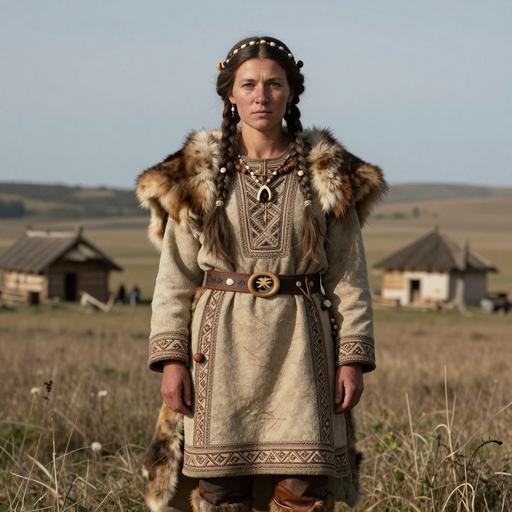
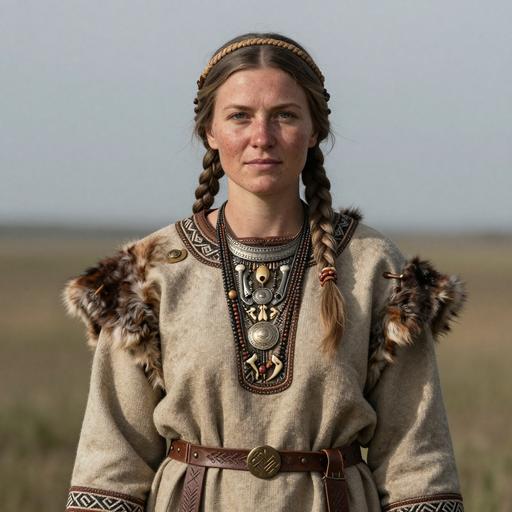
  • Sites span Ekven and Uelen (Chukotka), Bolshoy Oleniy Ostrov (Murmansk), Aleutian middens (Umnak, Kagamil, Ship Rock) and Canadian Arctic islands.
  • Maritime adaptations: specialized hunting tools, seasonal camps, and rich burial contexts.
  • Archaeological patterns show continuity and regional interaction across the Bering Strait, but local demographic change is likely.
Chapter IV

Daily Life & Society

The lifeworld of Arctic_Cultures was carved from wind, ice and sea. Subsistence focused on seals, walrus, sea birds and migratory fish; bone and ivory industries produced harpoons, ulu knives and decorative inlays. Winter dwellings — semi-subterranean houses lined with driftwood, skins and peat — sheltered extended families and served as nodes of craft production and social memory. Burials, when preserved in permafrost or peat, reveal grave goods that emphasize both subsistence technology and symbolic expression: toggling harpoons, carved talismans, and personal ornaments fashioned from ivory and shell.

Social organization likely emphasized kin networks responsive to seasonal resource patches and long-distance exchange routes. Sites such as Bolshoy Oleniy Ostrov display complex mortuary practices indicating social differentiation or wide-ranging alliances. Aleutian middens (Chaluka, Kagamil) show dense occupation layers and dietary signals of intensive shellfish and seabird use. Contact with neighboring groups — Late and Middle Dorset in Canada, later Thule expansions, and historic-era Russians and Europeans — introduced new tools, trade goods and pressures that reshaped local lifeways over centuries.

  • Economy built on marine mammals, seabirds and fish; specialized tools and bone industries evident.
  • House structures, seasonal mobility, and rich burials suggest complex kin-based social networks.
Chapter V

Genetic Profile

Genetic data from 68 ancient individuals link archaeological patterns to biological ancestry. Y-chromosome calls (n=44 males) are dominated by haplogroup Q (34/44), consistent with a paternal genetic continuity associated with Beringian and many Native American lineages. Minor Y-lineages include C (4), N (2), P (2) and F (2), indicating episodic inputs from wider Siberian pools or lineages retained at low frequency.

Mitochondrial DNA (n≈57 callable mtDNAs) is strongly represented by haplogroups D (26) and A (15), with a notable subclade A2a (13). These maternal lineages are characteristic of northern Eurasia and Beringia and frequently appear in ancient and modern Arctic and coastal Native American populations. Smaller counts of U (2) and Z (1) point to occasional gene flow or survival of older northern Eurasian maternal lineages. Together, the paternal Q dominance and maternal D/A profile support a model of deep Beringian ancestry with sustained maritime connectivity across the strait.

Caveats: sample distribution is geographically broad but temporally uneven; some haplogroups appear in restricted sites or periods, so inferences about population continuity, admixture timing and sex-biased migration remain provisional. Ongoing sequencing and better temporal resolution will refine these population histories.

  • Y-DNA: Q is predominant (34/44 male calls), with minority C, N, P, F lineages.
  • mtDNA: Dominant maternal lineages D and A (incl. A2a) link to Beringian/northern Eurasian ancestry.
Chapter VI

Legacy & Modern Connections

The genetic and archaeological threads of Arctic_Cultures continue into the present. Many modern populations in Chukotka, Alaska and Arctic Canada retain paternal and maternal markers seen in these ancient samples, reflecting deep-rooted connections across the Bering Strait. Cultural legacies — boat-building, sea‑ice hunting strategies, and carved iconography — persist in living traditions and ethnographic records.

At the same time, centuries of climatic change, trade, missionization and colonial pressures reshaped demographics and lifeways in the historic era. Ancient DNA offers a means to disentangle long-term biological continuity from recent disruptions: when combined with archaeology, it reveals where cultural practices track biological ancestry and where they change through contact and innovation. Limited regional sampling and temporal gaps mean that many questions remain open; future work integrating more genomes, isotopes and high‑resolution dating is essential to map the full human story of the Arctic seaboard.

  • Modern Chukotkan, Aleut and Inuit populations share genetic links with ancient Arctic_Cultures, indicating long-term connections.
  • Archaeogenetics helps separate cultural transmission from demographic change but more samples and finer dating are needed.
Chapter VII

Sample Catalog

2 ancient DNA samples associated with the Voices of Ice: Arctic Maritime Peoples culture

Ancient DNA samples from this era, providing genetic insights into the people who lived during this period.

2 / 2 samples
Portrait Sample Country Era Date Culture Sex Y-DNA mtDNA
Portrait of ancient individual NEO234 from Russia, dated 975 BCE
NEO234
Russia Russia_Uelen_IA 975 BCE Arctic Cultures F - A2a
Portrait of ancient individual NEO233 from Russia, dated 121 CE
NEO233
Russia Russia_Uelen_IA 121 CE Arctic Cultures F - D4b1a2a1
AI Powered

AI Assistant

Ask questions about the Voices of Ice: Arctic Maritime Peoples culture

AI Assistant by DNAGENICS

Unlock this feature
Ask questions about the Voices of Ice: Arctic Maritime Peoples culture. Our AI assistant can explain genetic findings, historical context, archaeological evidence, and modern connections.
Sample AI Analysis

The Voices of Ice: Arctic Maritime Peoples culture represents a fascinating chapter in human history...

Genetic analysis reveals connections to earlier populations while showing evidence of unique adaptations and cultural innovations. The ancient DNA samples provide insights into migration patterns, social structures, and the biological relationships between ancient populations.

This is a preview of the AI analysis. Unlock the full AI Assistant to explore detailed insights about:

  • Genetic composition and ancestry
  • Migration patterns and origins
  • Daily life and cultural practices
  • Modern genetic legacy
Use code for 50% off Expires Mar 05