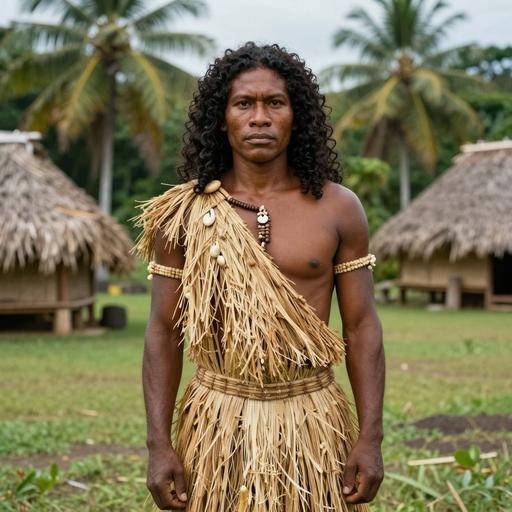
The Austronesian story is a maritime narrative etched into pottery sherds, voyaging canoes and genomes. Archaeological sequences in northern Taiwan (Hanben/Blihun, Gongguan on Green Island) show Neolithic farming communities by the later fourth millennium BCE that archaeological data link to a southward expansion. From these nodes, people carrying a suite of domesticated plants and distinctive pottery styles moved into the Philippines and through Island Southeast Asia.
By the late Holocene the movement reached the Bismarck Archipelago and beyond: dentate-stamped and red-slipped ceramics, as well as Lapita-style assemblages in parts of Vanuatu (Teouma, Efate) and the northern Solomons, mark waves of settlement into Near and Remote Oceania. Meanwhile, older skeletal and genetic material from sites such as Leang Panninge (South Sulawesi) and Morotai/Aru islands attest to long-standing local hunter–gatherer populations that interacted with incoming farmers. Limited evidence suggests complex, bidirectional contact: cultural traits and genes flowed both ways, producing regionally distinct island cultures.
Genetic patterns and archaeology together support a model of an origin in southern China/Taiwan with rapid maritime dispersal, followed by localized admixture with Papuan-related groups in Near Oceania. The sample set (267 individuals spanning 6378 BCE–1950 CE) captures this branching and mixing, but regional granularity remains uneven and some conclusions are preliminary.