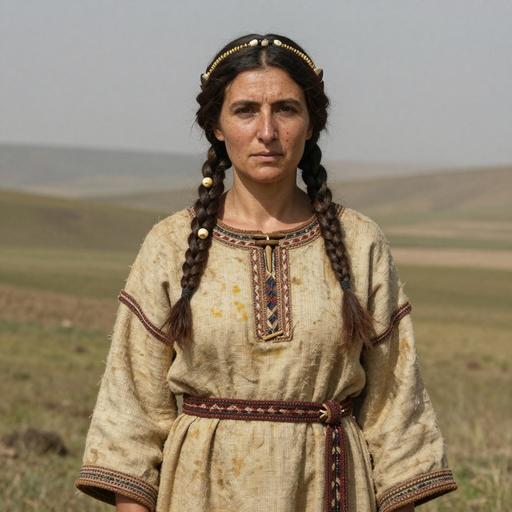
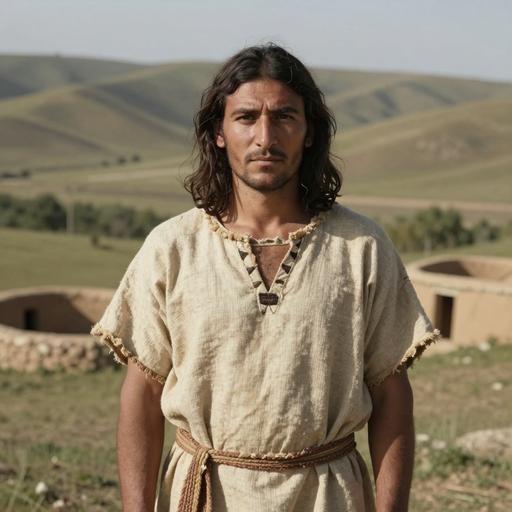
From the first sedentary houses of the Zagros to the fortified centers of the Late Bronze Age, this cultural arc unfolds as a long cinematic sequence of invention and contact. Archaeological layers at Tepe Abdul Hosein (Central Zagros, Iran), Neolithic settlements in eastern Anatolia such as Boncuklu and Kumtepe, and early Chalcolithic tells in the Levant demonstrate a millennia-long movement of farming knowledge, ceramics and metallurgy. The emergence of the Kura‑Araxes horizon (c. 3500–2200 BCE) created a striking material signature across the South Caucasus and into eastern Anatolia and northern Mesopotamia; archaeologists tie distinctive pottery, burial modes, and agro‑pastoral economies to this expansion. Later, Late Bronze Age centers such as Tell Atchana (Alalakh) and Arslantepe became nodes in long‑distance exchange, linking raw materials and ideas from the Zagros to the Mediterranean.
Ancient DNA from 441 individuals broadens the picture beyond artifacts: genetic continuity and patterned admixture appear alongside archaeological shifts. Limited evidence suggests early farmer ancestry remained a core component, while later epochs record pulses of additional ancestry from neighboring highlands and, occasionally, more distant steppe‑related sources. Where sample density is high—for example, across Armenian LBA–EIA contexts—archaeology and genetics align in showing regional persistence coupled with episodic influxes that reshaped local gene pools.